<p>AI writing is now part of everyday creative work. People use it to start drafts, test rhythm, change tone, and push past the blank page. That matters because AI poetry can sound finished very quickly, which makes the real question harder and more interesting: if a line moves you, how much of that came from the tool, and how much came from the person shaping it?</p>
<p>This showcase leans into that debate. These five original poems explore what AI creativity can offer and what it can flatten. The promise is range, speed, and surprise. The risk is sameness, borrowed voice, and language that feels smooth before it feels true.</p>
<h3>1. Autocomplete at Midnight</h3>
<blockquote>
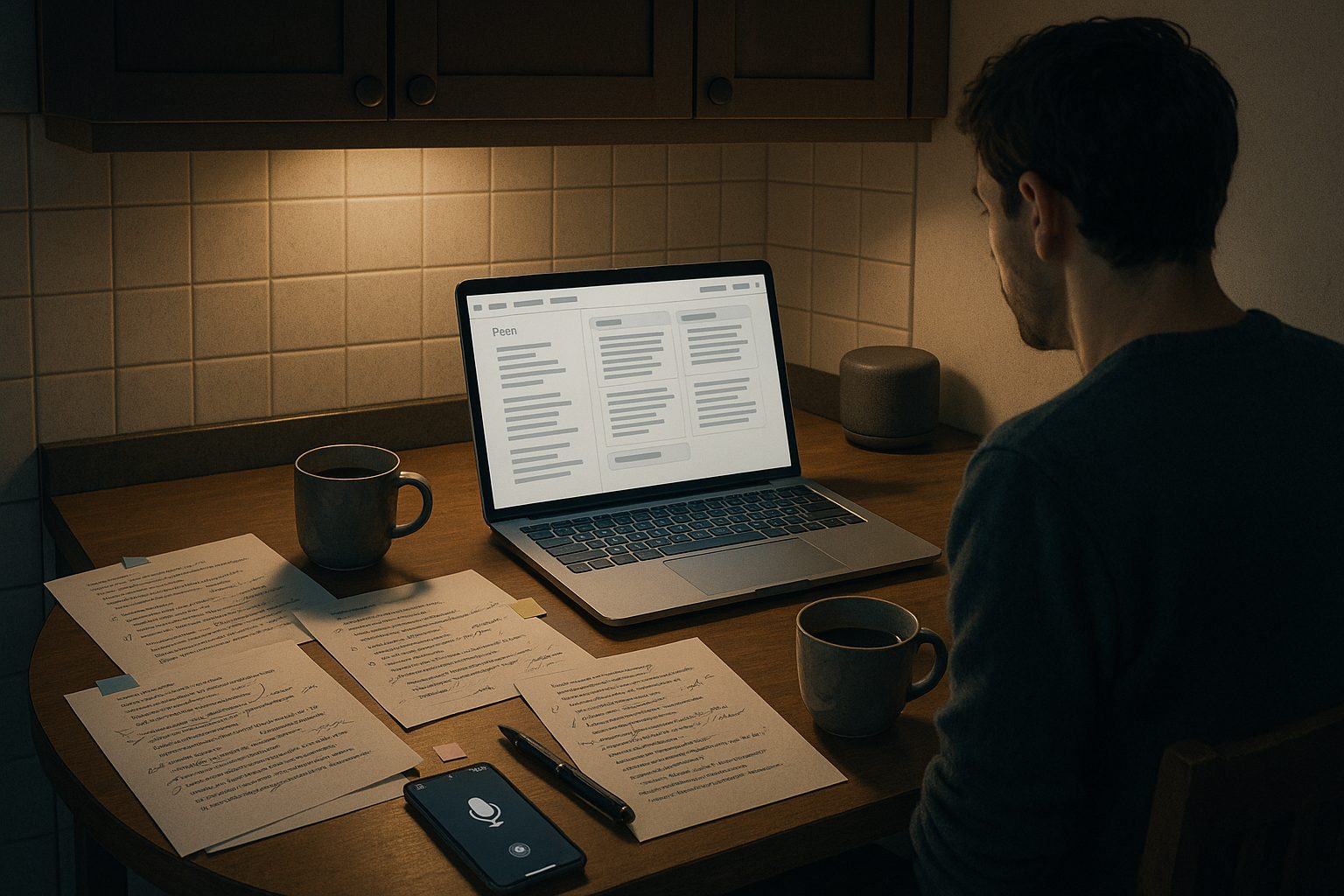
<p>The cursor blinks in a dark kitchen. Coffee has gone cold. A sentence opens its mouth and waits. At the right edge of the screen, the tool offers three neat endings, each one polished, each one almost wrong.</p>
<p>It knows that after <em>I remember</em>, writers often reach for rain, windows, hands, a train leaving. It does not know the blue plastic chair on the balcony, or the way my brother laughed only once that whole summer, or why I stop when the next word is <em>home</em>.</p>
<p>So I take a comma, reject a metaphor, keep one ordinary verb. We finish the line together, but not equally. The machine brings probability. I bring the reason the sentence hurts.</p>
</blockquote>
<h3>2. Training Set at Home</h3>
<blockquote>
<p>Our house is full of usable data. Receipts in a jar. Voice notes about medicine. Shopping lists with two languages on one line. A recipe that says only, “add water until it looks right.”</p>
<p>A system could learn our habits. Tea after coughing. Quiet after bills. The back door checked twice before sleep. It could notice that grief changes the shape of dinner, that some names disappear from the table faster than the plates do.</p>
<p>But it would miss the good cups on the top shelf, saved for guests who no longer come. It would miss my mother tasting soup with the same spoon, thinking, adjusting, never measuring, always knowing when enough has finally become enough.</p>
</blockquote>
<h3>3. Translation Mode</h3>
<blockquote>
<p>I write an email in the English I built slowly, brick by brick. The tool rewrites it in one second. Suddenly I sound efficient, polished, impossible to embarrass.</p>
<p>My old sentences had fingerprints. A wrong preposition. A rhythm carried over from another language. A little extra courtesy, because in my first language softness is part of respect. The new version is clean as glass. It could have come from anyone.</p>
<p>So I undo half the changes. I keep one awkward phrase that sounds like my actual mouth. In the age of AI writing, fluency is easy to borrow. Voice is harder. Voice is what remains after correction.</p>
</blockquote>
<h3>4. Draft Folder</h3>
<blockquote>
<p>On my laptop there is a folder full of versions: final, final2, final-real, final-real-fixed. Some begin with my notes. Some begin with generated lines. All of them carry the same weather: deadline at the door, doubt in the chair beside me.</p>
<p>The tool is useful with beginnings. It can open windows fast. It can list ten ways into a scene before I have chosen one. But speed has its own danger. A quick sentence can hide an empty one. A graceful paragraph can pass for thought.</p>
<p>By morning the best pages are never the first ones. They are the ones with cuts, with pressure, with one stubborn image that survived every rewrite. Not the text that arrived fastest. The text someone stayed with long enough to make specific.</p>
</blockquote>
<h3>5. Byline</h3>
<blockquote>
<p>At the bottom of the poem there is one name. That is simple. The making is not. Behind the byline stands a crowded room: teachers, borrowed books, old text messages, search bars, street signs, unpaid notebooks, the stranger on the bus who said one perfect sentence into a cracked phone.</p>
<p>Now there is another layer in the room. Models trained on public language. Interfaces built to predict the next likely word. Useful, powerful, often persuasive. Also impersonal, dependent on patterns, unable to care whether the pattern fits your life.</p>
<p>That is why the signature still matters. Not because one person made every part alone, but because one person must decide what stays, what goes, what is fair to borrow, and what truth they are willing to stand under when the page is done.</p>
</blockquote>
<h3>The Line Is in the Edit</h3>
<p>These poems blur the line between human and machine in the way most real writing now does: through collaboration, correction, and choice. If AI helps you get to the page, good. But the work becomes yours only when you add judgment, memory, and responsibility. That line is not in the prompt. It is in the edit.</p>