The New Creative Draft: How Writers Can Use AI Without Losing Their Voice
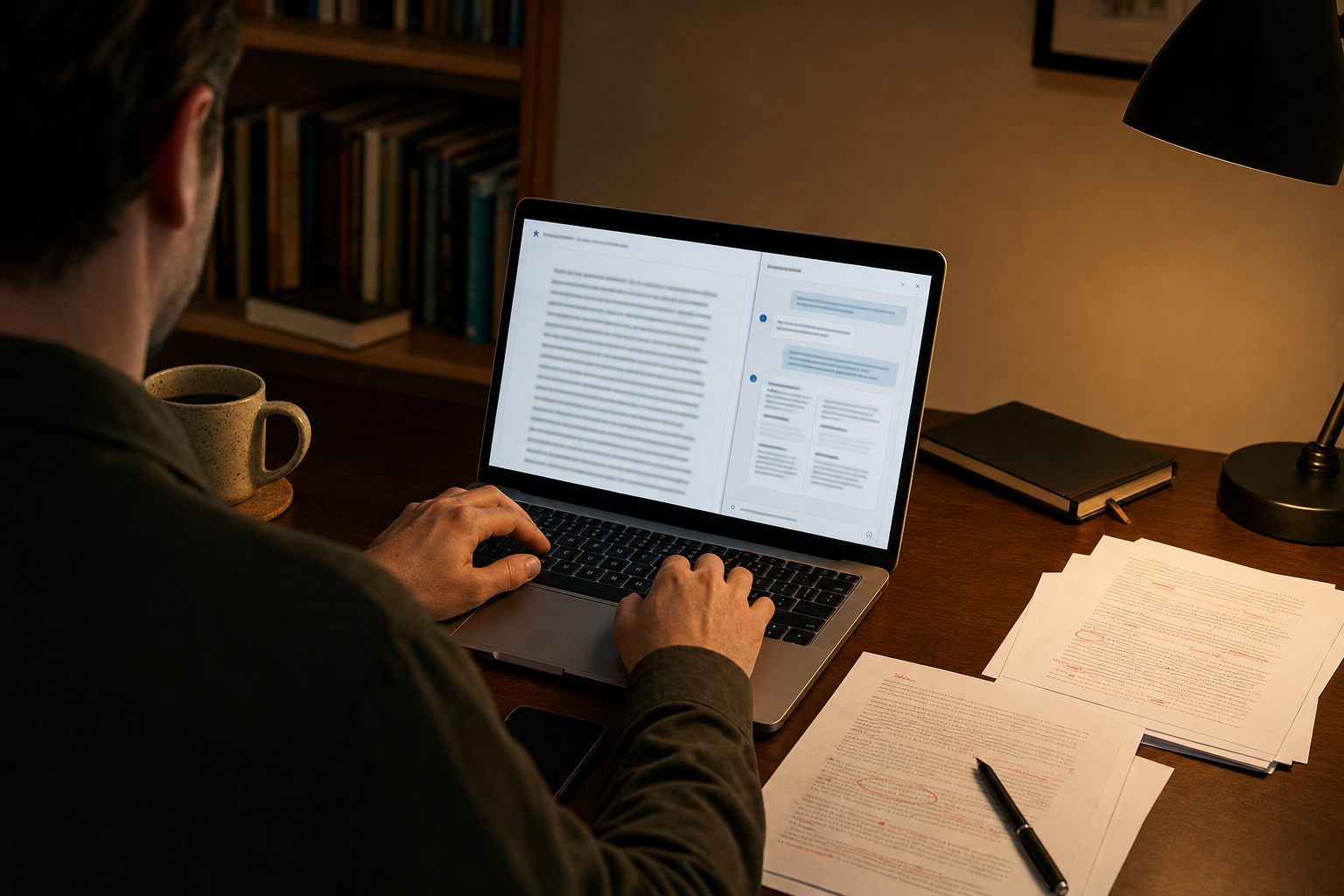
AI writing tools have moved from novelty to routine. In less than two years, systems that can produce a clean paragraph, an outline, or a headline in seconds have been built into word processors, note apps, search engines, and editing tools. Writers now face a very practical question: not whether the tools exist, but how to use them without letting them flatten the work.
This matters because writing is not only output. For many people, it is also how ideas become clear. The main tension is simple. AI can remove friction, expand options, and help people write faster, especially under pressure or in a second language. It can also make prose sound competent, generic, and strangely ownerless. The promise is speed. The risk is sameness.
From blank page to default feature
When UBS estimated in early 2023 that ChatGPT had reached 100 million monthly active users in about two months, the headline was not just about one chatbot. It signaled that text generation had escaped the lab. Since then, writing assistance has been folded into Microsoft, Google, Notion, Grammarly, Adobe, and many smaller tools.
The practical result is that a writer no longer has to go looking for AI. It is already inside the document window. For marketers, students, translators, grant writers, journalists, and novelists, the synthetic draft is becoming a normal part of the workflow.
That shift brings real benefits. A rough draft can help a freelancer hit a deadline, help a founder turn notes into a memo, or help a non-native English writer express a strong idea more clearly. For some writers with dyslexia, ADHD, or simple deadline panic, it can also make the first step less intimidating. Those gains should not be dismissed.
But the spread of these tools also changes the pressure around writing. In some workplaces, using AI is quietly becoming expected. That is where the creative question becomes sharper. If everyone has access to fast, plausible prose, what still counts as a writer’s distinctive contribution?
Voice is not a layer you add at the end
A common mistake is to treat voice like seasoning. First let the tool generate the draft, then add some personality on top. But voice is not decoration. It lives in choice: what detail you notice, what you leave out, how quickly you move, how blunt or playful your sentences are, when you refuse a neat conclusion.
Compare these two lines. “The restaurant had a warm atmosphere and friendly staff.” Now compare that with: “The waiter called everyone boss, and the menu was so dimly lit it felt like a dare.” The second line does not just sound different. It reveals a specific way of paying attention. That is voice.
AI systems are good at the first kind of sentence because they predict plausible next words from patterns in training data and user instructions. That makes them useful for summaries, explanations, and serviceable drafts. It also means they tend to favor the statistically familiar over the sharply particular.
“I don’t know what I think until I write it down.”
Joan Didion’s line matters here because drafting is often a thinking process, not a clerical one. If a tool does too much of the early thinking for you, you may get a page faster but arrive with thinner ideas.
Use AI for options, not identity
The strongest use of AI is not to replace authorship. It is to widen the field of options while the writer keeps judgment. In practice, that means using the tool for tasks where abundance helps and where the human still decides what belongs.
- Structure: Ask for three ways to organize your material, not a finished article. A memoir writer can feed in scenes and ask for possible sequences. A business writer can ask for five stronger openings built around one real example.
- Counterarguments: If you have a strong opinion piece, ask the tool to list the best objections. This can make your draft fairer and more precise.
- Compression: Paste in your own rough notes and ask for the core claim in one sentence, then rewrite that sentence yourself.
- Language support: For non-native English writers, AI can help smooth grammar, simplify tangled phrasing, or offer plainer alternatives without changing the underlying idea.
- Variation: Ten headline options, five subject lines, three transitions, shorter captions. These are useful repetitive tasks that do not need to carry the core meaning of the piece.
Notice what these uses have in common. The writer brings the material, the intent, or the argument. The tool helps explore the space around it.
Taste is the real scarce resource
AI can produce more text than any writer needs. The scarce resource is not output. It is taste. By taste, I do not mean fashionable taste or elite taste. I mean the judgment to know which sentence is alive, which example is stale, which paragraph belongs in this piece and which one is merely competent.
This is why two people can use the same tool and get very different results. One accepts the first smooth paragraph and moves on. The other treats the output as raw material, cuts most of it, replaces abstractions with observed detail, and keeps only what supports the point. The second writer is still writing in the fullest sense.
That also means voice is not only about sounding quirky. It is about standards. A writer with voice has preferences: stronger verbs, fewer slogans, harder facts, less padding, more scene, a particular rhythm of emphasis. AI can help generate possibilities, but it cannot decide which standards matter in your work. That decision remains human.
Constraints beat clever prompts
Writers often think the secret to better AI output is a magical prompt. Usually it is better constraints. General requests produce general prose. Specific boundaries force better material.
Instead of asking for “a thoughtful article about burnout,” a writer might ask for three structures based only on four interview notes, aimed at managers, with no therapy language, no clichés about “fast-paced modern life,” and paragraphs under four sentences. The point is not prompt wizardry. The point is that constraints protect your sensibility.
They also protect against imitation. Asking a system to write “in the style of” a living author is artistically weak and legally unsettled. A better move is to describe formal qualities instead: plain diction, short paragraphs, concrete reporting, dry humor, skeptical tone. That describes the work you want without turning another writer’s signature into a shortcut.
Revision is where authorship becomes visible
The real test of AI-assisted writing comes after generation. If you keep the first version because it is good enough, the tool’s habits will start to dominate the page. Those habits are easy to spot: tidy openings, vague intensifiers, balanced sentences, safe summaries, and endings that close more neatly than the reporting allows.
A useful revision pass asks blunt questions:
- Would I actually say this?
- Is this sentence doing real work, or only sounding polished?
- Can I replace an abstraction with a reported fact, a scene, or a concrete noun?
- Did the tool invent a source, number, quote, or example?
- What line here surprises me in a good way, and what line feels predictably smooth?
Read the piece aloud. Synthetic prose often reveals itself through rhythm before meaning. It sounds frictionless, evenly paced, and slightly overexplained. Human prose usually has more pressure in it. Some sentences hurry. Some stop short. Some take a risk.
Keep a human core
The parts you should guard most closely are the parts readers actually remember: the observation no dataset could have seen, the scene from your notebook, the odd connection, the moral emphasis, the cut you made because a line was too easy. If you are a reporter, that means interviews and verification. If you are an essayist, it means your actual experience and your real angle. If you are writing fiction, it means the pressure of character, not just events that fit a pattern.
This is also where privacy and ownership matter. Do not paste unpublished chapters, client documents, interview transcripts, or sensitive personal material into a tool unless you understand the product’s data policy and have permission to share that material. Many writers focus on style and forget the simpler risk: exposure.
There is a craft risk too. If beginners use AI to leap straight to acceptable prose, they may miss the slower practice that builds judgment. The danger is not only bland writing today. It is weaker writers tomorrow.
A workflow that protects your voice
- Start with your own raw material. Gather images, facts, scenes, fragments, and your real point before you ask for help.
- Use AI early for expansion. Ask for structures, objections, summaries, or alternatives.
- Use AI late for compression. Let it spot repetition, shorten passages, or surface unclear logic.
- Do not use AI as a fact source. Verify every quote, claim, date, and citation independently.
- Rewrite key passages yourself. The opening, the turn in the middle, and the ending should carry your cadence and judgment.
- Keep a personal style sheet. Note the words you overuse, the clichés you ban, the sentence lengths you prefer, and the kinds of detail that feel true to you.
- Read aloud before publishing. If the piece sounds like anyone could have written it, keep revising.
The ethics are still unsettled
One reason this debate feels messy is that the norms are still forming. There is no single rule for disclosure across journalism, academia, corporate writing, and fiction. Still, a basic standard is emerging. If AI helped with brainstorming, transcription cleanup, or grammar, many editors will treat that as ordinary assistance. If it drafted substantial passages, generated analysis, or substituted for reporting, disclosure becomes much more important.
Readers do not need a purity ritual. They do need honesty. The more a piece depends on generated text, the stronger the case for saying so, especially where trust is central.
The new creative draft is here, and it is not going away. For writers, the smart response is neither panic nor surrender. It is to assign the tool a smaller role than the market would like: useful for options, weak at judgment, dangerous when left unedited.
If you want to keep your voice, keep hold of the decisions that matter most. Bring the lived detail. Set the constraints. Make the cuts. Rewrite the sentences that feel too easy. The goal is not to prove that no software touched the page. The goal is to make sure the page still sounds like it came from a mind, a memory, and a set of standards that are recognizably yours.