Who Gets Credit When AI Helps Create?
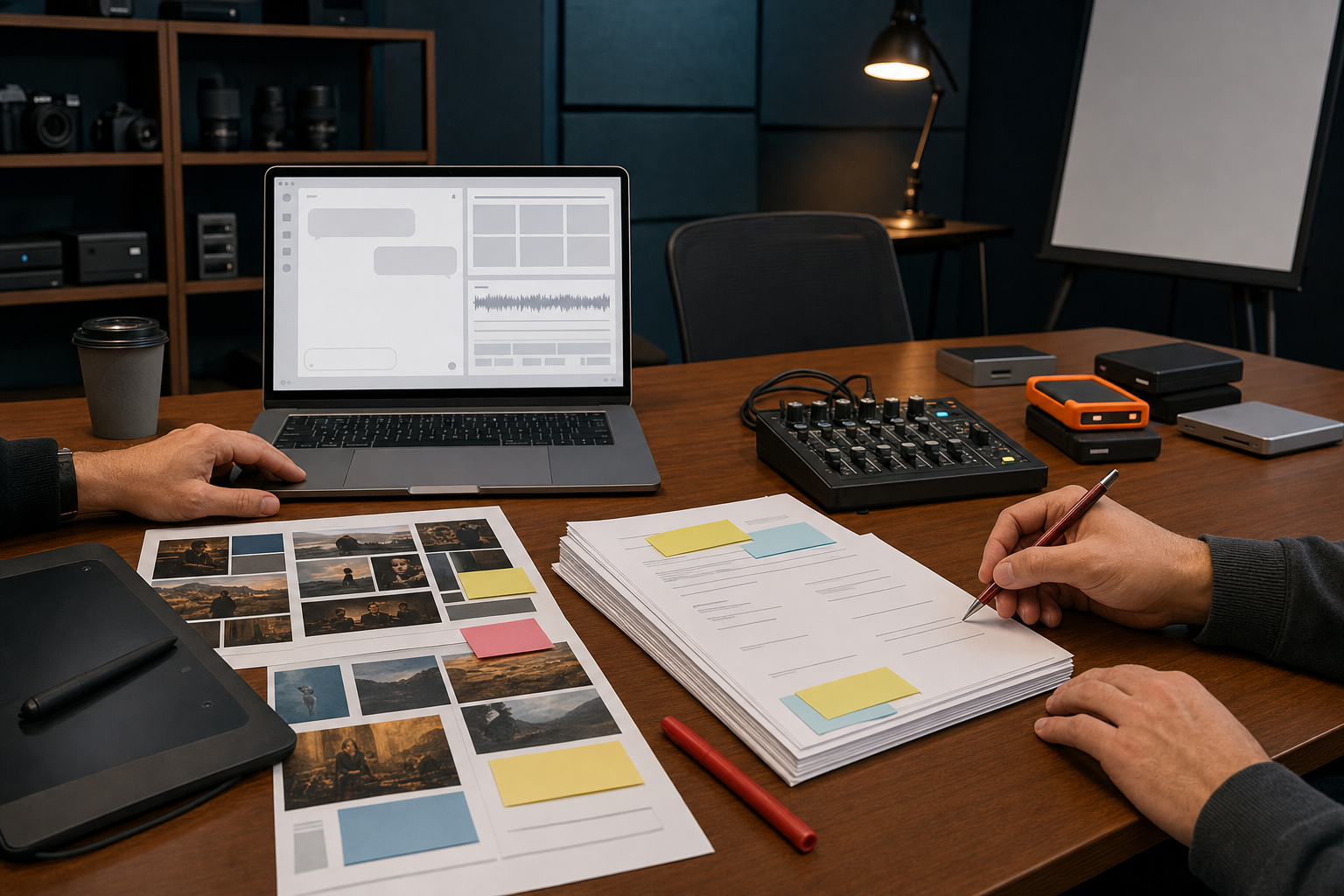
AI-assisted creativity has moved from edge case to daily habit. Students use chatbots to plan essays. Designers use generative fill to test layouts. Musicians use machine learning tools to isolate vocals or clean old recordings. Writers use AI to suggest headlines, summarize research, or draft rough copy. The tools are here. The rules for credit are not.
That gap matters because credit is tied to much more than ego. It affects grades, fees, prizes, copyright, and trust with audiences. The real debate is not whether AI can be useful. It is where assistance ends and authorship begins. If a system generates the core wording, image, or melody, can the human still claim to have made it? Sometimes yes. Sometimes no. Too often, those cases are treated as if they are the same.
Credit, authorship, and disclosure are different questions
A lot of confusion comes from mixing up three separate issues.
- Credit is social recognition. Whose name goes on the work?
- Authorship is a legal and professional question. Who can claim original creative ownership?
- Disclosure is about honesty. What should a reader, teacher, client, or audience be told about how the work was made?
These do not always point to the same answer. A novelist might use AI to help sort research notes, keep full authorship, and still choose to disclose that process. A designer might direct an AI image, edit it heavily, and deserve credit for art direction, but not honestly describe the final picture as hand-illustrated from scratch. A student might remain the author of an essay while still violating class rules if the assignment banned generative tools.
That is why the question should never be reduced to a single slogan like “AI is just a tool” or “AI made it.” Some uses are close to spellcheck. Others are closer to outsourcing first-draft creation. The language around credit has to reflect that difference.
What the rules already say
A few facts are already fairly clear. In the United States, the Copyright Office has repeatedly said copyright protects human-authored expression, not material generated by a system on its own. That does not mean all AI-assisted work is excluded. It means the human-made parts matter most.
The best-known example is the 2023 copyright fight over Zarya of the Dawn, a comic by Kris Kashtanova. The Copyright Office allowed protection for the text and the selection and arrangement of the work, but not for the Midjourney-generated images by themselves. The lesson was narrow but important: different parts of the same project can be treated differently.
Music has drawn a similar line. In 2023, the Recording Academy updated its Grammy rules and said:
“Only human creators are eligible to be submitted for consideration for, nominated for, or win a Grammy Award.”
That does not ban AI-assisted music. It means the award recognizes human creative contribution, not the software. A track can still qualify if the meaningful authorship is human.
Screenwriting pushed the issue even further. In its 2023 contract, the Writers Guild of America made clear that AI-generated material cannot be treated as literary material or source material. That was not just symbolic. Screen credit affects pay, residuals, and career status. Writers wanted to stop studios from using AI output to weaken those protections.
Outside those high-profile industries, the rules are still uneven. Some schools require disclosure for any generative AI use. Some only care if AI-generated text or images appear in the final work. Many publishers and clients are still inventing policy as they go. That uncertainty is part of the problem.
Not all AI help is the same
A practical way to think about credit is to ask what the tool actually did. The more the system created the expression that the audience is consuming, the stronger the case for disclosure and the weaker the case for sole authorship.
- Light assistance: transcription, grammar suggestions, background cleanup, noise reduction, basic translation support. In most cases, the human creator still clearly deserves the credit.
- Development help: brainstorming titles, generating mood boards, proposing structures, suggesting references. The human still usually owns the work, but disclosure may be wise or required.
- Draft generation: AI writes paragraphs, generates a melody idea, or produces concept art that becomes the base for the final piece. This is where simple claims of “all mine” start to look shaky.
- Core content generation: the final image, passage, or song section is largely generated by AI, with limited human changes. At that point, the human may be acting more as director, editor, or curator than sole creator.
That scale matters because people tend to talk about AI use as if it were one thing. It is not. Using AI to clean hiss from an old demo is not the same as generating a new lead vocal. Asking for headline options is not the same as submitting AI-written reporting under a human byline. A fair credit system has to be more precise than the marketing around these tools.
The cases that exposed the gap
Public arguments over AI credit did not begin in law offices. They exploded in visible, awkward moments. One of the most famous was Jason Allen’s win at the 2022 Colorado State Fair art competition with an image made using Midjourney and later edits. The judges knew the tool had been used, but the wider backlash showed something deeper: people did not share a common understanding of what counted as artistic labor anymore. Was the work a digital painting, a directed AI image, or something else? The argument was really about labeling and credit.
Music offers a useful contrast. The Beatles’ 2023 song Now and Then used machine learning to help separate John Lennon’s vocal from a noisy demo. That sparked interest, but not much confusion about authorship. The song was still understood as a Beatles recording because the software was used to recover and refine human performance, not replace it with new machine-generated vocals or songwriting. That case shows AI use does not automatically cancel human credit.
Taken together, these examples suggest a simpler rule than many policy documents do. People accept AI assistance more easily when the human role is visible, substantial, and honestly described. They push back when AI does the part audiences usually mean when they say “created.”
A workable standard for creators, students, and editors
My view is straightforward: credit the human judgment, disclose the AI process.
If a person made the key creative decisions, selected what stayed or went, revised the result, checked facts where needed, and takes responsibility for the final work, that person deserves credit. But if AI generated substantial parts of the final expression, the process should be disclosed in plain language. Not as a confession. Just as accurate labeling.
That can be done without making every byline unreadable. A short note is often enough.
- Writing: “Written and edited by Maya Chen. AI used for transcript summarizing and headline ideas. All facts verified by the author.”
- Illustration: “Concept and final edit by Omar Haddad, using Midjourney for initial image generation and Photoshop for compositing.”
- Student work: “AI used to brainstorm outline options; final argument and writing are my own.”
- Audio production: “Produced by Elena Ruiz. AI tools used for stem separation and background noise cleanup.”
This kind of disclosure does two useful things. First, it gives the human creator fair recognition for the work that was actually done. Second, it protects the audience from being misled about the process.
A good test is simple: would a reasonable reader, viewer, listener, client, or teacher feel the work was described inaccurately if the AI use were hidden? If the answer is yes, disclose it.
What disclosure still cannot fix
Disclosure is necessary, but it is not enough. It does not settle the hardest disputes around AI creation.
One issue is training data. Many lawsuits from authors, artists, news organizations, and music companies argue that AI systems were trained on protected work without permission. Even a creator who discloses AI use honestly may still be relying on tools built on contested data practices. That legal and ethical fight is still underway, and the answers remain uncertain.
Another issue is imitation. A prompt like “in the style of” a living artist can produce work that feels less like inspiration and more like market substitution. A credit line does not erase that concern. It may tell the truth about process, but it does not resolve whether the process was fair.
There is also a risk in going too far the other way. Not every use of AI should trigger suspicion. Accessibility tools, translation help, grammar support, and production cleanup can open creative work to more people, especially non-native English speakers and creators with disabilities. A blanket rule that treats every AI touch as fraud would punish legitimate assistance and ignore why people use these tools in the first place.
So the task is not to ban nuance. It is to sharpen it.
Credit should follow responsibility
The healthiest norm is not complicated. Credit should follow meaningful human contribution, and disclosure should follow material AI involvement.
If you made the important choices, shaped the final result, and can stand behind it, your name belongs on the work. If AI generated a substantial part of what the audience is actually seeing, hearing, or reading, say so clearly. If the rules of a classroom, contest, or workplace are stricter than that, follow those rules too.
The point is not to shame creators for using new tools. It is also not to pretend that typing a prompt is always the same as writing, drawing, composing, or reporting. AI has made creative work faster and more flexible. It has also made authorship easier to blur. The fix is plain language, not mystique: tell people who did what.
That is what credit is for.