Can Satire Teach AI Literacy? What CrankGPT Reveals About Trusting Chatbots Too Quickly
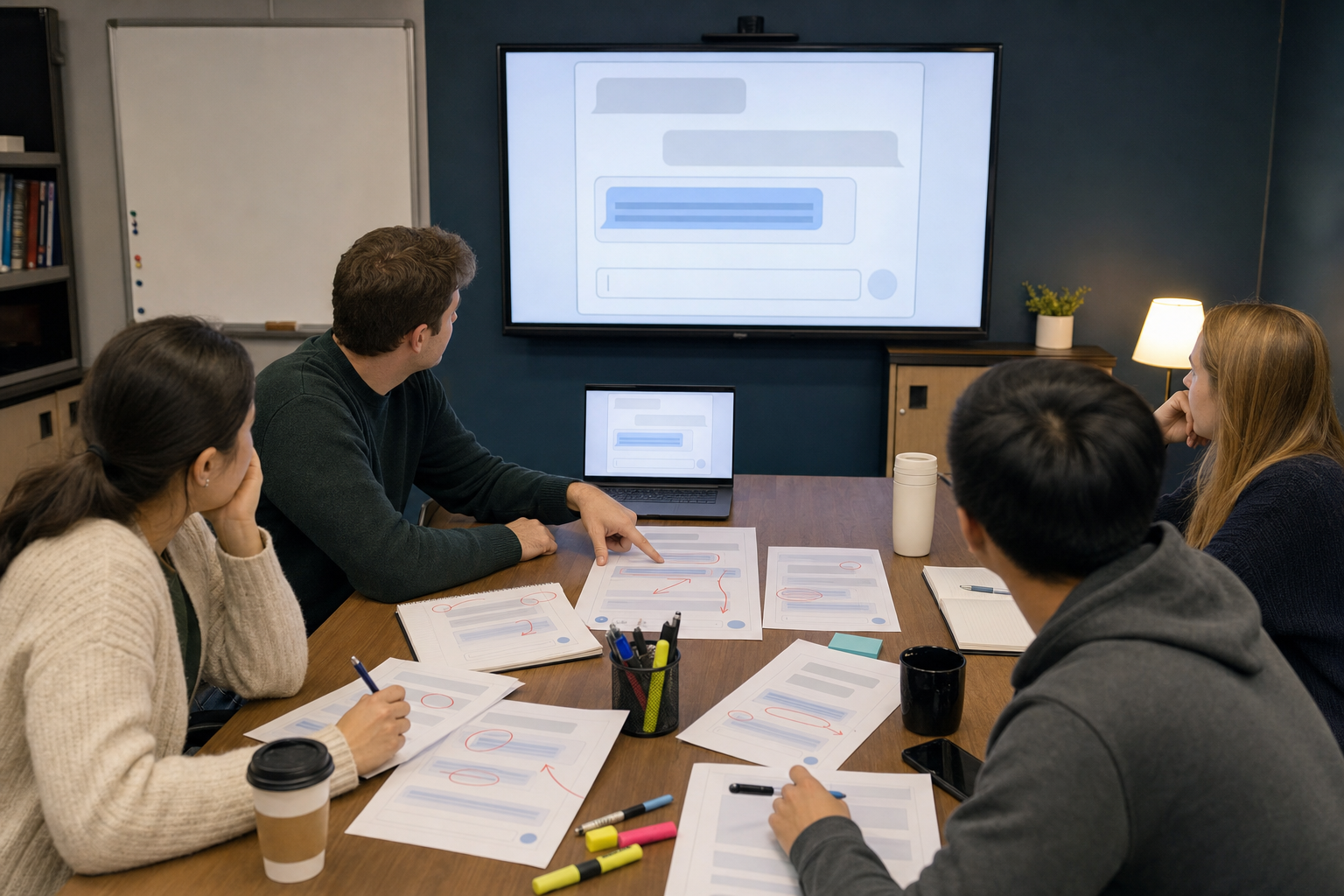
As CrankGPT circulated on online forums such as Hacker News, the reaction was predictable: people shared the strangest answers and laughed at how confidently the bot delivered them. But the interesting part was not the humor alone. It was the reminder that the same qualities that make a parody chatbot funny, speed, fluency, certainty, and a familiar chat interface, are the same qualities that make ordinary chatbots easy to trust too quickly.
That matters because chatbot trust is now a daily issue, not a niche one. Students use AI for homework, workers use it for drafts and research, and casual users ask it about health, money, and news. The debate is whether satire like CrankGPT can teach a real public skill: AI literacy. Used well, it can show why fluent machines feel credible. Used badly, it can blur the line between critique and misinformation.
The joke works because the interface feels normal
CrankGPT, as presented online, is satire: a chatbot framed to sound like an overconfident crank, the kind of voice that jumps from suspicion to certainty in one sentence. That style is exaggerated. The packaging is not. It still arrives in the format people now associate with useful AI: neat paragraphs, instant replies, and a tone that sounds composed.
That is why the joke lands. A parody like this does not succeed by inventing a new failure. It succeeds by making an existing failure easier to see. Large language models are built to generate plausible language, not to certify truth. When a satirical version pushes that tendency into obvious absurdity, the weakness becomes visible even to readers with no technical background.
The industry often uses the word hallucination for these mistakes. The term is common, but it can make the problem sound abstract. The more practical issue is simple: a chatbot can produce text that feels finished before the facts have been checked.
Fluency feels like competence
People have been overreading conversational machines for a long time. In the 1960s, users of ELIZA, a far simpler chatbot, sometimes treated it as if it understood them. That tendency became known as the ELIZA effect: people project more intelligence and authority onto a system than the system has earned.
Modern chatbots are much more capable than ELIZA, but the trust reflex is still there. In some cases it is stronger. A polished answer arrives in seconds. It is grammatically clean. It uses bullet points, transitions, caveats, and the kind of structure people associate with expertise. Many users read that style as evidence.
Psychologists use the term automation bias for a similar pattern. When a machine gives an answer, people often give it extra weight, especially when the answer looks organized and official. Chatbots are very good at triggering that bias because they do not just provide information. They perform competence.
There are already costly examples. In 2023, lawyers in a New York federal case were sanctioned after relying on ChatGPT-generated legal research that included fabricated citations. The filing looked professional. The problem was not the writing quality. The problem was that a fluent output had been treated as a checked source.
Personality shapes belief more than many users realize
CrankGPT also reveals something that product design discussions often underplay: chatbot personality is not a cosmetic layer. It changes how an answer lands. A system framed as a patient tutor feels different from one framed as a blunt analyst, a cheerful helper, or a rebellious “truth-teller.” The words may change a little or a lot. The user’s level of trust can change even more.
A satire project makes this clear by turning the dial too far. Ask two bots the same question about a vaccine claim, a tax rule, or a breaking news story. One may sound measured and uncertain. Another may lean into insider phrasing, certainty, and the suggestion that “they don’t want you to know.” Many readers will not judge those answers by evidence alone. They will also judge them by tone, familiarity, and whether the persona fits what they already suspect.
The fact is straightforward: the same underlying model can be instructed to sound cautious, breezy, combative, or conspiratorial. The interpretation is that style changes credibility. A reasonable conclusion is that developers should treat tone as part of AI safety, not just part of branding.
Why humor can teach what warnings often do not
Most advice about AI reliability is correct and forgettable. Verify sources. Cross-check claims. Keep a human in the loop. These are good rules, but they are abstract until someone feels the trap. Satire helps because it makes the trap visible.
That makes CrankGPT-style projects surprisingly useful as teaching tools. In a classroom, newsroom, or office training session, a parody bot can do something a standard disclaimer rarely does: it helps people notice why a bad answer felt believable in the first place. That is a deeper lesson than simply showing that the answer was wrong.
A practical exercise would be simple. Take one prompt and compare three responses: a mainstream chatbot answer, a satirical crank answer, and a well-sourced article. Then ask what each one does with certainty, evidence, citations, and uncertainty. Even beginners can spot the difference once the comparison is made explicit.
- Confidence is not evidence. Smooth language can still carry false claims.
- Tone is part of persuasion. Personality affects credibility.
- Speed can lower standards. Instant answers invite instant trust.
- Verification is a separate step. A chatbot response is a starting point, not a source by itself.
That is the promise of satire in AI literacy. It keeps the topic accessible. It lowers the barrier to entry. And it gives people a memorable example they can carry into everyday use.
Where satire can fail
Still, satire is not a clean solution. It depends on the audience recognizing the joke. Online, that recognition is never guaranteed. Screenshots move faster than context. A fake answer shared for laughs can be reposted as if it were real. In polarized communities, a crank persona may not even read as parody. It may read as honesty.
There is another risk. Satire can push people toward the wrong conclusion: that because one chatbot can produce nonsense, all AI tools are useless. That is not true either. Chatbots can be genuinely helpful for drafting, summarizing long documents, translating, brainstorming, and explaining unfamiliar jargon. The issue is not that they never work. It is that users often do not know when the tool is helping, when it is guessing, and when it is drifting outside its limits.
So the promise and the risk sit close together. Humor can build media literacy. It can also become just another viral content format unless someone turns the laugh into a lesson.
A better default for everyday users
The most useful form of AI literacy is not highly technical. It is procedural. Slow down. Treat the answer as a draft. Ask what kind of claim you are looking at and what it would take to verify it.
- Use chatbots to begin research, not to finish it.
- For factual claims, look for a primary source or a trusted outlet you can check independently.
- Ask the system what it is uncertain about and what assumptions it made.
- Run the same question again, or in a different tool, and compare the answers.
- Do not rely on chatbot output alone for legal, medical, financial, or safety-critical decisions.
These habits sound basic. That is the point. People usually get into trouble with chatbots not because they lack advanced technical knowledge, but because the interface makes weak information feel complete.
The real lesson behind CrankGPT
CrankGPT is useful not because it produces better answers, but because it exposes a common mistake in a form people can grasp quickly. When a ridiculous bot sounds persuasive, the warning is hard to miss: polished language is not proof.
If satire can make that lesson stick, it has real value. Trust chatbots as tools for exploration and drafting. Do not trust them simply because they sound like they know what they are talking about.