The Arabic Writer’s AI Co-Editor: How to Revise With AI Without Losing Your Voice
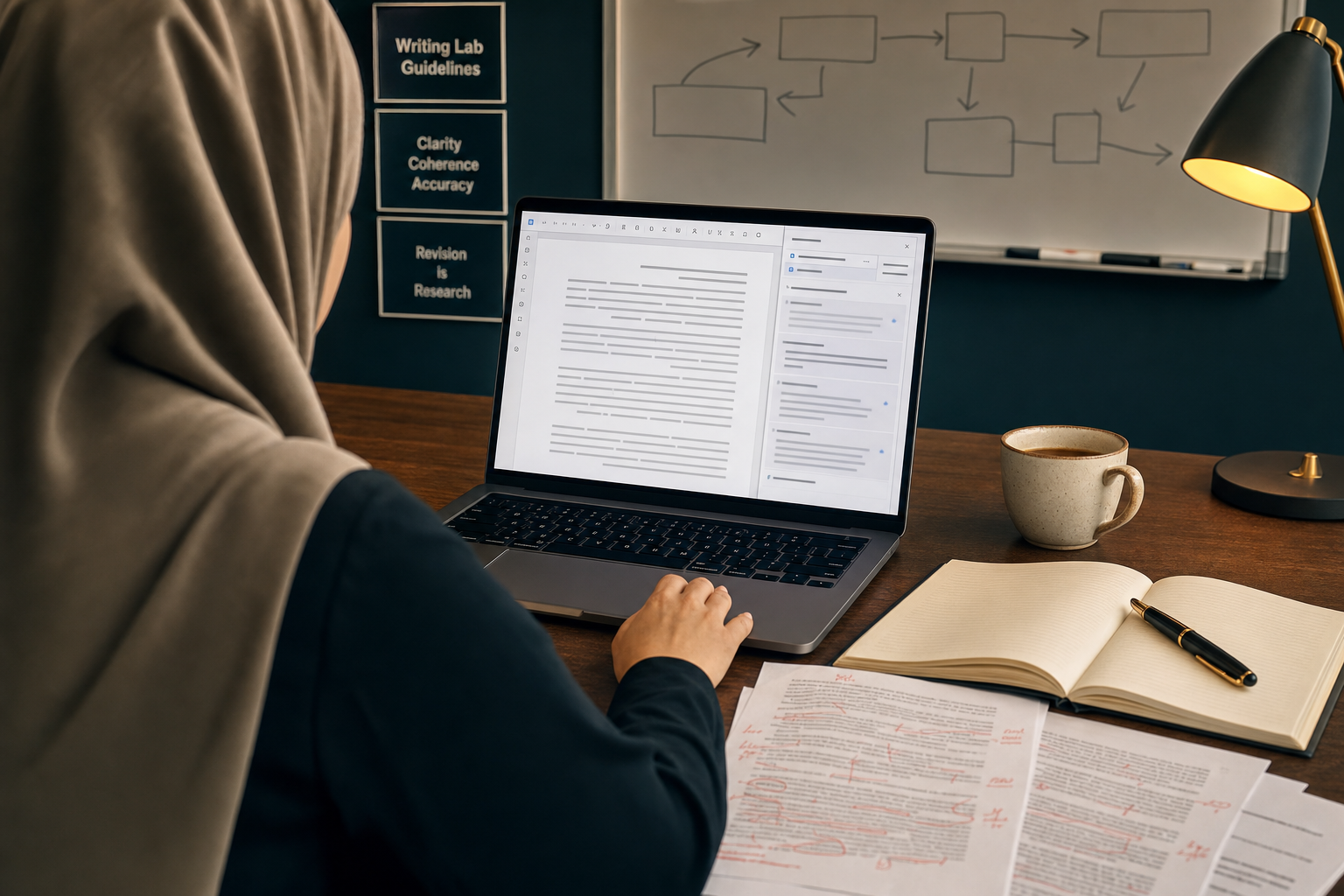
AI has quickly become part of the writing process. For Arabic writers, that is both useful and risky. A model can catch repetition, tighten structure, and suggest cleaner phrasing in seconds. But many mainstream tools still handle English more smoothly than Arabic, especially when a piece depends on dialect, rhythm, cultural references, or small shifts in register.
That is why the real question is not whether Arabic creators should use AI. Many already do. The question is how to use it without letting it flatten the language into something generic. The promise is speed and clarity. The risk is a polished paragraph that no longer sounds like the person who wrote it.
Arabic writing carries more than grammar
Arabic is spoken by more than 300 million people across more than 20 countries. It also moves across several levels at once: Modern Standard Arabic, regional dialects, internet slang, professional jargon, and borrowed English terms. A writer may shift between these on purpose. That shift often carries social meaning, not just style.
A sentence in clean fusha can sound formal, distant, or authoritative. A small move into dialect can create warmth, irony, or trust. A Qur'anic echo, a media cliché, or a phrase from family speech can change the whole mood of a paragraph. When an AI tool tries to “improve” the text by standardizing it, it may remove exactly what gave it life.
This happens in English too. But for Arabic writers, the problem is sharper because voice is often built through register. Change the register and you do not just edit the sentence. You change its social setting.
The basic fact is simple: most large AI writing tools were built for English-heavy use. My view is just as simple: Arabic writers should still use them, but mainly as revision assistants, not as first-draft machines.
What AI is actually good at
Used carefully, AI can be a strong co-editor. Its best value is not invention. It is diagnosis.
- Finding repetition: It can quickly spot where the same point appears twice in different wording.
- Clarifying structure: It can show where an argument jumps too fast or where a paragraph has no clear center.
- Flagging unclear references: Arabic prose can carry many pronouns and implied subjects. AI can point out where a reader may lose track.
- Offering alternatives: It can give several ways to shorten a sentence, sharpen an opening, or soften a transition.
- Testing audience fit: It can compare whether a passage reads better for a student audience, a business audience, or a general magazine reader.
- Checking register consistency: It can help identify where a text drifts unintentionally between formal and informal Arabic.
These are editing tasks. They save time. They reduce friction. They can make a draft more readable without changing what the writer is trying to say.
Where AI starts to damage the writing
The trouble begins when the instruction is vague: “Make this better,” “Rewrite beautifully,” or “Fix my Arabic.” In practice, that often means: make it safer, more standard, and less distinctive.
Original: ألجأ إلى الفصحى للدقة، وأرجع إلى العامية حين أريد صدقاً أقل حراسة.
Generic AI rewrite: أستخدم العربية الفصحى للدقة والعامية للتعبير الصادق.
The second line is clear. It is also thinner. The contrast becomes flatter. The phrase صدقاً أقل حراسة disappears. So does the rhythm. The meaning survives, but the voice does not.
This is the warning sign to watch for: if the new sentence could have been written by almost anyone, the edit probably went too far.
There are other risks too. AI can flatten literary echoes, misread regional phrasing, and smooth away ambiguity that the writer wanted to keep. It can also invent quotes or citations with impressive confidence. And if you are working with unpublished or sensitive material, privacy matters. Do not paste confidential drafts into a tool unless you understand exactly how that service stores and uses your text.
A better rule: edit with AI, do not hand over the page
Ask for diagnosis first. Ask for options second. Ask for replacement last.
This one rule changes the whole workflow. Instead of asking the model to take over the paragraph, ask it to tell you what it sees. Where is the logic weak? Which sentence carries the strongest image? Which phrase sounds translated from English? Which edit improves clarity but harms tone?
That keeps the writer in control of the meaning and the music of the line. It also makes the AI more useful. A revision tool works best when the task is narrow.
A practical workflow for Arabic writers
- 1. Draft the core yourself. Write the main idea, the emotional center, and the lines that matter most before opening any tool. If the first version is machine-generated, you may spend the rest of the process cleaning up a generic draft instead of refining your own.
- 2. Define the editorial role. Tell the model what kind of help you want: copy editing, structure feedback, headline options, or tone review. Say clearly that it is editing, not authoring.
- 3. Name the register. Say whether the piece should stay in Modern Standard Arabic, include light dialect, or keep a mixed register. If a line must remain Egyptian, Levantine, Gulf, Maghrebi, or neutral, say so.
- 4. Protect the sentences that matter. Mark any line you do not want rewritten. This is especially useful for openings, endings, jokes, imagery, and emotionally important phrases.
- 5. Ask for several options. One rewrite invites passive acceptance. Three options force comparison. That is where judgment begins.
- 6. Ask why each change helps. The explanation matters more than the sentence. If you understand the edit, you can apply the principle in your own words.
- 7. Read the result aloud. Arabic is deeply shaped by sound. If the revised line looks correct but falls flat when spoken, it is probably the wrong edit.
"Act as an Arabic copy editor, not a ghostwriter. Do not rewrite yet. Identify repetition, weak transitions, and any phrase that sounds translated from English. Preserve the reflective tone, keep the image in paragraph 2, and do not remove the light Levantine phrasing in the ending."
Prompt patterns that work better in Arabic revision
Writers often get better results when the request is specific and editorial. These prompt patterns tend to be more useful than a general rewrite:
- “Flag phrases that sound imported from English.” This helps with stiff wording and literal translation patterns.
- “Give me two fusha versions and one lighter, conversational version.” This helps test register without losing control.
- “Tell me which sentence carries the strongest voice and why.” This helps preserve the paragraph’s center.
- “Show where grammar correction may damage cadence.” This is especially useful in essays, scripts, and personal writing.
- “Keep cultural and religious references intact. If a phrase may confuse non-local readers, explain it instead of deleting it.” This protects meaning while improving accessibility.
The goal is simple: make the tool answer a small, clear question. Broad prompts usually produce broad, generic prose.
A short before-and-after
Imagine you write this line in a draft: في كل عودة إلى العربية بعد يوم طويل من الإنجليزية، أشعر أن الجملة تحتاج إلى نفس قبل أن تستقيم.
If you ask AI to “rewrite this beautifully,” it may deliver something smooth and empty. A better request is narrower: identify what is abstract, tell me whether تحتاج إلى نفس is vivid or vague, and give me two tighter versions that keep the image.
The useful result is not a finished sentence handed back to you. It is a clearer decision. You might keep the image but cut the extra words: كلما عدت إلى العربية بعد يوم من الإنجليزية، احتاجت الجملة إلى نفس قصير قبل أن تستقيم.
That is the right kind of collaboration. The tool helped with compression. The writer kept the voice.
What should stay firmly human
Some parts of writing should not be outsourced, especially in Arabic, where tone often carries memory, class, intimacy, and place.
- The opening line: It sets the temperature of the piece.
- The emotional hinge: The sentence where the writing becomes personal should come from your own ear.
- Cultural and religious references: Check every one yourself. Small wording changes can alter meaning.
- Quotes, citations, and names: Verify them manually. AI can be fluent and wrong at the same time.
- Sensitive material: Protect private, unpublished, or client-related text.
The final test is simple
If AI makes your draft clearer, tighter, and easier to read while preserving the parts only you could have written, it is doing its job. If it makes the page smoother but less alive, it has crossed the line from editing into replacement.
For Arabic writers, that line matters. A good co-editor helps you see the draft more clearly. It does not decide your register, erase your local texture, or trade your cadence for generic fluency. Keep the edit that sharpens your voice. Reject the one that merely standardizes it.