Arabic Creators and AI Translation: How to Keep Humor, Dialect, and Cultural Texture Alive
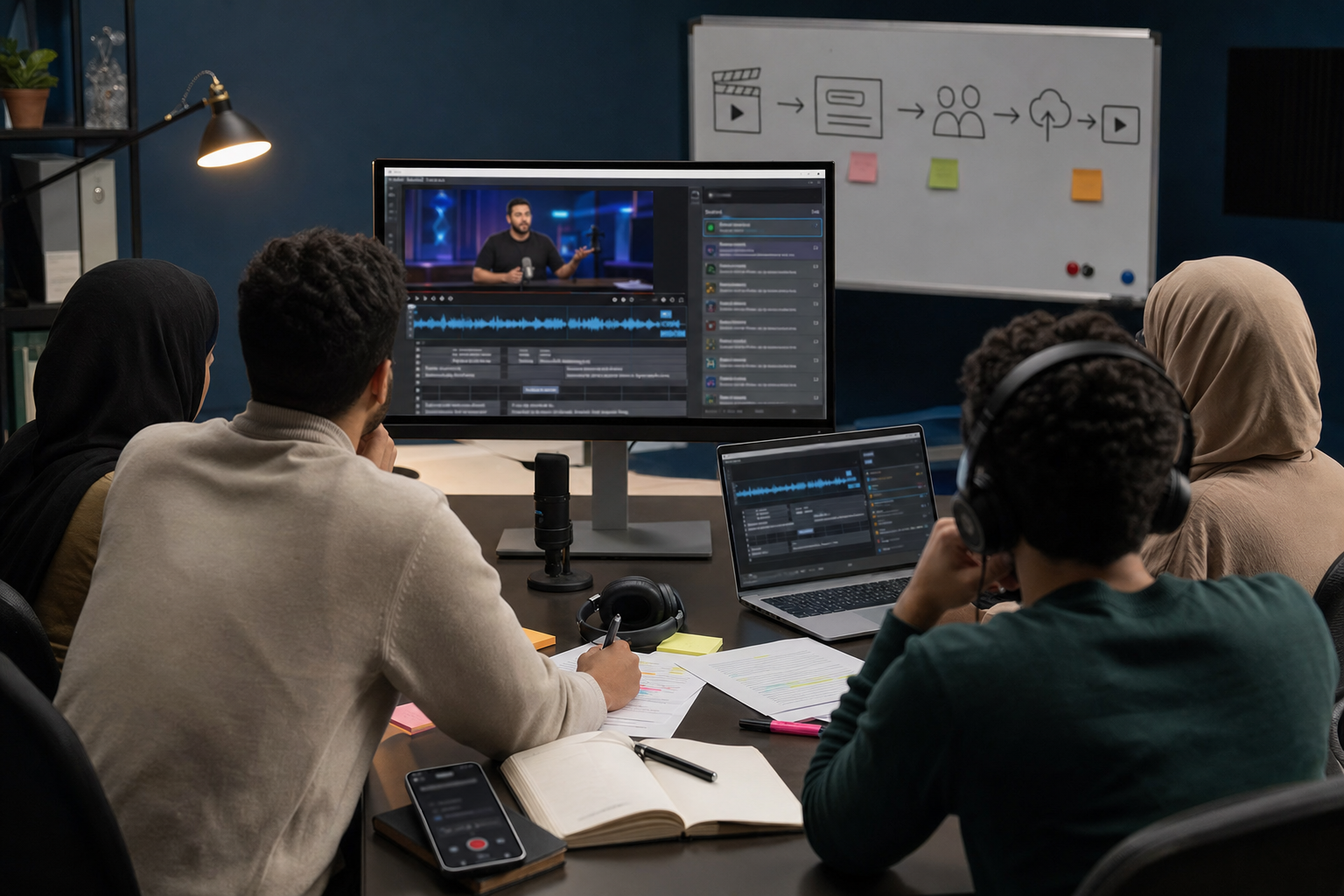
Arabic creators are now using AI translation and rewriting tools for everyday work: subtitles, newsletters, scripts, classroom materials, social posts, and podcast clips. The appeal is obvious. A draft that once took hours can appear in minutes. For writers and media teams publishing in both Arabic and English, that speed can mean more reach, lower cost, and faster production. The problem is that a translation can be technically correct and still lose the very thing that made the original worth reading or watching.
That matters because Arabic is not one flat language market. It is a large linguistic world, spoken by more than 300 million native speakers across many countries, dialects, and media cultures. The main tension is simple: AI can preserve the basic message, but often weakens humor, dialect, social signals, and cultural texture. The debate is no longer whether creators should use these tools. They already do. The real question is how to use them without sanding down voice and identity.
A translation can be grammatically right and still fail the scene.
The promise is real
It would be a mistake to treat AI translation as useless. For many creators, it solves real problems.
- Speed: It can turn long Arabic text into usable English quickly, or do the reverse for outreach and distribution.
- Drafting: It helps bilingual creators get past the blank page.
- Consistency: It can keep names, terms, and repeated phrasing aligned across a campaign or series.
- Adaptation: It can shorten a long post into a caption, rework an interview into bullet points, or create a subtitle-friendly version.
For small teams, this is not a minor gain. It can make bilingual publishing possible at all. A teacher building Arabic-English learning material, a podcaster cutting clips for social media, or a newsroom translating an explainer all benefit from faster first drafts.
But fluency creates a new risk: false confidence. If the English sounds smooth, people assume the meaning survived. Sometimes it did. Sometimes the tone, joke, or social meaning quietly disappeared.
Where the loss usually happens
Most translation errors are not dramatic. They are subtle. The sentence looks fine. The problem is that it now sounds flatter, colder, more generic, or less funny than the original.
- Humor: Jokes built on timing, understatement, exaggeration, or sarcasm often become plain statements.
- Dialect: A shift from Egyptian to Levantine, Gulf, or Moroccan Arabic may signal geography, class, age, or intimacy. Generic English erases that.
- Register: Moving between Modern Standard Arabic and colloquial speech can create authority, irony, or warmth. AI often smooths the difference away.
- Religious and social phrases: Expressions such as inshallah, alhamdulillah, or Allah yatik al-afiya do social work that literal English rarely captures.
- Code-switching: Many speakers mix Arabic with English or French. In some content, that mix is part of the style, not noise to be cleaned up.
Take a common phrase like إن شاء الله. In one setting it means sincere hope. In another, it is a polite hedge. In a third, it can be a soft refusal. A system that always translates it as “God willing” may be accurate at the word level and wrong at the human level.
Or consider يعطيك العافية. A literal translation such as “May God give you health” sounds strange in most English contexts. What the speaker may really mean is “thanks for your effort,” “good job,” or even a warm goodbye. The right translation depends on the scene.
Humor is usually the first thing to break
Humor does not travel as neatly as information. It depends on rhythm, surprise, shared reference, and the social relationship between speaker and audience. Arabic creators know this well. A joke can sit inside one word choice, one pause, one exaggerated formal phrase, or one sudden switch into dialect.
AI tools tend to optimize for smoothness. That is exactly why they miss so many jokes. A joke is often not the most statistically likely way to say something. It is the least expected version that still makes sense.
Imagine a Lebanese creator posting a failed cooking clip with the line شو هالعبقرية؟. A literal version, “What genius is this?” is understandable, but awkward. The real function of the line is ridicule. Depending on the audience, “Whose brilliant idea was this?” or “Absolute genius, clearly” may carry the joke better.
Or take sarcastic praise in Egyptian Arabic: يا سلام على التنظيم said during obvious chaos. “What wonderful organization” is not wrong, but it sounds stiff. “Beautiful. Total chaos.” may land closer to the original effect.
The key point is practical. When translating humor, creators should not ask only, “What do these words mean?” They should ask, “What is this line doing?” If it is teasing, stalling, softening, mocking, or building solidarity, the translation has to recreate that function.
Dialect carries more than words
Arabic dialect is not decoration. It carries social information. The difference between أريد, عايز, and بدي is not just vocabulary. It can signal region, formality, education level, mood, and closeness.
That matters in creative work. If a character speaks in Gulf dialect, that choice helps build the character. If a teacher uses colloquial Arabic in a video, it may make the lesson warmer and more accessible. If a comedian shifts from formal Arabic to slang, the switch may itself be the punchline.
English often compresses these distinctions into one neutral sentence. Sometimes that is fine. Sometimes it is not. In a news summary, neutrality may be useful. In a sketch, a memoir, a voice-over, or a social video, neutrality can strip away identity.
This challenge is even sharper with North African Arabic. Darija often includes Arabic roots alongside Amazigh, French, and Spanish influences. That mix can carry class, region, and attitude all at once. Public AI tools often handle Modern Standard Arabic more reliably than dense dialect writing. Creators who work in Moroccan, Algerian, or Tunisian vernacular usually already know this from experience.
Why “correct” English can still feel wrong
One of the biggest problems in AI translation is normalization. The system produces a version that is tidy, standard, and easy to read. The trade-off is that it starts to sound like everyone else.
That is a real editorial cost. If a creator’s Arabic voice is playful, sharp, informal, or regionally specific, and the English version turns into neutral internet prose, the translation has not simply changed style. It has changed authorship.
This is especially common in subtitles and social media clips. Short-form content depends heavily on tone. “We are joking” may be accurate for إحنا بنهزر, but “I’m kidding” or “just teasing” may sound more natural and carry the same softening effect. Word accuracy matters, but audience effect matters too.
What creators can do differently
The good news is that many of these losses are preventable. The tool does not need to be abandoned. It needs better instructions and firmer human review.
- Name the dialect. Do not ask for “Arabic to English” in general if the source is Egyptian, Levantine, Gulf, or Darija. Say what it is.
- State the purpose. Is this for subtitles, a newsletter, a comedy clip, a classroom handout, or brand copy? The format changes the translation choice.
- Say what must survive. If the line is sarcastic, affectionate, youthful, regional, or intentionally formal, say so.
- Ask for more than one version. A literal version, a natural version, and a culturally adapted version will often reveal what is being lost.
- Ask the tool to flag uncertainty. It is better to mark a phrase as ambiguous than to force a confident but wrong choice.
- Keep a glossary. Catchphrases, recurring jokes, honorifics, and brand terms should have approved translations or notes.
A simple instruction can improve results a lot: Translate this Egyptian Arabic script for English subtitles. Keep the joke and informality. If a phrase is culturally loaded or has no clean equivalent, flag it and suggest two options.
That will not solve everything, but it changes the task from blind conversion to editorial assistance.
Some words should stay in Arabic
Not every culturally specific word needs to be translated away. Some words do more work in Arabic than they can in English, especially if the target audience already has some familiarity with them.
Words such as yalla, habibi, or wasta may carry texture that a plain English substitute cannot match. In those cases, a mixed strategy often works best: keep the Arabic word, and make the meaning clear through context or a brief gloss the first time.
But this should be done with discipline. Leaving Arabic terms in the text can preserve voice. It can also become lazy branding if overused. The question is not whether the word “sounds authentic.” The question is whether keeping it helps the audience understand the scene, the relationship, or the world of the piece.
Human review is not optional
If a translation is going public, one human reviewer should have final say. Ideally, that person understands both the source culture and the target audience, not just the dictionary meaning of the words.
A strong review process is simple:
- Check meaning: Does this say what the original says?
- Check function: Does it tease, soften, provoke, or reassure in the same way?
- Check voice: Does it still sound like this creator, this character, or this brand?
That last question is the one teams skip most often. It should be central. In creative work, voice is not a bonus layer added after accuracy. It is part of accuracy.
For teams, make voice a system
Media teams, publishers, and educators should not solve this problem from scratch every week. If AI translation is part of the workflow, build a lightweight style guide around it.
- List recurring phrases and how they should be translated.
- Define when to keep Arabic terms and when to replace them.
- Set rules for dialect so the system does not keep pulling everything toward neutral Modern Standard Arabic or generic English.
- Save examples of good and bad outputs so editors can train internal judgment.
This does two things at once. It improves consistency, and it protects creators from becoming dependent on whatever default tone the tool prefers.
The real goal is not perfect translation
Arabic creators do not need a fantasy of perfect machine translation. They need something more practical: a workflow that protects voice while saving time.
AI is useful for first drafts, options, and speed. It is much less reliable as the final judge of humor, dialect, and social meaning. Those are not small details sitting on top of the text. In Arabic content, they are often the message itself.
The best rule is a simple one: use AI to do the heavy lifting, then spend the saved time on the parts that make the work yours. If the words survive but the texture disappears, the translation is not finished.