Arabic Creativity in the Prompt Box: How to Preserve Dialect, Metaphor, and Cultural Memory with AI
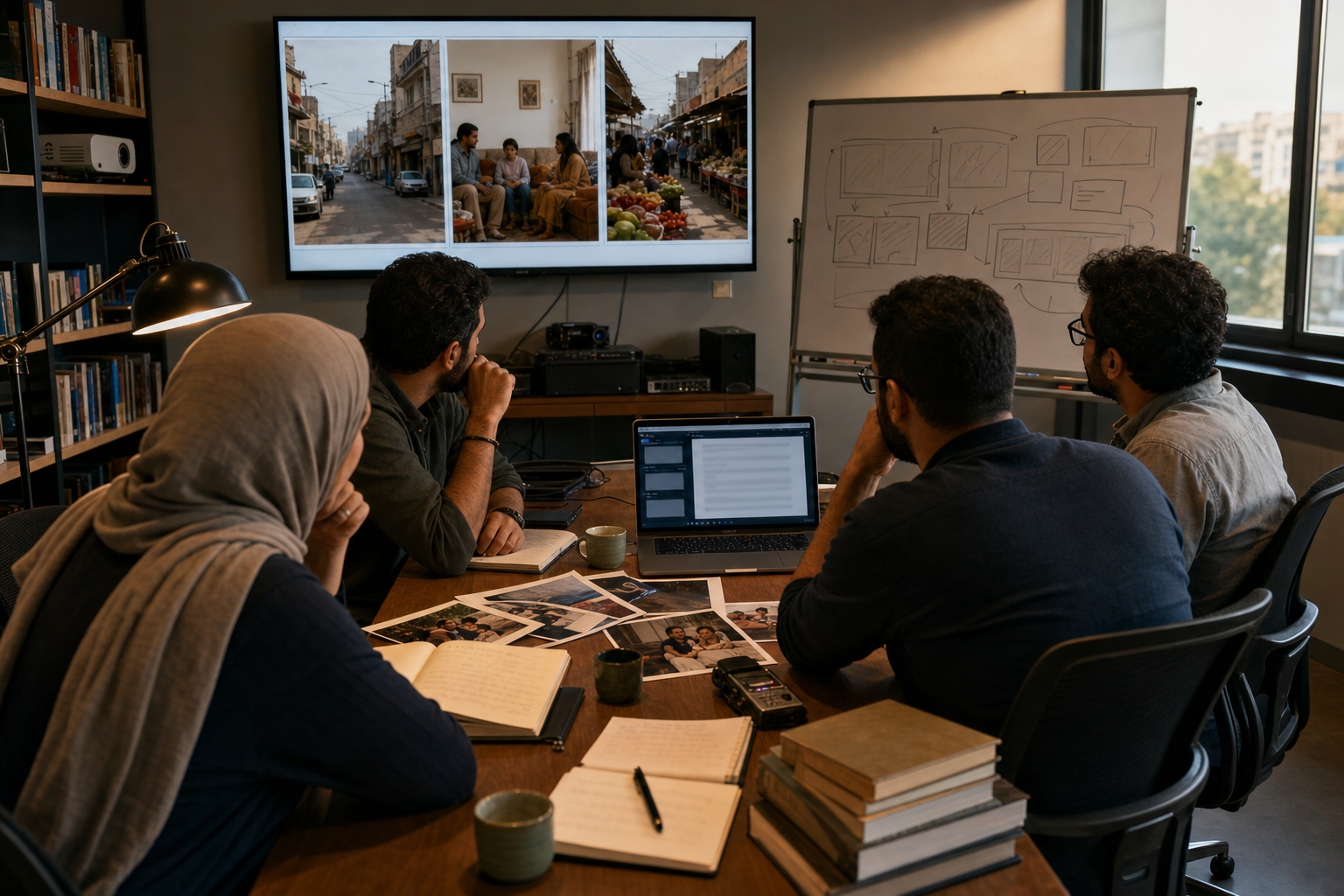
Generative AI is now part of everyday creative work for many Arabic-speaking writers, designers, teachers, marketers, and filmmakers. It can sketch a scene, suggest a headline, tighten a script, or produce ten variations in seconds. But one problem shows up fast: ask for something “in Arabic,” and many tools return a smooth, generic voice that sounds closer to formal Modern Standard Arabic, translated English, or broad internet slang than to any real city, family, or street.
That matters because in Arabic, voice is not a cosmetic layer. A single word can signal region, age, intimacy, irony, and class. The main debate is not whether AI can generate Arabic text. It can. The real question is whether creators can use it without letting it flatten dialect, weaken metaphor, and strip away cultural memory. The promise is speed and range. The risk is a polished sameness.
Why Arabic gets flattened so easily
Part of the problem is technical, and part of it is cultural. Many models are stronger in widely published Modern Standard Arabic than in the full range of living dialects. They have seen more news articles, formal essays, subtitles, and translated web text than the kinds of family speech, neighborhood humor, and oral rhythms that define local voice.
Arabic also moves across registers more than many tools expect. A person can joke in dialect, switch to MSA for emphasis, add an English term from work, then quote a proverb from an older generation. Humans do this naturally. A model often treats it as inconsistency and “fixes” it.
The result is familiar. The Egyptian line “إحنا مش ناقصين دوشة” comes back as “لسنا بحاجة إلى مزيد من الإزعاج”. It is correct, but it is no longer the same line. It has lost mood, social setting, and character. A phrase like “الحيطة بتسمع” may be replaced or over-explained, when its power comes from being short, shared, and half-spoken.
Modern Standard Arabic is not the villain
Preserving dialect does not mean rejecting MSA. Modern Standard Arabic still carries authority, beauty, clarity, satire, ceremony, and public weight. In many strong Arabic texts, the shift between dialect and MSA is the point.
The real issue is default choice. If a scene needs everyday tension between two sisters in Alexandria, and the tool automatically turns it into formal prose, the register is wrong. If an essay needs a sharp formal paragraph, MSA may be exactly right. The goal is not “more dialect” at all costs. The goal is deliberate register.
A useful prompt is often not “make this more natural,” but “tell me where this should stay in dialect, where it should rise into MSA, and why.”
Start with a language brief, not a vague prompt
Most weak AI writing starts with weak instructions. If you ask for “a creative paragraph in Arabic,” the model will guess. If you want texture, you need to give coordinates.
- Name the place: Cairo, Jeddah, Amman, Basra, Casablanca, Muscat, or a diaspora setting.
- Name the social context: two cousins texting, a voice-over for a short film, a podcast intro, a brand caption, a grandmother telling a story.
- Name the register: mostly colloquial, mixed with light MSA, or formal with one colloquial break.
- Name what to avoid: words from other dialects, textbook phrasing, over-explained metaphors, or pan-Arab vagueness.
- Name the script: Arabic script, Arabizi, or a mix, if your audience actually writes that way.
- Name the emotional temperature: dry humor, restrained anger, teasing, grief without melodrama.
“Write a 180-word monologue in Alexandrian Egyptian Arabic for a woman in her late twenties speaking to her younger brother. Keep it conversational, not literary. Do not replace ‘إحنا مش ناقصين دوشة’ with formal Arabic. Use one seaside image, one family proverb, and one brief switch into MSA only when she is mocking official language.”
That kind of prompt does more than ask for content. It protects voice before the drafting even starts.
Preserve metaphor by telling the model what not to simplify
AI systems are often rewarded for clarity, which means they tend to explain. That is useful in a report. It is damaging in a poem, a scene, a lyric, or a personal essay. Arabic metaphor often works through compression. It says more by saying less.
If your line is “البلد مأكولة من حوافها”, you probably do not want a clean replacement like “the country faces many problems.” If your character says “الحيطة بتسمع”, you may want the phrase to remain exactly where it is, without footnotes inside the dialogue.
So say that directly. Tell the model what must stay dense, local, or ambiguous.
“Revise this paragraph for flow, but do not simplify proverbs, kinship terms, food names, or neighborhood slang. Keep the metaphorical language compressed. If a non-local reader may need help, add a short gloss after the draft instead of replacing the original phrase.”
This is one of the simplest ways to keep the tool from sanding down the best line on the page.
Build a cultural memory file before you generate
Cultural memory does not survive by accident. It lives in repeated details: forms of address, wedding phrases, market objects, schoolyard jokes, Ramadan references, football chants, old TV lines, street names, dishes, fabrics, and the small verbal habits that tell readers, “this came from somewhere real.”
One practical method is to build a working file for each project. It does not have to be complicated. A page or two is enough.
- Core words to keep in Arabic: terms that lose force when translated.
- Recurring phrases: family sayings, neighborhood expressions, religious or seasonal greetings used in context.
- Place markers: actual streets, districts, cafés, buses, school types, or shoreline references.
- Sound markers: vendor calls, stadium rhythm, school announcements, call-and-response lines.
- Memory objects: a tea glass, a specific bread, a plastic tablecloth, a prayer rug, a cassette, a building stairwell.
Then feed that file into the prompt. If you do not provide memory, the model will use probability. Probability is usually broad. Memory is specific.
Keep dialect local, and keep the mix intentional
“Arabic dialect” is too broad to be useful. Even “Levantine” or “Maghrebi” may be too broad for creative work. If locality matters, say so. A paragraph that mixes “شو”, “عايز”, and “أبغى” may still be understandable, but it often sounds manufactured unless the mixing is intentional.
This is especially important in dialogue. Readers can forgive a strange factual detail. They are less forgiving when a character speaks like three regions at once.
There is also nothing wrong with mixing on purpose. Many young Arabic speakers move between dialect, MSA, English, and platform slang all the time. The point is not purity. The point is control. If your characters code-switch, tell the model why they switch and when.
Spelling matters too. In colloquial writing, spelling can signal region and tone. If you have chosen a certain way to write recurring dialect words, tell the tool not to normalize them into formal Arabic or into another local style.
Use a two-pass workflow
Creators often get better results when they stop asking AI for a final draft and start using it in stages.
- Pass one: generate options. Ask for three or five versions with different moods, lengths, or levels of sharpness.
- Pass two: audit the language. Ask the tool to identify where it drifted into textbook Arabic, generic phrasing, or another dialect.
- Human pass: read aloud, cut dead lines, restore your own rhythm, and test doubtful phrases with a speaker from the target community.
“Review this draft and flag any words that sound overly formal, pan-Arab in a vague way, or imported from another dialect. For each one, suggest a local alternative or tell me to keep the original.”
This turns the model into a rough assistant and quality checker, not the final owner of the voice.
Translation is often where voice disappears
Many Arabic creators still brainstorm in English and translate later. That can be practical, but it often costs rhythm. If the original emotional logic of the piece is Arabic, start in Arabic. If the joke was born in dialect, do not make it travel through English unless you have to.
Subtitles and bilingual publishing need special care. A phrase like “يا زلمة” is not always just “man.” Depending on context, it can carry annoyance, affection, disbelief, urgency, or simply conversational pacing. The best subtitle is not always the most literal one, but the worst choice is usually a flat replacement that erases tone.
A better request is: give me the original Arabic line, a literal gloss for internal use, and a viewer-friendly subtitle. That keeps the source line intact while still making the work travel.
Human review is the real safeguard
No prompt can replace lived knowledge. If the piece is rooted in a dialect that is not yours, get a reader from that community. Ask simple questions: Would you actually say this? Which word sounds imported? Does this joke land locally or only on paper?
This matters even more in projects tied to memory and identity: oral history, family archiving, community media, religious language, migration stories, and local humor. AI can help transcribe, sort, summarize, and suggest structure. But when it paraphrases too aggressively, it often removes repetition, invocation, hesitation, and little spoken habits that carry meaning.
Sometimes the line that looks redundant on screen is the line that makes the speaker sound real.
The best role for AI is support, not substitution
The most useful way to see AI in Arabic creative work is as a support tool around the human core. It can help with scaffolding, variation, cleanup, and research. It can suggest alternate scene openings, sharper transitions, tighter summaries, and different pacing. It can even help a creator notice where a draft has gone bland.
What it should not do is decide what counts as local truth. A poet can use it to test stanza order, not to invent memory. A screenwriter can ask for five quieter versions of a punch line, then pick the one that sounds like her family. A heritage project can use it to organize interviews, but the phrases that matter should come from actual voices, not generated approximation.
That is the right balance: use the machine for speed, use people for meaning.
The practical rule is simple. Do not outsource your ear. In Arabic creative work, the line worth keeping is often the one that sounds too local, too odd, or too specific for a generic system to invent on its own. Use AI for options, structure, and friction reduction. Keep dialect, metaphor, and cultural memory under human control. The prompt box can help you draft faster. It cannot decide what should remain said in your own language, your own rhythm, and your own way.