AI That Lives on Your Phone: Memory, Privacy, and Trust in the Next Personal Assistants
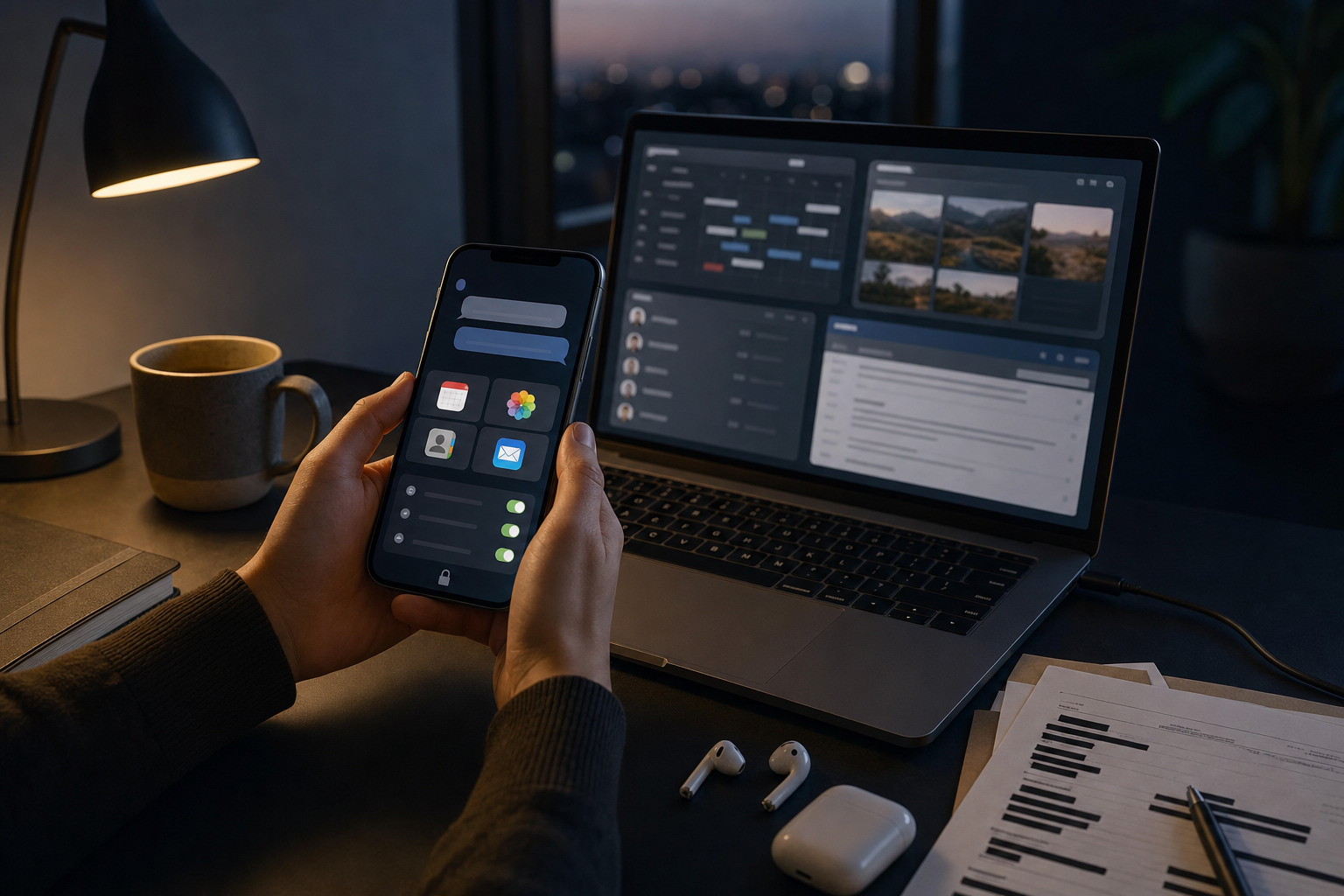
Phone-based AI assistants are changing fast. The clearest sign came in 2024, when Apple said Siri would become more useful by drawing on a user’s “personal context” across apps, while Google and Samsung kept pushing more AI features directly onto phones. This is a bigger shift than a better chatbot in a new interface. It means the assistant is moving closer to the most sensitive device most people own: the one that holds messages, photos, payment cards, calendars, location history, work files, and health data.
That matters because a personal assistant is only helpful if it remembers enough to be useful, yet only trustworthy if it forgets enough to protect you. That is the core tension. People want software that can find the file a colleague sent last week, rewrite a text in the right tone, or remind them which medicine a child can take. But they do not want a system that quietly builds a deep profile from every message, purchase, and habit. The debate is no longer whether assistants can sound smart. It is whether their memory and boundaries deserve trust.
From command tool to context machine
Older phone assistants were limited in obvious ways. They could set timers, make calls, start music, or answer simple questions. They were clumsy because they mostly handled one request at a time.
The new model is different. It is built around context. A modern assistant is supposed to understand what is on your screen, what is in your inbox, what is on your calendar, who “Mom” or “my manager” refers to, and which app can complete the task. In theory, you should be able to say, “When does my mother land, and text Sam that I’ll be 20 minutes late,” and the software should pull from email, calendar, messages, maps, and contacts without making you repeat every detail.
That sounds convenient because it is convenient. It also means a single request can touch five or six different stores of personal data. The assistant is no longer just a voice feature. It becomes a layer across the phone.
Apple described the next Siri as using your “personal context” and, when the device needs more computing power, handing the task to a server system it calls “Private Cloud Compute.”
The important point is not the brand name. It is the direction of travel. The phone assistant is becoming a coordinator of your digital life, not just a tool for commands.
Memory is the real product
When companies talk about smarter assistants, they often focus on language quality or app actions. The more important feature is memory.
A useful assistant needs at least three kinds of memory:
- Short session memory: remembering what you asked two minutes ago so you do not have to repeat yourself.
- Preference memory: knowing that you prefer aisle seats, short emails, metric units, or a certain language.
- Personal context memory: knowing that the PDF your colleague sent “last Tuesday” was in Mail, that your daughter’s school pickup changed this week, or that your doctor appointment is in the app you rarely open.
The first kind feels harmless. The second is where convenience starts to pay off. The third is where the stakes rise sharply.
This is because personal context is not one thing. It is built from fragments: recurring locations, the people you message most, the files you open before meetings, the notes you keep, the receipts in your email, the reminders you ignore, the photos you favorite. Each fragment looks small. Together they reveal routines, finances, relationships, health concerns, and stress points.
That is why “memory” should never be treated as a simple feature toggle. A phone assistant with memory is not just storing facts you deliberately gave it. It may also be inferring patterns from behavior. That is a much more intimate form of computing.
The case for AI that stays on the phone
There is a real reason the industry keeps talking about on-device AI. Keeping more processing on the phone can improve privacy, speed, and reliability at the same time.
If a request is handled locally, the data does not need to travel to a remote server just to summarize a message, rewrite a note, or sort photos. That can reduce exposure. It can also make the assistant feel faster and more responsive. In some cases, it may work without a strong connection.
Google has used on-device models such as Gemini Nano for certain phone features. Samsung has promoted local processing for some Galaxy AI tasks. Apple’s pitch leaned heavily on the idea that many requests should run on the device first, with a separate server path only when needed. This is not marketing fluff. It reflects a real technical shift: phone chips are now strong enough to run more AI workloads than they could a few years ago.
For users, the promise is simple. Your phone should be able to help with private tasks without constantly sending private material elsewhere. That is a good goal.
Why local processing does not end the privacy problem
Still, “on-device” is not the same as “private.” It is better to treat it as one layer of protection, not a full answer.
First, many assistant systems are hybrid. A request may begin on the phone, then move to the cloud when the task is too large, too complex, or tied to an online service. If that handoff is invisible, users cannot make informed choices.
Second, an assistant can be local and still be intrusive if it has broad permissions. If the software can read messages, inspect photos, see your screen, access your microphone, and act inside third-party apps, the privacy question does not disappear just because the first model runs on the handset.
Third, personal data often leaks through the edges. Cloud backups, sync services, crash reports, analytics, notification previews, and app integrations can all create side channels. A carefully designed assistant might avoid storing raw requests on a server, yet still generate metadata about when you asked for help, which apps were involved, or which contacts appeared most often.
Fourth, third-party actions multiply the risk. If the assistant books a table, sends a message, files an expense, or orders medicine, your data is no longer moving only between you and the phone maker. It enters the privacy rules of restaurants, retailers, insurers, delivery services, and workplace software.
That does not mean companies are being deceptive when they talk about privacy. It means privacy is a system property, not a slogan. It depends on architecture, default settings, retention rules, security, app permissions, and whether users can see what is happening.
Trust is also about accuracy, not just secrecy
There is another problem that gets less attention: a personal assistant can remember the wrong thing.
A system might infer that you always want morning flights because that was true during a busy month. It might misread sarcasm in a text, confuse two people with similar names, or pull an outdated address from an old email. With ordinary search, errors are annoying. With a memory-based assistant, they can be costly or embarrassing.
Imagine a system that incorrectly stores that a colleague is your manager, that your child no longer has a food allergy because of one badly summarized note, or that an old bank account is still your preferred account for payments. These are not science-fiction edge cases. They are exactly the kind of quiet mistakes that happen when software turns messy human history into neat machine memory.
This is why trust requires more than data protection. It also requires memory hygiene: users need to know what the assistant believes, where that information came from, and how to correct or delete it.
If companies want assistants to act on a user’s behalf, they should be held to a higher standard than “usually helpful.” An assistant that sends messages, edits documents, or surfaces private facts needs verifiable memory, not just fluent language.
Good boundaries should be visible and boring
The strongest privacy products are often not the flashiest ones. They win by making limits clear.
A trustworthy phone assistant should offer a few basic controls:
- A clear memory panel: users should be able to inspect what the assistant has stored as preferences, facts, and recent context.
- Easy deletion: not hidden three menus deep, and not limited to full account wipes.
- Per-app permissions: Mail, messages, photos, files, health data, and work apps should not all be lumped into one vague consent screen.
- Temporary modes: a private session should mean the assistant does not retain the interaction unless the user chooses to save it.
- Clear cloud disclosure: when a request leaves the device, the user should know.
- Action confirmation: sending, buying, deleting, booking, or sharing should require explicit approval unless the user has enabled automation for a narrow task.
- An audit trail: users should be able to see why the assistant gave an answer or took an action, including which app or source it used.
None of this is glamorous. That is the point. Trust in personal AI will be built by controls that feel almost administrative.
There is also a social dimension. Not every phone is used in a stable, private environment. Some are work-managed. Some are shared within a family. Some belong to people in controlling relationships. Some are used in countries where legal protections are weak. A feature that feels harmless to one user can create real exposure for another. Designers should assume that boundaries matter most where life is already uneven.
The business model question is still hanging over all of this
Even the best technical safeguards run into a harder question: what incentives shape the assistant over time?
If the product is meant to increase hardware sales, that creates one set of pressures. If it is meant to drive subscriptions, that creates another. If it is tied to advertising, shopping, or platform lock-in, the incentive to collect, retain, and connect more user data can grow quickly.
This is where skepticism is healthy. A company may sincerely build strong privacy protections today and still expand data use tomorrow through new features, partnerships, or policy changes. That is why durable trust should not depend on goodwill alone. It should depend on product limits that are technically enforced and easy to verify.
Apple has tried to frame this issue by saying that certain cloud requests can be processed without storing user data, and by promising unusual visibility into the server software behind those requests. That is a meaningful step if it works as described. But it is still a claim that needs continued scrutiny. The same standard should apply to every company making “private AI” promises.
The next assistant will succeed or fail on restraint
The next generation of phone assistants will probably be more capable than the last one. That part is not hard to predict. They will summarize faster, search more naturally, and complete more actions across apps. Many people will find that genuinely useful.
The harder test is whether these assistants can be personal without becoming invasive, and helpful without becoming presumptuous. The best assistant will not be the one that remembers everything. It will be the one that remembers the right things, for the right amount of time, under rules the user can see and change.
That is the real human standard for AI on your phone. Not whether it sounds smooth. Not whether it can answer in one breath. Whether it respects memory as something earned, limited, and accountable.