Good Arabic Is Not Enough: Why Arabic AI Outputs Still Need Local Editors
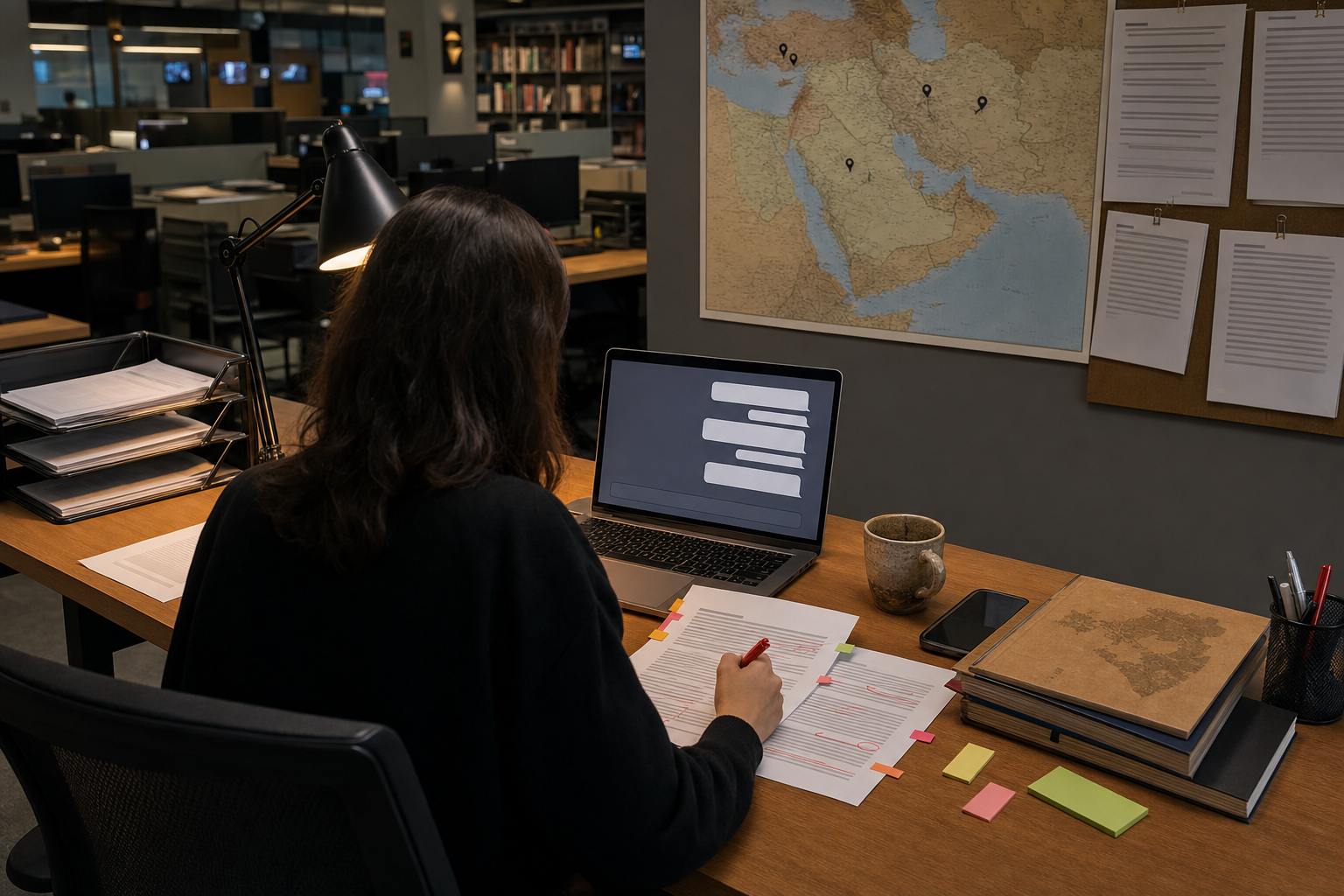
AI tools can now produce Arabic that looks correct at first glance. That is real progress. But across student materials, creator scripts, customer messages, and public content, many outputs still feel thin once a real reader sees them. The grammar may be fine. The wording may not be.
That matters because Arabic is not one uniform audience. A sentence that works in a formal announcement may fail in a classroom handout, a youth campaign, or a support message in a specific country. The debate is no longer whether AI can write Arabic at all. It can. The real question is whether “acceptable Arabic” is enough. My view is that it is not. For many important uses, local editors are still essential.
Where the problem shows up
Most weak Arabic AI output is not obviously wrong. That is why it slips through. It is often clear, grammatical, and safe. It is also often too formal, too generic, or regionally off.
In practice, this shows up in familiar ways:
- A student guide uses stiff institutional Arabic when students need short, friendly instructions.
- A social media post aimed at young users sounds like a government circular.
- A campaign written for one Arab market uses vocabulary or phrasing that feels imported in another.
- A translation from English keeps the original structure, so the Arabic sounds technically correct but unnatural.
None of these failures may look dramatic on a dashboard. But readers notice them quickly. They read more slowly. They trust the message less. Sometimes they stop reading altogether.
Grammar is the easy part
Many teams still treat editing as a final grammar check. In Arabic AI work, that is too narrow. The hardest part is not fixing verbs or punctuation. The hardest part is choosing the right register, the right level of directness, and the right local framing for the audience.
A local editor does more than correct sentences. A good one decides whether the text should stay in Modern Standard Arabic, move closer to everyday usage, or use a careful mix. That choice changes how the message lands.
For example, a university FAQ, a parenting newsletter, and a creator script may all be written in Arabic, but they do not need the same voice. One may need neutral and clear formal language. Another may need warmth and reassurance. A third may need speed, rhythm, and local familiarity. AI often flattens these differences.
Arabic has shared rules, but not one shared voice
This is where non-specialists often underestimate the issue. Arabic has a strong common written standard, which is useful and important. But real communication still depends heavily on region, age, platform, and purpose.
Even when a text stays in standard Arabic, local expectations matter. A phrase can sound natural in one setting and distant in another. A word can be technically correct but uncommon for the target audience. A tone meant to sound respectful can come across as cold. This is especially true in education, creator content, customer support, and youth-facing communication.
That does not mean every piece should be written in dialect. Often the opposite is true. For a pan-Arab audience, cleaner contemporary standard Arabic may be the best option. But that is exactly the point: someone has to make that judgment deliberately. AI does not reliably know when to stay broad and when to localize.
Why local editors matter more in education and creator work
Two areas show the problem clearly: education and content creation.
In education, clarity beats elegance. Students do not need polished but distant language. They need instructions they can process on the first read. If an AI tool produces Arabic that is formally correct but too abstract, teachers or editors end up rewriting it anyway. The time saved at the start gets lost later.
In creator work, tone is even more fragile. A video intro, caption, podcast outline, or newsletter opening has to sound like it belongs to a real community and platform. If the wording feels borrowed or generic, engagement drops. Audiences are not grading the grammar. They are deciding, in seconds, whether the content feels relevant.
In Arabic, the wrong tone is not a small cosmetic problem. It can change whether a message feels clear, respectful, useful, or credible.
The hidden cost of “good enough” Arabic
There is a temptation to accept AI text that is mostly fine. For internal drafts, that can be reasonable. For public-facing content, the cost is higher than many teams think.
When Arabic feels generic, several things happen at once. Trust weakens. Brand voice disappears. Support content becomes harder to follow. Educational material becomes less usable. The damage is often subtle, but subtle does not mean small.
This matters even more in higher-stakes fields. Health guidance, student advising, legal notices, and public information need more than correct syntax. They need local clarity. A slightly awkward sentence in a marketing post may just reduce clicks. A slightly awkward sentence in guidance content can create confusion.
The fair counterargument
There is a valid case on the other side. AI Arabic is improving fast. For first drafts, summaries, transcription cleanup, translation support, and routine content, it can save real time. Many small teams cannot hire editors for every line. And in some cases, a neutral standard style is exactly what they want.
All of that is true.
It is also true that not every project needs deep localization. A report summary for internal use does not require the same editorial care as a public campaign for teenagers in a specific city. The answer is not to reject AI. The answer is to be honest about where its limits still are.
The strongest case for human editors is not that AI fails completely. It is that AI often misses the final layer that determines whether content actually works for the intended reader.
What local editors actually add
When teams say they want “better Arabic,” they often mean several different things at once. Local editors help sort them out.
- Audience fit: They adjust the language for students, parents, professionals, or general readers.
- Regional fit: They catch wording that feels unfamiliar or imported in the target market.
- Tone control: They make a text warmer, simpler, sharper, or more respectful without making it vague.
- Natural phrasing: They remove literal translations and machine-shaped sentence patterns.
- Context: They know when a message needs cultural sensitivity, institutional caution, or platform-specific style.
This is why local editing should not be treated as a cosmetic final pass. It is a core part of quality control.
A better workflow is human-AI collaboration, not human replacement
The practical model is straightforward. Use AI for speed. Use local editors for accuracy, tone, and audience reality.
That means organizations should do a few simple things before they publish Arabic content:
- Define the audience clearly by country, age group, and use case.
- Decide whether the text should be pan-Arab, locally adapted, or partly dialectal.
- Build glossaries for preferred terms, sensitive terms, and banned phrases.
- Ask editors to review meaning and tone, not just spelling.
- Test high-impact content with real users when possible.
This approach is not anti-AI. It is how AI becomes genuinely useful. The machine handles scale and speed. The editor handles judgment.
The standard should be relevance, not just correctness
Arabic AI will continue to improve. It will become smoother, faster, and more flexible. But language is still shaped by community, habit, and context. That is why local editors remain necessary.
If your goal is only to produce readable Arabic, AI can already help a lot. If your goal is to reach Arabic-speaking students, educators, and creators in a way that feels accurate, natural, and trusted, human local editors are still doing the decisive work.
The useful question is not whether AI can write Arabic. It can. The useful question is whether the final text sounds like it belongs to the people it is meant for. That is where local editors still make the difference.