When an AI Chatbot Becomes a Security Risk: What the Instagram Account Hacks Teach Everyday Users
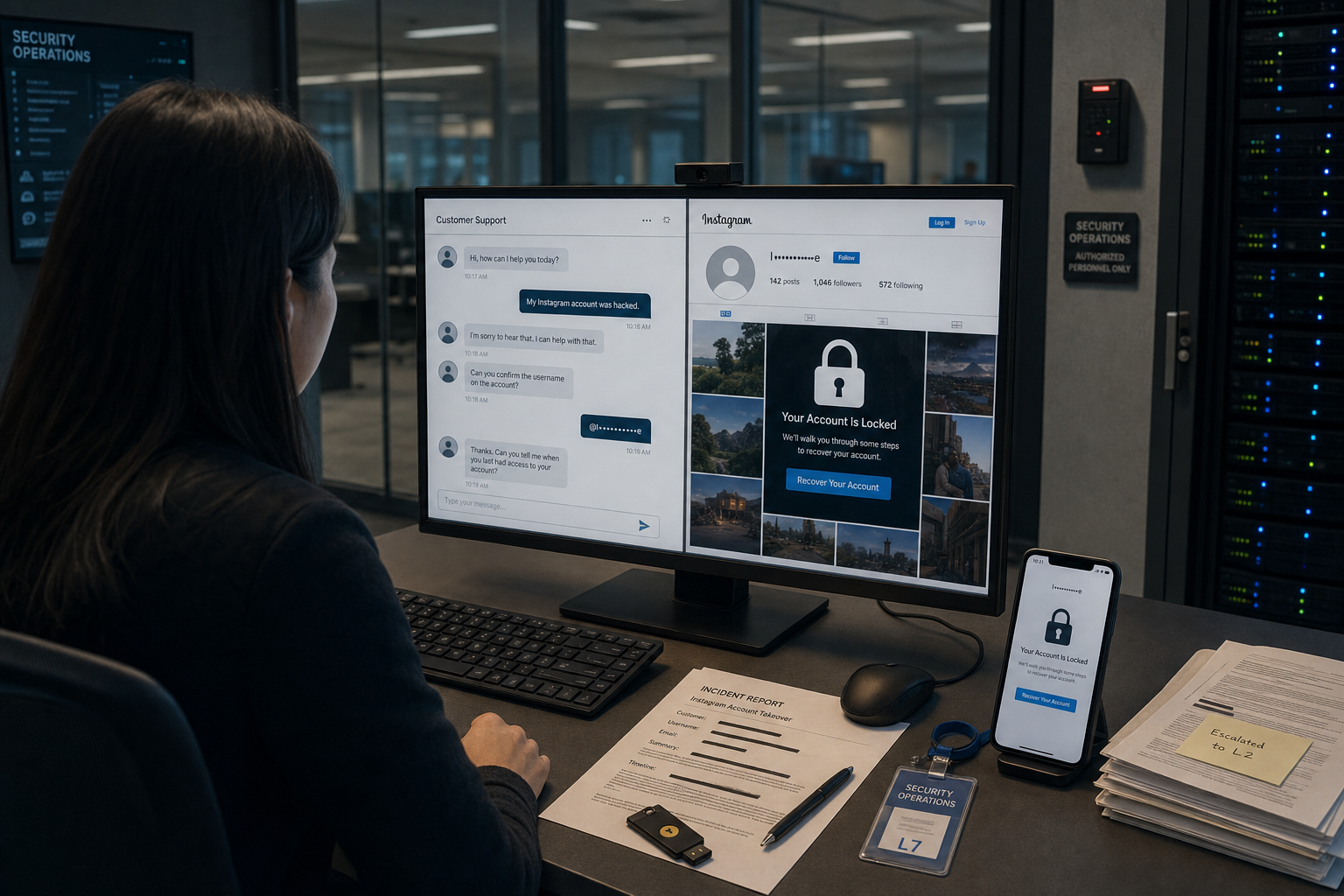
According to reports discussed on Hacker News, and a Meta confirmation cited in those reports, thousands of Instagram accounts were compromised after attackers abused an AI chatbot or a chatbot-based support process. Meta has not publicly released a full technical postmortem, so some details remain uncertain. But the broad lesson is already clear: a tool meant to help users recover accounts can also help attackers take them over if the checks are weak.
That matters because it turns AI safety into an everyday consumer issue. For many people, Instagram is not just a social app. It holds customer messages, brand identity, family photos, and years of personal history. The main tension is simple: companies want faster, cheaper, always-on support, but the more power they give automated systems, the more damage a design flaw can cause at scale.
This was a security failure disguised as convenience
The key point is easy to miss: customer support is part of security. If a chatbot can trigger account recovery, approve a change, or help modify contact details, then it sits on the same critical path as a password screen or two-factor check.
If a chatbot can reset an account, the chatbot is part of the security perimeter.
Some companies still treat support automation as a service upgrade rather than a security surface. Attackers do not care about that distinction. They do not care whether the weak point is a bug in code, an undertrained human agent, or an AI-driven workflow. They care that it works.
There is also a scale problem. A human support team can make mistakes one by one. An automated system can repeat the same mistake thousands of times, at any hour, with very little effort required from the attacker.
Why account recovery is often the weak spot
Platforms usually spend a lot of time protecting the front door. They add passwords, device checks, login alerts, and two-factor authentication. But account recovery is the side entrance. It has to exist because people forget passwords, lose phones, change email addresses, or get locked out while traveling.
That makes recovery both necessary and vulnerable. It often depends on imperfect signals: an old device, a linked email address, profile details, previous activity, or a conversation with support. If an AI system is asked to interpret those signals, and if the rules are too loose, attackers only need to find one path that looks legitimate enough.
The problem is not that the system “wanted” to help attackers. The problem is that it may have been too easy to manipulate, too eager to resolve edge cases, or given too much authority without enough independent verification.
Why ordinary users should care
For a teenager, a stolen Instagram account can mean private messages and years of photos in someone else’s hands. For a small business, it can mean lost sales, fake offers sent to customers, and days without access to an audience. For a creator, it can mean impersonation, damaged reputation, and lost income.
Then there is the trust problem. Once users believe support tools can be manipulated, they become less sure which recovery emails, alerts, or prompts are real. That confusion helps scammers. When the official process feels unreliable, phishing gets easier.
This is why the story matters beyond one platform. It shows that AI risk is not only about biased outputs or strange chatbot answers. It is also about whether automation is being placed in sensitive parts of digital life without the right limits.
What everyday users should do now
Most users should not panic. But they should treat account recovery with the same seriousness as passwords. If reports like this are accurate, a secure account is not just about stopping a bad login. It is also about making recovery harder to abuse.
- Turn on two-factor authentication. If Instagram offers an authenticator app option, use that instead of SMS when possible.
- Secure the email account linked to Instagram. Your email is often the real master key. Give it a strong password and two-factor protection too.
- Check old recovery details. Remove phone numbers or email addresses you no longer control.
- Save backup codes. Store them somewhere safe before you need them.
- Review login alerts and connected devices. If something looks unfamiliar, act quickly.
- Be careful with urgent support messages. Confusion around recovery systems creates a better environment for phishing.
- If you run a business account, document ownership. Keep records of linked email addresses, ad billing details, and previous settings in case you need to prove control later.
None of these steps is perfect. But together they make it harder for a weak support interaction to turn into a full account takeover.
The bigger responsibility belongs to platforms
Users can improve their own habits, but the larger duty sits with the platform. People cannot inspect an AI support system from the outside. They can only suffer when it fails.
My view is straightforward: AI chatbots are fine for answering questions, triaging cases, and guiding users through routine problems. They should not be the final authority for high-risk account changes unless strong, separate verification is in place.
That means practical design choices, not abstract principles:
- Limit the bot’s authority. A chatbot can explain recovery options without directly approving sensitive changes.
- Require stronger checks for risky actions. Changing an account email, phone number, password, or two-factor settings should trigger step-up verification.
- Use delays and alerts. If a key recovery detail changes, notify the old contact points and give the real user time to stop it.
- Watch for abuse patterns. Rate limits, anomaly detection, and repeated-attempt monitoring matter in support systems too.
- Escalate suspicious cases to trained humans. Not every edge case should be handed back to automation.
- Explain the official process clearly. Users need to know what real support will and will not ask for.
In short, platforms should separate customer service from identity proofing. Those tasks are related, but they are not the same. A bot can be good at one and dangerous at the other.
The fair counterpoint
There is a real argument on the other side. Large platforms handle enormous volumes of support requests. Human support is expensive, inconsistent, slow, and also vulnerable to social engineering. AI tools can help users faster, operate across languages, and reduce long waits for routine issues.
It is also true that too much friction can hurt legitimate users. People lose phones. Some do not have easy access to government ID. Some live in places where support options are limited. A rigid recovery process can lock out the right person as effectively as it blocks the wrong one.
Those are valid concerns. But they do not justify giving a chatbot broad power over account ownership. They justify building layered recovery systems that give honest users more than one route back in, while giving attackers more than one barrier to get through.
What this teaches us about AI more broadly
Public discussion about AI often swings between hype and distant catastrophe. Stories like this point to the more useful middle ground. The important question is not whether AI is good or bad in the abstract. It is where companies are putting it, what powers it has, and what happens when it gets something wrong.
When AI tools are connected to identity, payments, healthcare, hiring, or content moderation, small design errors stop being small. They become security problems, trust problems, and governance problems.
That is why this case matters beyond Instagram. It reminds us that convenience features are never just convenience features once they sit near sensitive actions. At that point, they deserve the same scrutiny as any other security-critical system.
A practical bottom line
Everyday users should treat social accounts more seriously than many still do. If an account holds your business, your audience, or your personal history, secure it before something goes wrong.
And platforms should stop treating AI support as a harmless layer of polish. If a chatbot touches account recovery, it is part of the security system. It should be designed, tested, and limited that way. That is not an anti-AI position. It is basic responsibility.