What AI Still Can't Do in a Team Meeting
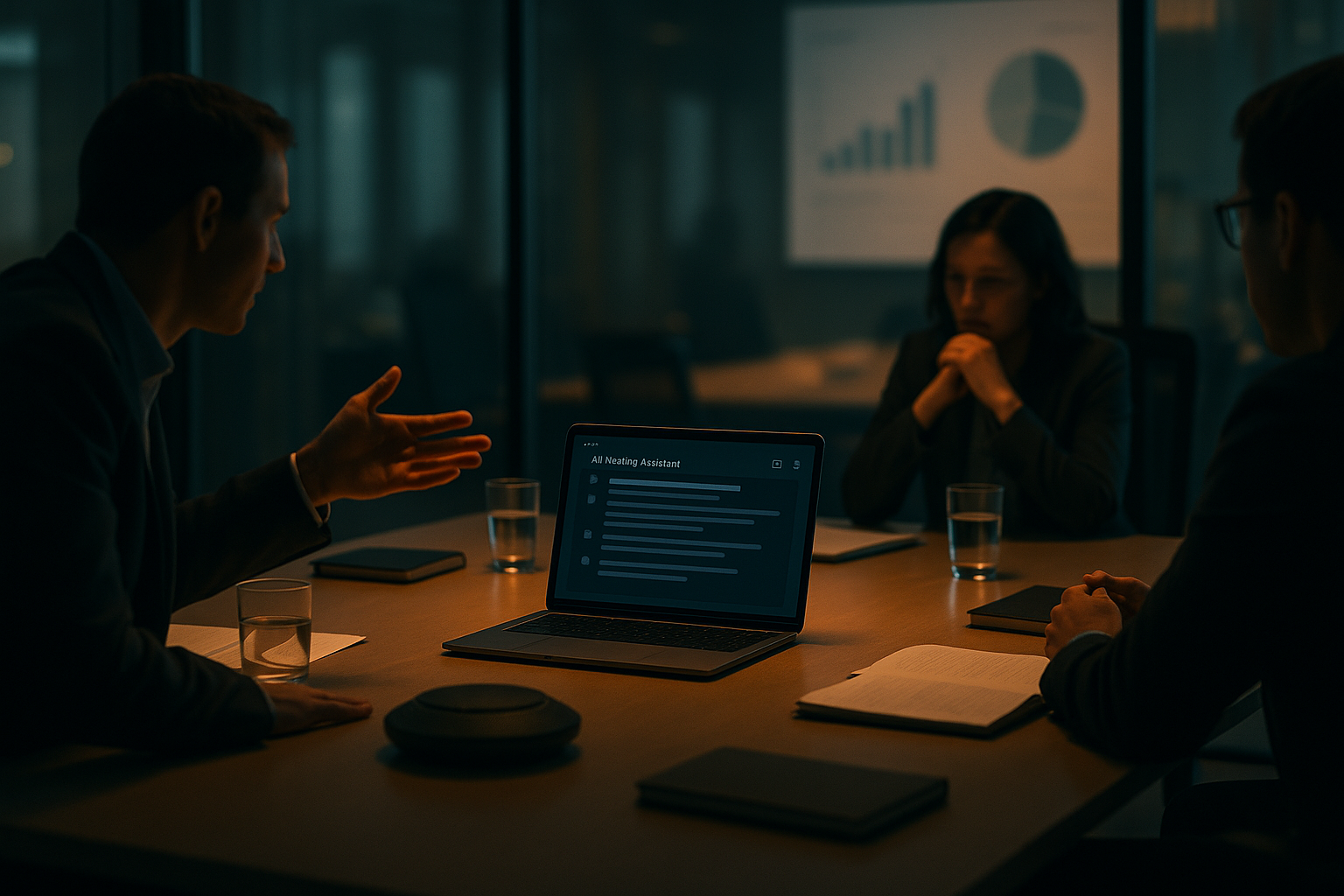
AI tools now draft agendas, transcribe discussions, summarize decisions, and turn loose conversation into tidy action items. At the same time, a recent online discussion among developers about why senior engineers often struggle to communicate their expertise pointed to a bigger issue: knowing something is not the same as helping other people understand it. That matters well beyond software. The same problem shows up in classrooms, management reviews, editorial meetings, design critiques, and nonprofit boards.
The debate is simple enough to state and hard to settle in practice. If AI can organize information so well, can it also close the communication gap inside teams? My view is that it can help around the edges, and sometimes a lot, but it still cannot reliably do the most important work in the room. Team meetings are not just about moving information. They are about judgment, trust, timing, disagreement, and accountability.
Meetings are not mainly about notes
A transcript can tell you what was said. A summary can tell you what looked important. But many meetings succeed or fail because of things that never appear clearly in either one.
Take a product meeting. The written recap may say, “Team aligned on launching next month.” What it may not capture is that the operations lead hesitated before agreeing, the designer stopped pushing back after a senior manager cut in, and the engineer who said “that should be fine” really meant “that will probably break under pressure.” The record looks clean. The reality is unstable.
This is where many teams confuse documentation with understanding. AI can improve the first. It does not reliably guarantee the second.
The hard part of a meeting is rarely writing down the words. It is making sure the right things can be said, heard, and acted on.
Expertise is often compressed, local, and hard to translate
The developer debate that inspired this topic is useful because it highlights a common misconception. When senior people communicate badly, the problem is not always that they are careless or vague. Often their knowledge is compressed. It includes edge cases, past failures, political constraints, hidden dependencies, and tradeoffs that took years to learn.
AI can help unpack some of that. It can rewrite technical language in simpler terms. It can turn a long explanation into bullet points. It can suggest examples for a less experienced audience. Those are real benefits.
But there is another layer. In a live meeting, someone has to decide which part of that knowledge matters now, how directly to say it, what context other people are missing, and whether the room is ready to hear the warning. That is not just a language task. It is a social and organizational judgment task.
For example, a senior engineer may know that a project risk is technically manageable but operationally dangerous because another team is already overloaded. A teacher may know that a parent’s silence means confusion, not agreement. An editor may know that a writer says “I can revise that” when the real message is “the premise is still wrong.” These are not mystical insights. They come from context, history, and attention.
What AI can do well in meetings
It would be a mistake to swing too far in the other direction and pretend AI has little value here. It already does.
- Before a meeting: it can summarize past documents, surface open questions, prepare briefing notes, and help people who need more time to process information.
- During a meeting: it can capture decisions, flag unclear owners or deadlines, and help multilingual or remote teams review what was said.
- After a meeting: it can generate action lists, compare decisions with earlier commitments, and reduce the common problem of “I thought we agreed on something else.”
These are not small improvements. In badly run organizations, better records alone can save time and reduce confusion. For non-native English speakers, meeting summaries can also make discussions more accessible by giving people a second chance to review fast-moving exchanges.
So the argument is not that AI has no place in collaboration. It is that teams should be precise about where its strengths end.
The gap is not intelligence alone. It is accountability.
One reason meetings matter is that they produce commitment. Someone raises a concern. Someone else answers for the plan. A manager accepts a tradeoff. A team member agrees to deliver by a date. That chain of responsibility is part of the meeting itself.
AI systems do not carry that responsibility. They can present options, summarize positions, and infer likely next steps from previous patterns. They do not own the consequences if the summary is too neat, the risk is understated, or a minority view disappears into the phrase “team aligned.”
This matters because many organizational failures are not failures of information. They are failures of candor. People soften objections. Junior staff defer too early. Managers mistake silence for consent. A clean summary can actually make this worse by turning unresolved tension into an official-looking record.
The strongest counterpoint
A fair objection is that many meetings are poor use of human time anyway. Routine check-ins, status updates, and recurring coordination work often do not need deep emotional intelligence or subtle facilitation. If AI can compress these meetings or replace parts of them, that is a gain.
That is true. In highly structured settings, AI may cover most of the real task. A daily project update, a standard client handoff, or a weekly administrative review can benefit from strong automation. And as systems improve, they may get better at spotting contradictions, missing dependencies, or imbalances in who gets heard.
But even in those cases, there is a limit. Pattern detection is not the same as understanding why a group is avoiding a point, why one person’s wording signals risk, or why a formally “efficient” decision may fail once it reaches the wider organization. That last part still depends on human judgment.
The real risk is polished misunderstanding
The biggest danger is not that AI will take over every meeting. It is that teams will mistake smoother outputs for better collaboration.
A generated summary has authority because it looks complete. It arrives quickly. It sounds neutral. It can be copied into project tools and forwarded up the chain. But if it flattens disagreement, misses a hidden concern, or overstates clarity, it can lock in a false story about what happened.
This is especially risky in mixed-language teams or organizations with power distance. People may speak indirectly for cultural, professional, or personal reasons. A strong human facilitator notices that. An automated summary may not. It may privilege the clearest speaker, the most direct phrasing, or the most common vocabulary. That can turn a record into a distortion.
What teams should protect
If organizations want better human-AI collaboration, they should protect the parts of meetings that create real understanding.
- Translation: someone must turn expert judgment into language others can use without losing the important nuance.
- Challenge: someone must ask what the room is avoiding, not just what it is deciding.
- Commitment: someone must make sure decisions have named owners, clear tradeoffs, and visible dissent where dissent remains.
In practice, that means using AI heavily for preparation and follow-up, but not treating it as a substitute for facilitation. It also means reviewing AI-generated summaries while the meeting is still fresh, correcting them openly, and making disagreement explicit instead of smoothing it away.
The meeting skill that matters more now
As AI gets better at drafting and summarizing, human communication becomes more valuable, not less. The scarce skill is no longer just producing text. It is helping a group face reality together.
That is why this topic matters beyond technology teams. In any field, the people who will stand out are the ones who can explain hard things clearly, notice what is not being said, and turn loose discussion into honest agreement. AI can support that work. It still cannot reliably do it for us.
The practical takeaway is simple: use AI to handle the paperwork of meetings, but do not confuse paperwork with alignment. A team meeting works when people leave with shared understanding, not just shared notes.