Verification Is the New Digital Literacy
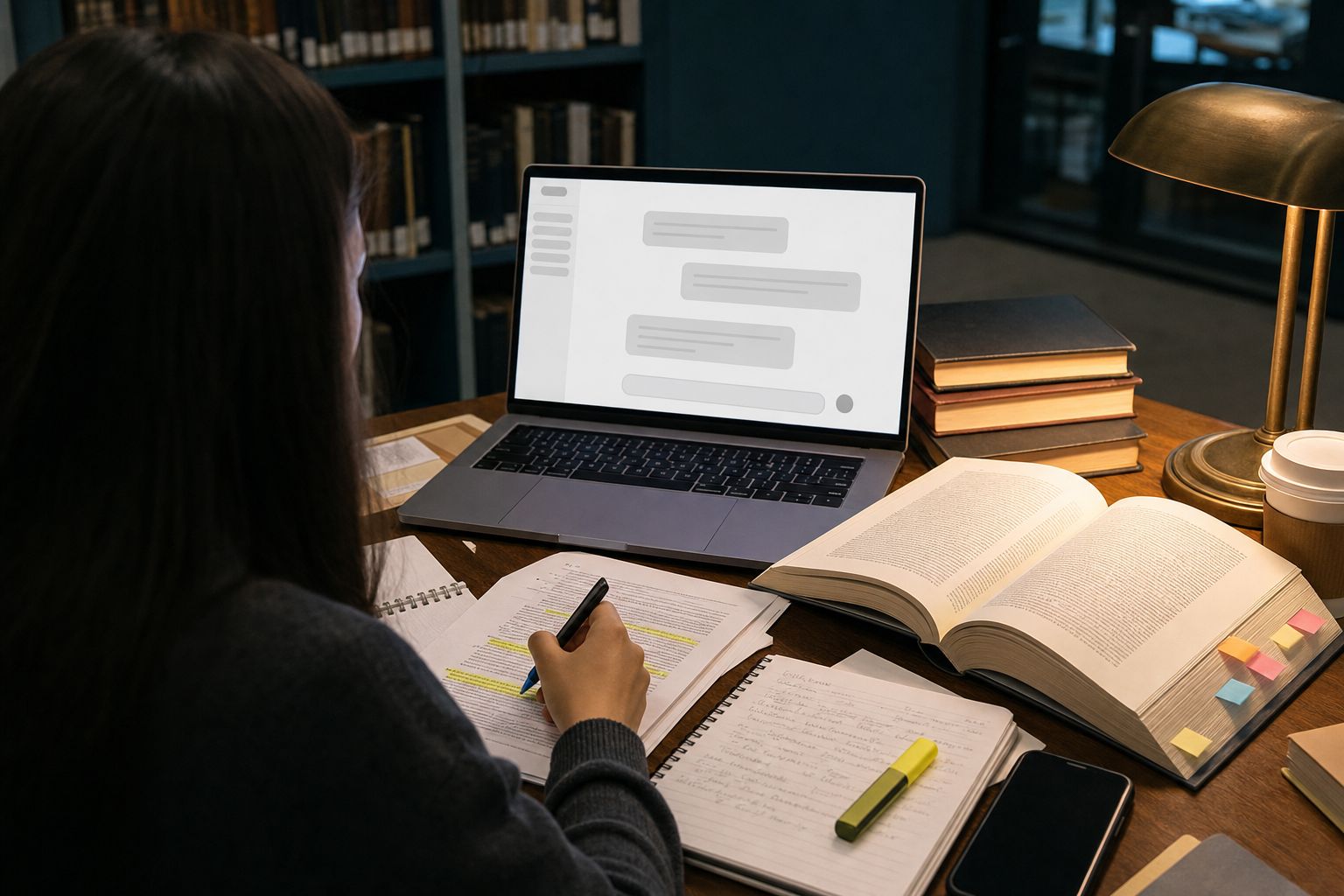
In recent months, two AI stories have been unfolding at the same time. One is hopeful: reports and online discussions have suggested that large language models, including systems from OpenAI, may help researchers explore hard problems, even in areas such as discrete geometry. The other is much more common: students, workers, and readers ask chatbots for facts, summaries, and explanations, then find that some answers are smooth, useful, and wrong. These are different settings, but they raise the same question: how do we check what is true?
That question matters because AI changes how people consume information. A search engine used to make you compare links. A chatbot gives you one polished answer and invites you to stop there. The main tension is clear. AI saves time and can expand access to knowledge, but it also makes weak claims look finished and reliable. My position is straightforward: in the AI era, verification is no longer a specialist habit. It is a basic literacy.
Fluency is not evidence
The fact is that current AI systems can be very useful. They can summarize long articles, explain concepts in plain language, suggest research paths, and help users find terminology they did not know before. For many people, especially beginners, that is a real benefit.
The problem is that usefulness and truth are not the same thing. Large language models generate answers by predicting patterns in text. They do not independently confirm that a citation exists, that a statistic is current, or that a claim is fair in context. Sometimes they are right. Sometimes they are partly right. Sometimes they invent details that sound perfectly plausible.
This is not a small technical flaw. It changes user behavior. When an answer sounds confident, many people lower their guard. They copy the paragraph into notes, slides, homework, or a meeting document. The error then moves from one screen into other forms of authority.
That is why verification matters more now than it did in the early web. The old internet often looked messy, so readers knew they had to be cautious. AI answers often look clean, organized, and neutral. That presentation can hide uncertainty.
Even in math, the proof still matters
The recent discussion around AI and discrete geometry is a useful example. Some reports and claims suggest that language models can help researchers notice patterns, propose conjectures, or point toward lines of attack in difficult problems. If that holds up, it is important. It shows that AI can be more than a writing aid.
But it does not cancel the need for verification. In mathematics, a helpful hint is not a theorem. A pattern is not a proof. A proposed argument still has to survive formal checking by human experts. The same logic applies elsewhere. In science, a model output is not a result until it is tested or replicated. In journalism, a summary is not a fact until it is sourced. In education, a neat explanation is not reliable until the student can trace it back to evidence.
This is the deeper lesson from the last six months of excitement around large language models. The promise is real, but the standard of truth has not changed. If anything, it has become more important to defend.
From digital literacy to verification literacy
For years, digital literacy meant learning how to search, compare websites, spot scams, and judge whether a source looked credible. Those skills still matter. But AI compresses the process. The comparison step disappears unless the user puts it back in on purpose.
That is why verification should now be taught as a first-step habit, not a last-step correction. Before sharing a claim, citing it in class, or using it in work, people should ask: where did this come from, and how can I check it?
This is not only a school issue. It affects offices, newsrooms, nonprofits, and families. A manager pastes an AI summary into a briefing note. A student uses a chatbot citation in an essay without opening the source. A reader asks for a quick explanation of a breaking news story and gets a confident answer built on incomplete reporting. In each case, the risk is the same: the tool reduces friction, and the user mistakes that reduction for reliability.
A practical verification habit
The good news is that verification does not need to become an elaborate ritual. For most everyday cases, a short routine is enough.
- Isolate the claim. Turn a long answer into one sentence you can actually test. If the chatbot gives you five paragraphs, ask what the core factual claim is.
- Trace the source. If the answer cites a study, article, law, or expert, open it. Do not trust a citation until you have seen that it is real and says what the answer claims.
- Find one independent check. Look for a second source that did not simply copy the first. For serious topics, use one primary source and one reliable secondary source.
- Check date, scope, and context. Many false claims are not fully invented. They are outdated, exaggerated, or stripped of conditions. Ask when, where, for whom, and under what limits the claim is true.
- Test for uncertainty. Ask what evidence might challenge the claim. If a model cannot name uncertainty, exceptions, or debate, that is a warning sign.
Consider a classroom example. A student asks for sources on social media and teen mental health. The chatbot produces a convincing paragraph and a list of studies. Verification means checking whether the studies exist, whether they show correlation or causation, what age group they cover, and whether the findings are contested.
Consider a news example. An AI tool says a government has “banned” a platform. Verification means checking the original announcement, the date, the legal scope, and whether the restriction applies to all users or only to official devices. One word can turn a partial policy into a false headline.
Consider a workplace example. A model says a market regulation “requires” a company to do something. Verification means reading the regulator’s own text or a trusted legal summary, not relying on the model’s phrasing.
The fair counterpoint
There is a reasonable objection here: not every task deserves a fact-checking exercise. That is true. If you use AI to brainstorm headlines, rewrite an email, or generate interview questions, the stakes are lower. Speed matters, and full verification may not be necessary.
There is another fair point. AI can sometimes help with verification too. A model can suggest what to check, identify weak points in an argument, translate a technical source, or compare two versions of a claim. Used well, it can support good judgment.
But those counterpoints do not weaken the main argument. They sharpen it. The issue is not whether AI should be used. It is whether the user understands when verification becomes mandatory. If a claim affects grades, money, reputation, health, policy, or public understanding, “the chatbot said so” is not a standard.
It is also a mistake to think that asking three chatbots the same question counts as verification. Agreement between models may reflect shared training data, repeated web errors, or the same popular simplification. Cross-checking only works when the sources are genuinely independent.
What schools and workplaces should teach now
If verification is a new literacy, it needs to be taught directly. Telling people to “be careful” is not enough. They need a routine they can practice.
- In schools, students should be asked to show the source trail behind factual claims, not just submit a finished paragraph.
- In universities, research assignments should reward source quality, context, and evidence of cross-checking, not only polished writing.
- In workplaces, AI-assisted memos and reports should include links or references for any non-obvious factual claim.
- In media habits, readers should learn to pause before sharing screenshots, summaries, and AI-generated explainers about breaking events.
This is not a burden added to modern life for the sake of caution. It is the skill that lets people use powerful tools without becoming dependent on their mistakes.
Use AI for speed. Use verification for truth.
The best AI users will not be the fastest prompters. They will be the people who know how to separate a useful lead from a false answer. The web taught us how to find information. The next step is learning how to check it before we trust it. That is what digital literacy means now.