Small Multimodal Models, Big Classroom Questions: What New AI Releases Mean for Teachers on Limited Budgets
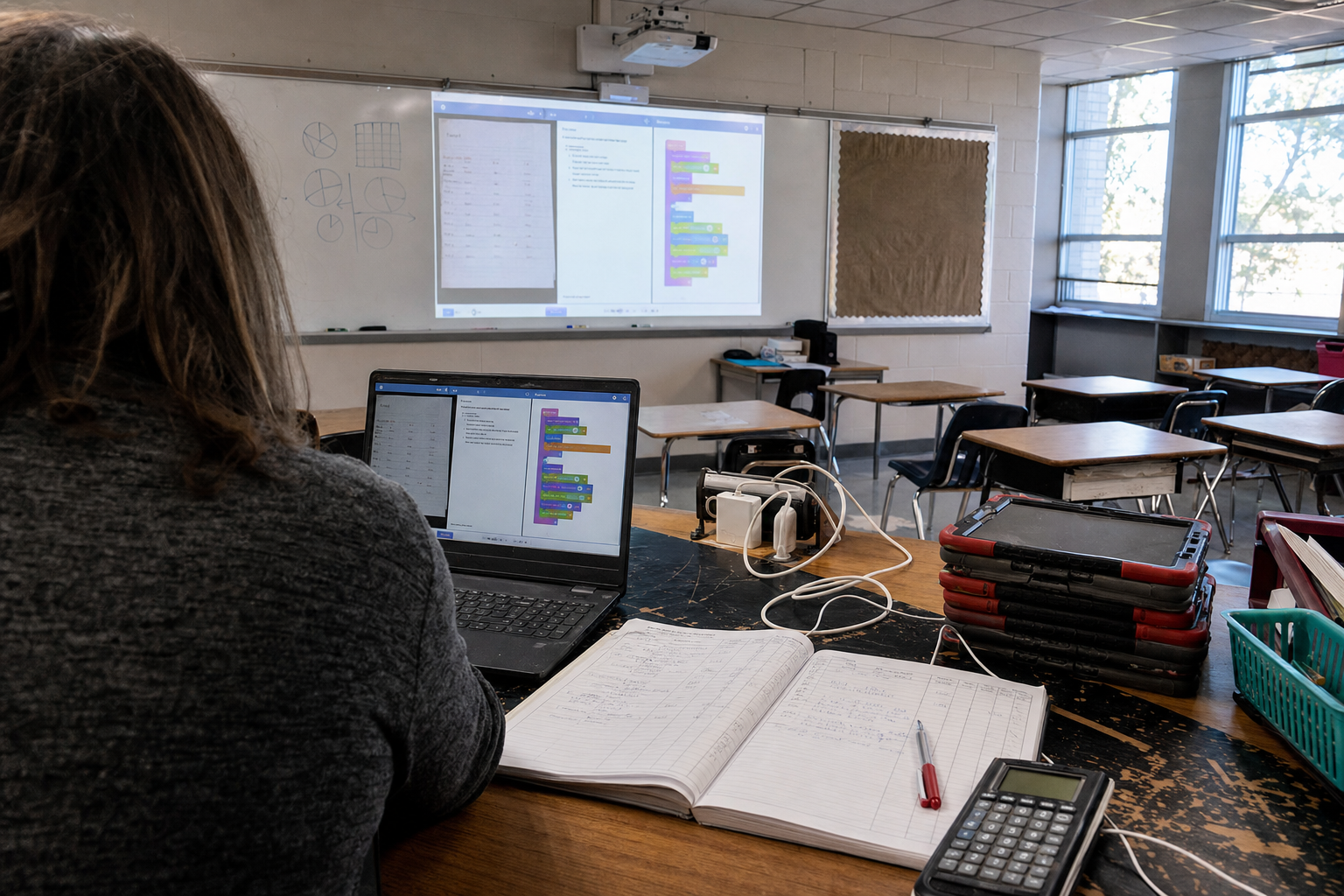
Recent AI releases and developer discussion around compact models, including reports of a Gemma 4 12B unified multimodal model and tools such as MAI-Code-1-Flash, point to a shift that matters for schools. AI systems that can work with text, images, and sometimes code are getting smaller, faster, and cheaper. For teachers and districts that cannot pay for premium AI access at scale, that may be more important than the latest frontier model.
That matters because most schools do not operate in ideal conditions. They work with tight budgets, old devices, limited IT support, and strict privacy duties. The main debate is not whether these smaller models are technically impressive. It is whether they can give teachers practical help without adding new checking work, new compliance problems, or new pressure to trust weak output. My view is simple: schools should pay close attention to these models, but use them for narrow, supervised jobs, not as low-cost replacements for teaching judgment.
The right question is not whether a model is powerful. It is whether it can save teacher time without lowering classroom standards.
What these releases actually signal
It is worth separating the signal from the hype. Specific benchmark claims around new models can change, and some details first circulate through developer forums before broader reporting catches up. But the larger trend is clear enough: useful AI capability is moving down the cost curve.
“Multimodal” means a model can process more than one kind of input, usually text and images, and sometimes audio or code-related tasks. In school terms, that could mean turning a photo of a worksheet into editable text, generating reading support from a diagram, or helping staff organize visual materials. A release like MAI-Code-1-Flash points to a related pattern: smaller, faster models are being tuned for specific jobs rather than trying to do everything.
That is the factual shift. The interpretation is where the education debate begins. If capability becomes cheaper, schools may have more options. But cheaper access does not automatically mean better teaching, fairer systems, or easier implementation.
Why smaller models may matter more than bigger ones in education
Most teachers are not waiting for an AI system that can ace a difficult benchmark. They are looking for help with repetitive work. They want to adapt a reading passage to a lower level, translate a family notice, convert a scanned handout into accessible text, or draft a quiz from class notes. These are ordinary tasks. They also consume time.
Large frontier systems can do many of these things well, but they often come with subscription costs, usage limits, data-sharing concerns, or procurement barriers. Small multimodal models raise a different possibility: some of that work might be done more cheaply, sometimes on local infrastructure, and sometimes through tools built for a school’s exact workflow.
That matters even more for underfunded schools. A district with strong procurement teams and enterprise contracts can absorb expensive tools more easily. A school with limited funds cannot. In that environment, the practical value of a “good enough” model can be higher than the theoretical value of the best available model.
Where the classroom value could be real
The strongest case for small multimodal models is not fully automated teaching. It is support work around teaching.
- Converting materials: A teacher photographs an old worksheet and gets editable text for revision, translation, or accessibility review.
- Differentiating resources: A lesson handout is quickly rewritten for different reading levels, with the teacher checking the result.
- Family communication: School notices can be drafted in simpler English or translated into common home languages before human review.
- Visual support: Images, diagrams, and classroom documents can be turned into short explanations or captions for students who need extra support.
- Staff productivity: A faster code-focused model may help an instructional technologist automate a spreadsheet, clean data, or build a simple internal tool.
These are not glamorous uses, and that is exactly why they matter. Schools do not need more AI theater. They need less friction in everyday work.
There is also a privacy argument. If a smaller model can run in a controlled environment rather than sending every task to an external cloud service, some schools may gain more control over student and staff data. That does not remove compliance duties, but it can change the options.
The budget promise is real, but it is easy to oversell
Advocates of smaller models are right about one thing: lower compute needs can lower cost. Open-weight or lightweight systems can reduce per-use fees, give districts more negotiating power, and make pilot projects possible without large contracts.
But schools should be careful with the word “cheap.” A 12B multimodal model is smaller than a frontier system, not weightless. Running it well may still require capable hardware, setup work, monitoring, updates, and staff who know what they are doing. A district that saves money on API fees can still lose money through integration delays, unreliable performance, or teacher time spent correcting bad outputs.
There is another hidden cost: training. If the tool is good but the rollout is sloppy, teachers end up doing two jobs at once, teaching and quality control. That is not efficiency. It is cost shifting.
What schools should worry about before they get excited
Smaller multimodal models can be useful. They can also fail in predictable ways.
- Image errors: Low-quality photos, handwritten notes, science diagrams, and mixed-language materials can produce inaccurate output.
- Weak guardrails: Smaller or less mature systems may have less robust safety tuning than major commercial platforms.
- Bias and uneven performance: Translation quality, dialect handling, and reading-level adaptation may vary across student groups.
- Overtrust: If a system sounds confident, busy staff may skip verification.
- Procurement confusion: Vendors may market “private” or “school-safe” AI without explaining storage, retention, or review processes clearly.
These risks are not abstract. In a classroom, a small error can become a real problem fast. A mistranslated family message can damage trust. A poor simplification of a text can remove key meaning. An incorrect explanation of a diagram can confuse students before a test. Teachers can correct these errors, but only if the workflow leaves time for correction.
The strongest counterpoint: bigger systems may still be the safer choice
Supporters of enterprise AI will make a fair argument here. Larger commercial systems often perform better, especially on complex reasoning, multilingual tasks, and hard edge cases. They may also come with stronger uptime guarantees, better accessibility features, more mature documentation, and clearer support channels. For some districts, paying more for a well-supported service may be less risky than hosting or customizing a smaller model badly.
That counterpoint should be taken seriously. “Small” does not mean “safe,” and “open” does not mean “easy.” A school with no technical capacity may do better with a limited, well-governed cloud tool than with a cheaper system it cannot manage properly.
Still, that does not weaken the main case. It sharpens it. Schools should not ask whether small models can replace established platforms everywhere. They should ask where small models are good enough to solve specific problems at a reasonable cost.
What responsible adoption looks like
The best first use of these models is staff support, not student judgment. Use them to reduce clerical work and improve access to materials. Do not use them, at least at the start, for grading, discipline, mental health screening, cheating accusations, or special education decisions.
A sensible pilot would be modest and measurable. Pick two or three tasks. Define what success means. Check whether the tool saves time after human review, not before it. Track error rates, staff satisfaction, and privacy implications.
- Good pilot areas: worksheet conversion, translation drafts, summary creation from teacher notes, accessibility support, and internal staff automation.
- Poor pilot areas: automated grading, behavior analysis, surveillance, student risk scoring, and any decision that could directly affect a child’s record or opportunity.
If the tool works, expand carefully. If it saves only a few minutes but creates distrust or rechecking burden, stop. Schools do not need to force an AI use case just because the price is lower than last year.
The bottom line for teachers and school leaders
The most important AI news for education may not come from the largest model release. It may come from the moment smaller multimodal systems become reliable enough to handle ordinary school work at a price real schools can bear.
That is promising, especially for classrooms that have been priced out of the AI conversation. But the promise is narrow. Small multimodal models are best seen as practical assistants for preparation, adaptation, and access. They are not ready-made teaching substitutes, and they are definitely not a shortcut around professional judgment.
For schools on limited budgets, that is the practical rule to remember: adopt AI where it removes routine friction, keep humans responsible for meaning and decisions, and ignore any pitch that treats lower cost as proof of classroom value.