Arabic Prompt Clinic: 10 Before-and-After Prompts for Better Summaries, Emails, and Lesson Plans
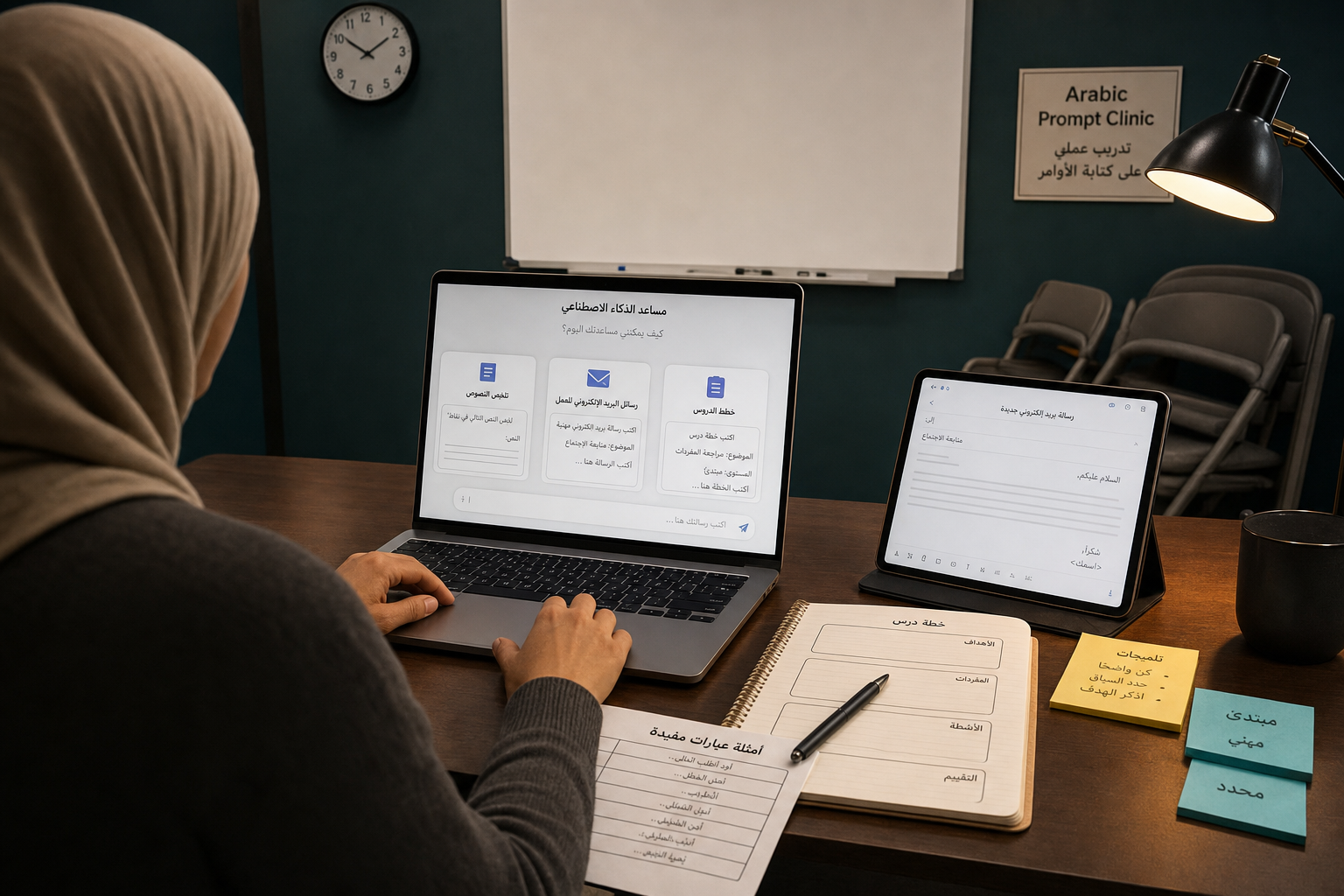
Arabic-speaking beginners are using AI tools for real tasks now, not as a novelty. They want quick summaries for study, better emails for work, and usable lesson plans for class. The problem is that much of the advice they find is either too abstract or too technical. So they write vague prompts, get vague answers, and often assume the tool is the issue.
This matters because the gap is often not intelligence or effort. It is wording. The main debate is straightforward: should people have to learn prompting at all? In a better product, probably less than they do today. But in current tools, a few clear instructions in Arabic still improve quality a lot. My view is simple: beginners do not need “prompt engineering.” They need practical examples that show how small changes produce better results.
The pattern behind all 10 examples is basic. A stronger prompt usually answers five questions:
- What is the task? Summarize, compare, draft, explain, plan.
- Who is it for? A student, a manager, a professor, a client, a child.
- What form should it take? Bullet points, two paragraphs, lesson sections, email format.
- How long should it be? Five points, 120 words, 40 minutes.
- What should it avoid? Guessing, invented numbers, excessive formality, private details.
Summaries
1. Turn a vague summary request into a student-friendly brief
Before
لخّص هذا المقال.
After
لخّص المقال التالي في 5 نقاط واضحة بالعربية الفصحى السهلة. ابدأ بجملة واحدة تشرح الفكرة الرئيسية، ثم اذكر 4 نقاط داعمة. تجنّب النسخ الحرفي، وإذا كانت هناك معلومة غير واضحة أو غير مؤكدة فاذكر ذلك.
The second version does three useful things: it names the reader, sets the length, and tells the system not to hide uncertainty. That usually cuts filler and makes the result easier to study from.
2. Ask for an executive summary, not just “a summary”
Before
اعمل ملخص للنص.
After
اقرأ النص التالي وقدّم ملخصًا تنفيذيًا من فقرتين لمدير مشغول. الفقرة الأولى: الفكرة العامة. الفقرة الثانية: النتائج أو الأرقام أو القرارات المطلوبة. الحد الأقصى 120 كلمة. إذا لم توجد أرقام مهمة في النص فلا تضفها.
This works because it forces prioritization. Many AI summaries waste space on background. A manager usually needs the main point and the actionable details first.
3. Make comparison summaries useful for learning
Before
قارن بين النصين.
After
قارن بين النصين التاليين في 3 أجزاء واضحة: أوجه الاتفاق، أوجه الاختلاف، ولماذا يهم هذا الفرق لطالب مبتدئ. استخدم نقاطًا قصيرة، ولا تنسب رأيًا إلى أي نص إذا لم يذكره صراحة.
Comparison prompts often produce loose observations. Adding structure and the line about why the difference matters turns the result into a study aid, not just a list.
Emails
4. Write a better extension request
Before
اكتب إيميل أعتذر فيه وأطلب تمديد.
After
اكتب رسالة بريد إلكتروني مهنية بالعربية إلى أستاذ جامعي. الهدف: الاعتذار عن التأخر في تسليم المشروع وطلب تمديد لمدة 3 أيام. اجعل النبرة محترمة ومباشرة، واذكر سببًا مختصرًا دون تفاصيل شخصية كثيرة، ثم اختم باقتراح موعد جديد للتسليم.
The better prompt controls tone. Without that, the answer may become too dramatic, too long, or oddly formal. Most academic emails work best when they are calm, brief, and specific.
5. Structure a customer-service reply around action
Before
رد على العميل.
After
اكتب ردًا قصيرًا لعميل اشتكى من تأخر الطلب. ابدأ بالاعتذار، ثم اشرح الحالة بجملة واحدة فقط، ثم قدّم حلين واضحين: الاستمرار في الانتظار مع تحديث جديد، أو استرداد المبلغ. استخدم لغة هادئة ومهنية، وتجنّب الوعود غير المؤكدة.
This is better because it follows the logic most customers expect: acknowledge the problem, explain the situation, then offer choices. It also reduces the risk of promising something the company cannot deliver.
6. Keep internal reminders short enough to be read
Before
ذكّرهم بالاجتماع.
After
اكتب رسالة تذكير داخلية قصيرة جدًا إلى فريق العمل بشأن اجتماع يوم الثلاثاء الساعة 10 صباحًا. تضمّن فقط 3 عناصر: الموعد، رابط الاجتماع، وما المطلوب من كل عضو قبل الاجتماع. اجعل الرسالة ودية ومباشرة.
Internal email often becomes wordy for no reason. The three-part structure here makes the result immediately usable, especially in busy teams.
7. Help Arabic speakers write in English with a built-in check
Before
اكتب إيميل بالإنجليزي.
After
اكتب رسالة بريد إلكتروني قصيرة باللغة الإنجليزية إلى مسؤول توظيف للمتابعة بعد مقابلة عمل، ثم قدّم تحتها ترجمة عربية. النبرة: مهنية وواثقة. الهدف: شكر المسؤول، تأكيد الاهتمام بالوظيفة، والسؤال بلطف عن الخطوة التالية.
For many professionals, the issue is not only writing in English. It is checking whether the tone and meaning are right. Asking for an Arabic translation underneath adds a simple layer of verification.
Lesson Plans
8. Build the lesson around age, time, and classroom use
Before
اعمل خطة درس عن الكسور.
After
أنشئ خطة درس مدتها 40 دقيقة عن الكسور لتلاميذ الصف الرابع. قسّمها إلى: هدف الدرس، تمهيد لمدة 5 دقائق، نشاطين رئيسيين، 3 أسئلة للتحقق من الفهم، وواجب منزلي بسيط. استخدم لغة مناسبة للأطفال وأمثلة من الحياة اليومية.
A generic lesson plan may look polished but still fail in class. This version anchors the answer in the realities that matter most: age level, lesson length, and concrete teaching steps.
9. Add real-world constraints instead of designing for an ideal classroom
Before
حضّر درس عن الطاقة.
After
أنشئ خطة درس مدتها 45 دقيقة عن مصادر الطاقة لطلاب المرحلة المتوسطة في مدرسة ذات موارد محدودة. لا تستخدم أجهزة رقمية. اقترح نشاطًا جماعيًا يعتمد على الورق والسبورة فقط، ثم أضف طريقة تقييم سريعة في آخر الحصة.
This is where better prompting becomes practical, not decorative. A lesson plan is only useful if it fits the room you actually teach in.
10. Ask for differentiation when student levels vary
Before
اكتب درس عن الماضي البسيط.
After
صمّم خطة درس مدتها 45 دقيقة عن الماضي البسيط لطلاب يتفاوت مستواهم في اللغة الإنجليزية. تضمّن هدفًا واحدًا واضحًا، شرحًا مبسطًا مع مثالين، تمرينًا أساسيًا للجميع، تمرينًا أسهل للمتعثرين، تمرينًا إضافيًا للمتقدمين، ونموذج إجابة مختصر.
Mixed-ability classes are common, but generic lesson plans often ignore them. This prompt asks for support, stretch, and an answer key, which makes the output far closer to classroom reality.
What the better prompts have in common
- They define the audience. A student, manager, client, professor, or fourth-grader needs a different kind of output.
- They choose a format. Two paragraphs, five bullets, three sections, or a lesson sequence.
- They set limits. Word counts and time limits force better prioritization.
- They add context. Low-resource schools, mixed-ability classes, and bilingual needs change the answer.
- They reduce common errors. “Do not invent numbers” and “mention uncertainty” are small lines with big value.
- They specify the Arabic register when needed. العربية الفصحى السهلة is often safer for school and work than a vague request for “Arabic.” If you want a dialect, say which one.
Where prompt advice can go wrong
There is a fair counterpoint here. Some people turn prompting into a ritual. Every small task becomes a long template, and that wastes time. They are not entirely wrong. If you only want spelling correction or a quick title, a short prompt may be enough.
But that does not weaken the main point. When the task depends on tone, structure, audience, or classroom fit, vague prompts usually create more editing work later. The goal is not to make every prompt longer. It is to make the important parts explicit.
What better prompts still cannot guarantee
- Accuracy. A clean summary can still miss or distort a source, so important material should be checked.
- Natural tone. Some Arabic outputs remain stiff or translated-sounding, especially in formal emails.
- Curriculum fit. A lesson plan may look solid but still miss local standards, class pace, or assessment rules.
- Privacy safety. Do not paste sensitive student, client, or company information unless your policy allows it.
The practical lesson is not complicated. Better Arabic prompts are not a secret skill. They are clear requests shaped around real use. Before you press send, add five things: the task, the audience, the format, the length, and the limits. For most beginners, that one habit will improve summaries, emails, and lesson plans more than any trending prompt formula.