Private AI by Default: What GrapheneOS-Supported Devices Could Mean for Students, Families, and Activists
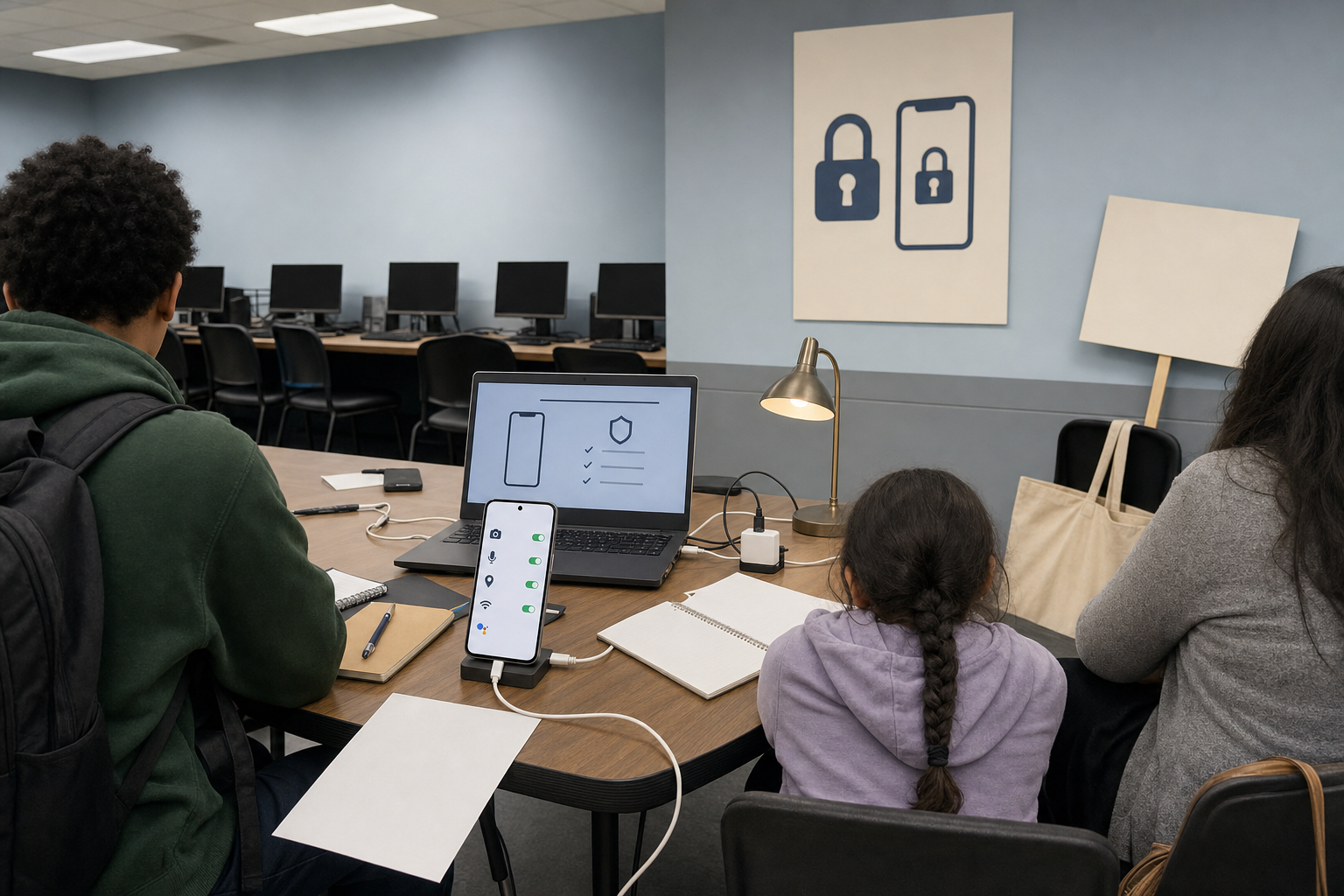
A claim now circulating in privacy and developer circles suggests that more devices capable of supporting GrapheneOS could arrive around 2027. That is not the same as an official product launch, and timelines in mobile hardware often slip. Still, the discussion matters because phones are quickly becoming AI devices by default. The real issue is not just which operating system runs on them. It is whether the next generation of phone AI will keep more of our data on the device, or send more of our lives back to vendors and cloud services.
This is why a technical debate about GrapheneOS deserves wider attention. GrapheneOS is known for a security-first, privacy-first approach to Android. If more hardware can support that model well, ordinary people could get a stronger alternative to the common trade-off in consumer tech: useful tools in exchange for broad data collection. The main tension is clear. Can private, secure AI become a normal consumer option, or will privacy remain a specialist luxury for people with time, money, and technical confidence?
This is bigger than one operating system
GrapheneOS is not important because it is trendy. It matters because it represents a different default. In the usual smartphone model, many AI features depend on constant ties to company accounts, cloud processing, app tracking, and deep system access. In a privacy-first model, the goal is the opposite: keep permissions tight, process data locally when possible, and make it harder for apps and services to collect more than they need.
That difference becomes more important as AI moves into basic phone tasks. Phones now offer transcription, message summaries, photo search, writing help, spam detection, voice features, and increasingly personal recommendation systems. Those features can be helpful. They can also touch some of the most sensitive material on a person’s device: private messages, lecture recordings, children’s photos, health questions, travel patterns, and political conversations.
Private AI by default should mean something simple. The phone should do as much work as it can on the device. If it needs the cloud, it should say so clearly. It should not quietly turn every convenient feature into a new stream of behavioral data.
Today, GrapheneOS is closely associated with Google Pixel devices, largely because Pixels offer strong hardware security and reliable update support. If future devices can support GrapheneOS at a high standard, that would matter for one practical reason: it would reduce dependence on a single hardware line for people who want serious mobile privacy. More choice would not solve everything, but it would be a real shift.
Why students should care
Students are often expected to live through their phones. They record lectures, scan assignments, search sensitive topics, join class groups, store financial details, and use campus apps that know where they are and when they arrive. Add AI features to that mix, and the device starts processing a detailed map of a young person’s academic life, social life, stress, habits, and interests.
A privacy-first phone will not remove all those risks, but it can reduce them. A student using on-device transcription for lectures does not have to send every class recording to a remote server. A local writing assistant does not need to build a profile from draft after draft. Photo search that runs on the device is very different from a service that permanently links personal images to a cloud account.
This matters most when students are exploring vulnerable parts of life: mental health, sexuality, reproductive health, immigration questions, political views, debt, or family conflict. Young people should not need expert-level security knowledge to keep those searches and notes from becoming part of a larger data trail.
There is also a fairness issue here. Wealthier users can often buy premium devices, paid privacy services, and spare time to configure them. Everyone else gets whatever settings a school, app store, or phone maker chose for them. If private AI stays difficult or expensive, the result is simple: the people with the least institutional power get the least privacy.
Why families should care
Families share devices, share photos, share calendars, and often share mistakes. That means family phones hold an unusual amount of intimate data in one place: children’s pictures, school records, voice notes, medical reminders, location histories, shopping habits, and home addresses. AI tools can make all of that easier to manage. They can also make it easier to collect, analyze, and retain.
For many parents, convenience is the strongest argument for built-in AI. Automatic photo organization is useful. Voice-to-text is useful. Spam filtering is useful. Smart reminders are useful. The promise is real. A privacy-first device does not ask families to reject those features. It asks whether they can get the benefits without turning domestic life into a long-term corporate dataset.
That question becomes sharper with children. Kids cannot give meaningful consent to long data histories built from their images, voices, routines, and messages. Yet many consumer products are drifting in exactly that direction. A more privacy-focused phone cannot solve the entire problem, but better defaults can narrow the amount of data collected in the first place.
Families also need security, not just privacy. A phone that limits data collection but misses updates is not a good bargain. This is one reason GrapheneOS gets attention: its supporters care about hard security, not only anti-tracking features. That distinction matters. A private phone that is easy to compromise is not private for long.
Why activists should care
For activists, organizers, and many journalists, privacy is not a lifestyle preference. It can affect harassment risk, employment risk, travel risk, and in some countries, physical safety. Phones are often the weakest point in that chain because they combine identity, location, communications, photos, and contact networks in one device.
AI expands both the usefulness and the danger of that device. Local transcription can help document events quickly. On-device translation can help cross language barriers at protests or community meetings. Searchable notes can help organize evidence. But if those same features depend on cloud syncing, broad app permissions, or hidden retention, they can expose far more than users expect.
This is where a stronger privacy model matters most. Tight app sandboxing, fewer silent background privileges, and better control over network access are not abstract technical wins. They can reduce the chance that one careless install, one overreaching service, or one seized account reveals an entire network of people.
None of this should be romanticized. A secure phone does not make someone safe by itself. It cannot fix risky behavior, phishing, weak passwords, or an informant inside an organization. It also cannot protect data that users willingly upload to insecure services. But better defaults still matter. In security, small reductions in exposure can have very large human consequences.
The case for caution
There are fair objections to the privacy-first ideal, and they should be taken seriously. The first is usability. Many people do not want to think about operating systems, threat models, or app permissions. They want a phone that works with their bank, their school, their relatives, and their favorite apps. Privacy tools that create friction often stay niche.
The second objection is performance. Cloud AI is often stronger than on-device AI, especially for complex language tasks and large-scale search. Some users will accept more data sharing in exchange for faster or more capable tools. That is a legitimate choice, as long as it is a real choice and not the only option offered.
The third objection is public safety. Critics argue that stronger device privacy can also protect criminals. That concern is real, but it should not decide the design of everyday consumer technology for everyone else. Society does not normally require every household lock to be weak in case the police may later need easier access. The same principle should apply to digital life.
There is also a practical warning for privacy advocates. Expanding GrapheneOS support would be good only if the quality stays high. More devices are not automatically better devices. Security depends on hardware design, update commitments, and careful engineering. If “support” means uneven updates, weak components, or confusing user experiences, the promise will be overstated.
What private AI by default should actually look like
If devices with strong GrapheneOS support do become more common, the public should expect more than a niche branding exercise. A serious privacy model for phone AI should include a few basic standards.
- Local-first processing. If a task can run on the phone, it should run on the phone.
- Plain consent for cloud features. If data must leave the device, users should be told clearly before it happens.
- Long, reliable security updates. Privacy claims mean little without fast patching and durable support.
- App compatibility without full trust. People still need banking, school, travel, and family apps. Sandboxing and permission controls matter because most users cannot opt out of those ecosystems completely.
- Reasonable prices. Privacy that only exists at flagship prices will not reach students, parents, or grassroots organizers at scale.
- Simple defaults. Good privacy should not depend on a weekend of forum reading.
That list is not radical. It is what mature consumer technology should already provide when it handles highly personal data.
The real question is who gets privacy
The biggest point here is not about GrapheneOS fans getting more hardware choice. It is about whether privacy survives once AI becomes a basic layer of the phone. If AI is going to summarize our classes, sort our family photos, draft our messages, and help document public life, then the terms of that help matter.
Most people are not trying to disappear. They are trying to live ordinary lives without turning every ordinary action into a permanent data asset for someone else. That is why this debate matters now, before today’s “smart” defaults harden into tomorrow’s normal.
If GrapheneOS-supported devices really do broaden around 2027, that will be worth watching. Not because one operating system will save mobile privacy, and not because every user should switch. It will matter because it tests a better standard: useful AI on a phone, with the user still in charge. That should not be a specialist demand. It should be the baseline.