Model Access Is a Human Issue: Who Decides Which AI Tools People Can Use?
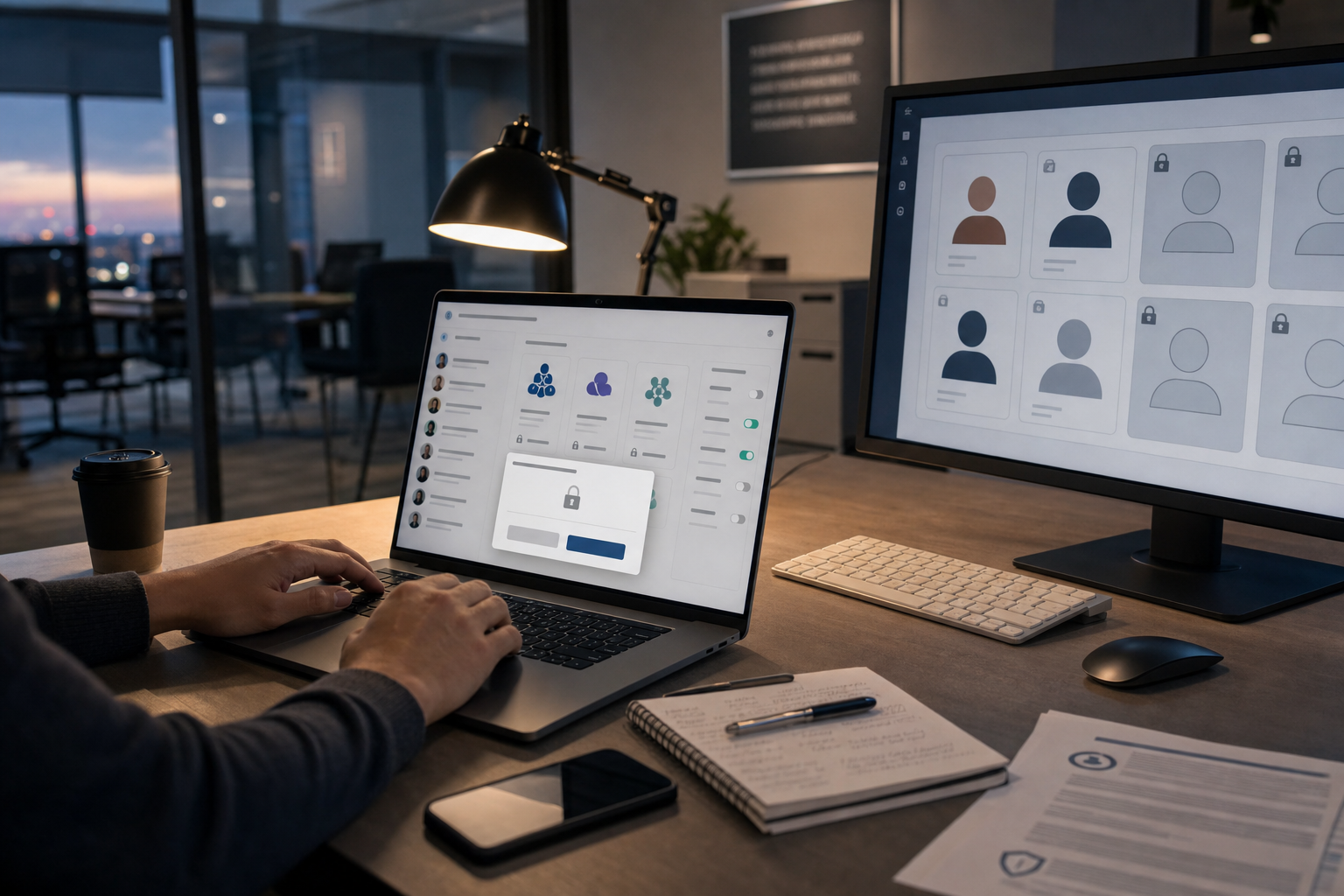
Recent debate around Anthropic model access, cloud platform influence, and possible government pressure has exposed a basic fact: access to AI is not just a product setting. It is a power issue. In this case, some of the public discussion rests on reports, executive comments, and online interpretation rather than a complete public record, so some claims remain uncertain. But the underlying question is clear even when the details are not. Who gets to decide which AI tools people are allowed to use?
That matters because model access shapes real life. A student may build study habits around one assistant. A teacher may design lesson plans around another. A small charity may depend on a low-cost model for translation or drafting. If access changes because of opaque policy decisions, commercial pressure, or government influence, ordinary users carry the cost. The main tension is legitimate: societies do need safety rules for powerful models. But they also need safeguards against quiet gatekeeping by a few firms or state actors.
Access is not a technical footnote
When people talk about AI, they often focus on model quality. Which model is smarter? Which one is faster? Which one hallucinates less? Those questions matter, but they are not the whole story. The first question for many users is simpler: can I use it at all?
That answer is often decided far above the user. A model provider can restrict who gets API access. A cloud company can decide which customers are approved. A platform can set terms that favor one provider over another. A government can pressure companies directly, or shape outcomes through export controls, procurement rules, licensing, or national security arguments. Even when each decision looks narrow, the combined effect can be broad.
For a large company, this may be frustrating but manageable. It can switch vendors, hire lawyers, or build an internal workaround. For a student, freelancer, teacher, local newsroom, or nonprofit, it is different. They usually do not have leverage. If access disappears, they adapt or they fall behind.
The debate around Anthropic points to a bigger problem
The current discussion is not only about one company. Anthropic has become a useful example because it sits at the center of several pressures at once: commercial partnerships, safety branding, enterprise demand, and government attention. Online discussion has linked model restrictions to broader questions about whether major providers can be nudged, or pushed, into limiting access in ways the public cannot fully see.
Some of that discussion may overreach. Not every access limit is political. Not every safety policy hides another motive. And it would be irresponsible to present online speculation as proven fact. Still, the concern is reasonable. When a handful of companies control advanced models, cloud distribution, and user interfaces, even informal pressure can shape what the public can use. That is exactly why transparency matters.
The larger issue is structural. If access depends on private negotiations between big firms and officials, the public learns about the rules late, if at all. By then, the market may already be shaped. Developers may have changed plans. Schools may have chosen a locked-in vendor. Smaller competitors may have lost their chance.
Why this is a human issue, not just a business issue
It is easy to treat model access as a fight between tech companies. That misses the people downstream.
Consider a university student in a country with limited software budgets. One model is available, another is blocked, and a third costs too much. That student will not learn “AI” in the abstract. They will learn the habits, limits, and worldview of the tools they can actually reach.
Consider a teacher who needs a system with strong language support for students who are still learning English. If that model is unavailable because of regional policy or contract restrictions, the teacher cannot simply wait for the market to fix itself.
Consider a small architecture studio or legal aid clinic that builds a workflow around one model’s document handling or reasoning style. Sudden access changes can mean retraining staff, rewriting prompts, reviewing outputs again for quality, and absorbing costs that bigger organizations can spread more easily.
In each case, the issue is not only convenience. It is capability, confidence, and fairness. People shape their work around the tools that stay available. That makes access policy a form of social policy, whether companies admit it or not.
The case for restrictions is real
A fair editorial has to say this plainly: not every user should get unlimited access to every model feature.
There are strong reasons to restrict some forms of use. Advanced models can help with cyber abuse, fraud at scale, dangerous biological information, and highly persuasive manipulation. Governments also have legitimate national security concerns, especially when frontier systems may have military or intelligence relevance. Companies have legal duties around sanctions, child safety, and data protection. Some access controls are necessary.
There is also a business reality. Providers invest huge sums in training and serving these systems. They cannot be expected to expose every model to every user, in every country, at every level of capability, with no screening or pricing control.
Those are serious arguments, and they should not be waved away.
The problem is opaque and concentrated control
The problem begins when necessary limits become broad, unclear, and unaccountable.
If a company blocks access, users should know the rule. If a government requires a restriction, that basis should be clear where possible. If a platform favors one model family over another, users should understand the terms. If policy changes are made because of safety concerns, companies should explain the category of concern, even if they cannot publish every internal detail.
Right now, users are often left guessing. Was access denied because of geography, institution type, political sensitivity, contract terms, cloud dependency, risk scoring, or simple market strategy? When the answer is hidden, power grows in the dark.
This matters even more in AI than in many other software markets because model ecosystems create lock-in quickly. People save prompts, train teams, integrate APIs, and adjust workflows to one system’s quirks. A sudden restriction is not like switching a note-taking app. It can reset how work gets done.
Quiet gatekeeping can distort the market
Opaque access rules do more than inconvenience users. They shape competition.
If a few firms can decide which developers get advanced features, which countries get current models, and which enterprise customers receive preferred terms, they also influence who can build the next useful layer on top. That can suppress small innovators before they have a chance to compete.
This is especially important for independent developers and small organizations. They often build practical tools that large firms ignore: classroom assistants for local curricula, niche translation tools, software for disability support, workflow systems for small clinics, or low-cost research helpers. These groups need stable and predictable access more than they need marketing language about empowerment.
There is also a cultural issue. If access is filtered through a few Western firms, cloud partners, and regulators, then the models most people use will reflect that concentration. Languages, teaching styles, professional norms, and acceptable use cases may narrow. That is not always malicious. It is often the byproduct of centralized control. But the effect is real.
What fair access should look like
No serious policy can promise universal access to every model. But the default should be broader, clearer, and more contestable than it is today.
- Clear public rules: Providers should publish understandable access policies, including geographic limits, eligibility categories, and major reasons for denial.
- Notice of change: When access terms change in a meaningful way, users should get advance notice where possible, not a surprise after building a workflow.
- Appeal paths: Individuals and organizations should have a real way to challenge denials or mistaken risk flags.
- Narrow restrictions: Limits should target harmful capabilities or illegal uses, not broad classes of ordinary users.
- Disclosure of state pressure: If government action materially shapes public access, companies should disclose that at least in general terms when lawful.
- Interoperability and portability: Users should be able to move data, prompts, and workflows more easily so access decisions do not trap them.
- Independent oversight: For frontier systems with major public impact, some external review is better than asking companies to grade their own gatekeeping.
These steps would not remove all conflict. They would at least make the conflict visible.
Counterpoints deserve a fair answer
One common response is that private companies have no duty to serve everyone. That is true in a narrow legal sense. But when a small number of firms control widely used infrastructure for education, media, software development, and knowledge work, their decisions have public consequences. Society has always paid closer attention when private control starts to look like system-level control.
Another response is that full transparency is impossible because it could expose safety methods or national security concerns. That is also partly true. No one is asking providers to publish a roadmap for bad actors. But “some secrecy is necessary” is not the same as “the public gets no explanation.” There is a middle ground between reckless disclosure and total opacity.
A third argument is that users can simply choose another model. Sometimes they can. Often they cannot. The alternatives may be more expensive, weaker in a needed language, unavailable in their region, blocked by procurement rules, or missing key features. “Use something else” is easy advice when switching costs fall on someone else.
The better principle
The principle should be simple: access to lawful, mainstream AI tools should not be quietly narrowed by concentrated power without clear public justification.
That does not mean every model must be open. It does not mean safety screening is bad. It does not mean governments have no role. It means the burden should be on those restricting access to explain why, how broadly, and with what safeguards.
AI policy often sounds abstract until it lands in a classroom, office, or community group. Then it becomes concrete very quickly. Which assistant can students practice with? Which translation tool can a migrant support center afford? Which API can a startup trust enough to build on? These are not side questions. They are the real shape of AI adoption.
The practical bottom line
We should stop talking about model access as if it were only a technical setting inside a company dashboard. It is a civic question with economic and educational consequences.
The promise of AI is wider access to useful capabilities. The risk is that a few companies and government actors will decide, quietly and unevenly, who gets that promise. Good policy should reduce harm without turning access into a closed club.
If AI is going to become part of everyday work and learning, the rules around access need to be visible, narrow, and challengeable. Otherwise, the future of AI will not be decided by users, teachers, creators, or small builders. It will be decided for them.