The Hidden Cost of Free AI Tools for Students: Data, Attention, and Dependency
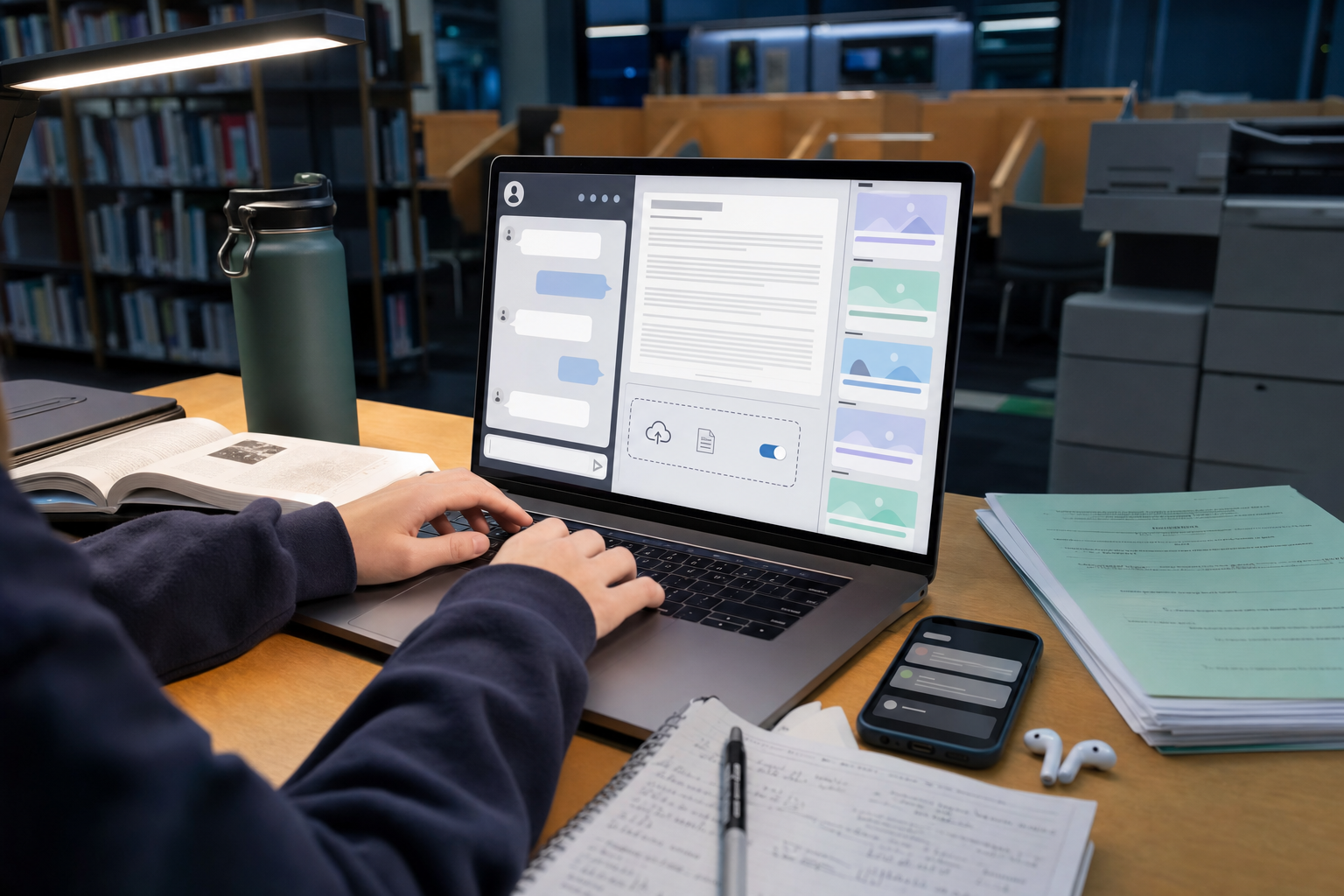
Free AI tools have moved into student life very quickly. They are now used to summarize readings, explain math steps, fix grammar, generate code, translate materials, and draft essays. In many schools, especially those with tight budgets, these tools look like a gift: extra help without extra cost. But they are not truly free. The price is often paid in student data, in time and attention, and in growing dependence on systems that may not always serve learning well.
That matters because the main debate is not simply whether AI is good or bad for education. The real tension is between access and hidden tradeoffs. Free AI can support students who lack tutors, strong school resources, or confidence in academic English. At the same time, it can normalize constant data collection, reduce independent practice, and turn one company’s interface into a student’s default way of thinking through schoolwork. My view is simple: students should be able to use helpful AI tools, but schools and families should stop treating “free” as neutral.
Free rarely means costless
Most free digital tools need a business model. Sometimes that means ads. Sometimes it means pushing users toward paid tiers. Sometimes it means collecting usage data that helps improve products, target features, or build long-term market power. With AI tools, the exact arrangement depends on the company, the product, the settings, and the terms of service. Those terms also change.
For students, that creates a basic problem. A homework question may seem harmless, but school use often includes more than homework. Students paste in rough drafts, college essays, code, notes, and sometimes deeply personal questions. A teenager asking for help with a scholarship letter may include family income details. A student revising a personal essay may include immigration history, disability status, or mental health struggles. That information can move into systems the student does not understand and cannot negotiate with.
Some companies offer stronger privacy protections on education plans than on consumer tools. Some say they do not use certain user content for model training. Those differences matter. They are also exactly why no one should speak about AI tools as if they all work the same way. “Free AI” is not one product. It is a category with very uneven rules.
Data risk is not just a technical issue
Privacy discussions often sound abstract until you look at what students actually do. They ask for feedback on personal statements. They upload writing that includes names and class details. They describe conflicts with teachers or classmates. They ask career questions that reveal age, location, grades, and ambitions. Even when data is not obviously sensitive, it can still reveal patterns about a student’s weaknesses, interests, and habits.
This is especially important in under-resourced settings. When students have fewer books, fewer office hours, and less access to tutoring, they are more likely to accept a privacy trade without real choice. That does not make the trade acceptable. It makes transparency more urgent. The students with the fewest alternatives should not be the ones asked to give up the most.
In education, the question is not whether a tool is free. The question is what it asks in return.
The attention cost is easy to miss
Data is one hidden cost. Attention is another. Free AI tools are designed to be convenient, fast, and hard to leave. A student may open one tab to check a formula and then stay to generate flashcards, rewrite notes, ask unrelated questions, and compare premium features. The tool becomes a central academic portal.
That may sound efficient, and sometimes it is. But convenience also changes behavior. When one system becomes the default place to ask every question, students can become less likely to read full texts, compare sources, or sit with confusion long enough to develop their own approach. Fluent answers create a feeling of progress even when understanding is shallow.
This is not a moral panic about screens. Students already work online. The concern is narrower and more practical: free AI tools compress search, explanation, writing support, and recommendation into one commercial interface. That gives the tool unusual influence over what students see first, what they ignore, and how they move through a task.
Dependency is the biggest educational risk
The deepest cost may be dependency. Education is not only about getting an answer. It is also about building the ability to frame a problem, test an idea, revise a weak argument, and recover from mistakes. AI can help with those steps. It can also quietly replace them.
Take a student learning to write in a second language. AI can explain sentence structure, suggest clearer wording, and help the student practice. That is useful. But if the student pastes every paragraph into a tool and accepts the rewritten version, the tool is no longer supporting learning. It is doing the visible part of learning while the student misses the repetition needed to improve.
The same is true in coding and math. A model can point out an error or show an example. That can save time and reduce frustration. But when students rely on generated solutions too early, they may recognize patterns less well on their own. They finish the assignment while weakening the skill the assignment was meant to build.
Some educators call this “overreliance.” A simpler phrase is better: students can lose confidence in their own first draft of thinking. That loss is subtle. It does not appear on a receipt. But it matters.
There is a real case for free AI in education
None of this means free AI tools should be dismissed. For many students, they offer genuine value. They can explain a concept at 11 p.m. when no teacher is available. They can translate material for non-native English speakers. They can help students with disabilities reformat or simplify information. They can reduce the shame some students feel when asking basic questions in public.
In poorly funded schools, these benefits are not theoretical. They can be immediate. A student with no tutor and no quiet support at home may get real help from a free AI tool. Telling that student to avoid AI entirely, while wealthier students get private tutoring or paid subscriptions, would be unfair and unrealistic.
That is why the right response is not rejection. It is governance. If a tool is going to sit inside the learning process, then privacy, design, and educational impact should matter as much as price.
What schools should ask before recommending a free AI tool
- What data does the tool collect? Schools should know whether prompts, files, location data, or account information are stored, reviewed, or used to improve systems.
- What are the defaults? Strong privacy matters little if students must find and change hidden settings on their own.
- Can students use it without personal accounts? Account-free access reduces unnecessary tracking.
- Are there age and consent issues? This is especially important for younger students.
- Does the tool show sources or uncertainty? A confident answer without evidence is a teaching problem.
- What tasks should remain AI-limited or AI-free? Not every assignment should be outsourced to a machine-generated response.
- Is there a real opt-out? Students should not be penalized for refusing a tool that collects their data.
These are not anti-technology questions. They are the basic questions schools should ask about any system that enters the classroom and touches student records, habits, and judgment.
What students can do now
- Do not paste private or identifying information into a free tool unless you know the policy and trust the setting.
- Use AI for explanation, brainstorming, or practice before using it for finished work.
- Check important facts with course materials, library sources, or teacher guidance.
- Keep some work fully your own, even when AI could make it faster. That is how you test what you actually know.
- Pay attention to your habits. If the tool appears before your own thinking every time, that is a warning sign.
These steps are imperfect, but they restore some choice. The goal is not purity. It is control.
A better standard for “free”
Free AI tools can widen access to help, and that should not be ignored. For many students, they already fill gaps that schools have left open. But schools, families, and policymakers should stop talking about these tools as if their only cost is financial. They can also cost privacy, concentration, and independence.
A good standard is straightforward: if an AI tool is useful enough for education, it is important enough for clear rules. Students should know what data is taken, what protections exist, and what skills the tool may weaken if used carelessly. That is not fear-mongering. It is basic consumer and educational honesty.
Free can be a fair price. It can also be a misleading one. In education, the difference matters.