Arabic AI Literacy Starter Pack: 15 Terms Every Student and Teacher Should Know
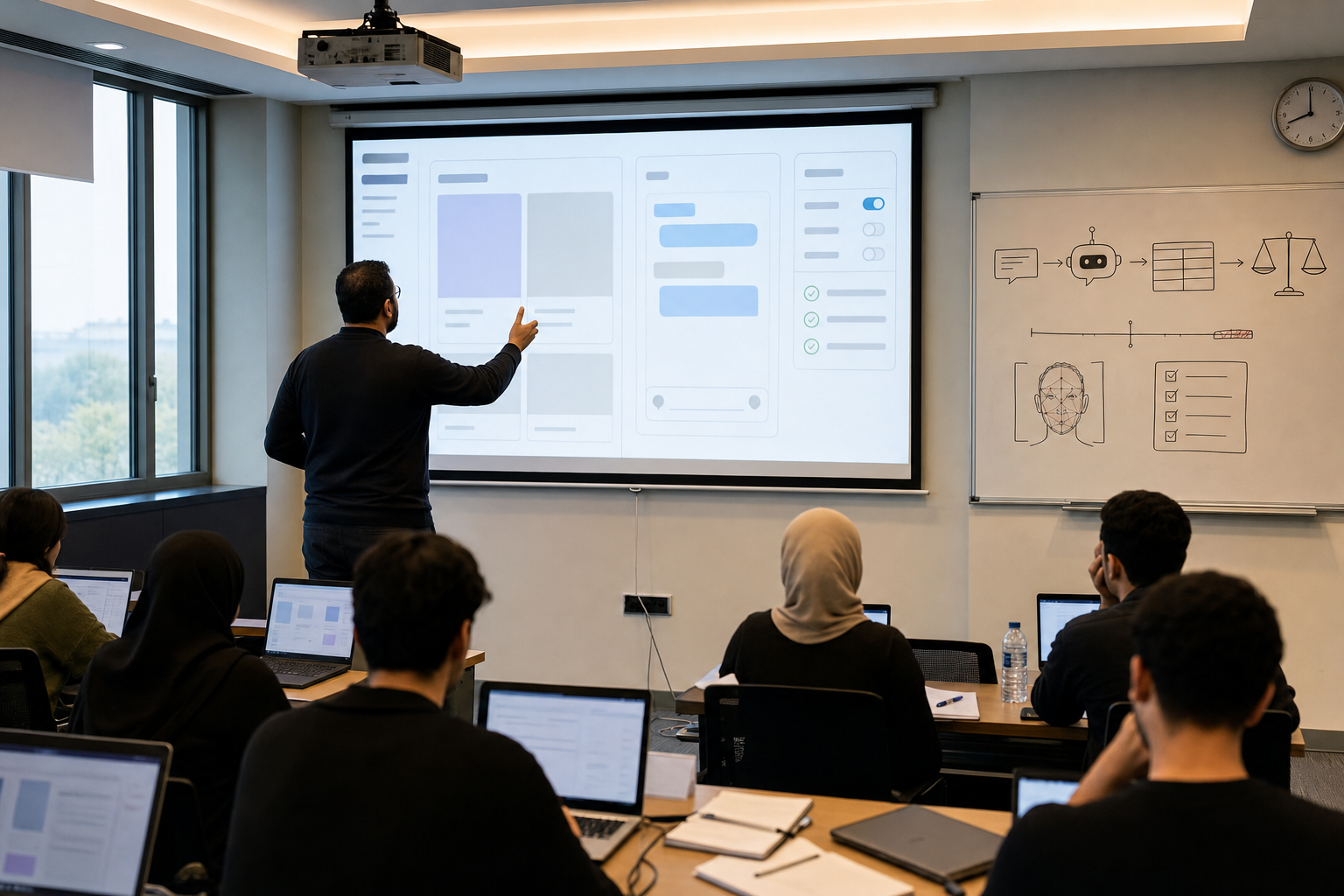
AI tools reached classrooms faster than Arabic AI education did. Students now hear words like model, prompt, bias, and deepfake in app menus, school policies, and news headlines, often in English and without explanation. The result is a basic literacy gap: many Arabic-speaking users are expected to use or judge AI systems before they have the vocabulary to discuss them clearly.
That matters because AI is no longer a niche topic. It affects homework, research, translation, assessment, privacy, and misinformation. The real debate is not whether every student must become a programmer. It is whether schools and universities can teach, regulate, or even question AI responsibly without a shared set of terms. They cannot. My view is simple: Arabic AI literacy should start with a practical vocabulary, even if the translations are not perfect yet.
Start with the words, not the hype
There is a common counterpoint here: learning a list of terms is not the same as real AI literacy. That is true. Vocabulary alone will not solve cheating, protect student data, or teach critical thinking. But the opposite is also true. Without basic terms, deeper teaching becomes vague very quickly. A class cannot discuss risk if it does not know what bias means. A school cannot write a policy if teachers do not know the difference between a model and a chatbot.
AI literacy does not begin with coding. It begins with shared words that let students ask basic questions: What is this tool, what was it trained on, and who checks the result?
Arabic speakers also face a translation problem. Some terms have more than one Arabic equivalent. Some are still used mostly in English. That should not stop schools from teaching them. In fact, it is a reason to teach both the Arabic and English forms together.
The 15 terms that matter most
- الذكاء الاصطناعي (Artificial Intelligence): A broad label for computer systems that perform tasks that usually require human judgment, such as classification, prediction, translation, or content generation. It is a category, not a single product. That matters because many tools are marketed as “AI” even when the claim is loose or exaggerated.
- الخوارزمية (Algorithm): A set of instructions used to solve a problem or make a decision. Not every algorithm is advanced AI, but every AI system depends on rules somewhere in the process. This term helps students understand that a tool’s result does not appear from nowhere.
- تعلم الآلة (Machine Learning): A method where systems learn patterns from data instead of relying only on hand-written rules. This is the foundation of most modern AI tools. If a student understands machine learning, they already understand why data quality matters so much.
- النموذج (Model): The trained system that takes an input and produces an output. When the news says a company released a “new model,” it usually means a new trained system with different abilities, limits, or costs. This is one of the most useful words in AI reporting.
- بيانات التدريب (Training Data): The examples used to train a model. These may include text, images, audio, or other material. Training data affects what a model can do, what mistakes it makes, and whether privacy or copyright concerns may exist.
- النموذج اللغوي الكبير (Large Language Model): A model trained on very large amounts of text to generate or analyze language. Tools like chatbots often rely on this kind of system. It can produce fluent answers, but fluency is not the same as truth.
- الموجّه أو الطلب (Prompt): The instruction a user gives the model, usually in text, but sometimes with images or voice. A clear prompt can improve usefulness, structure, and tone. It cannot guarantee accuracy, and it does not remove the need for checking facts.
- الذكاء الاصطناعي التوليدي (Generative AI): AI systems that create new content such as text, images, audio, video, or code. This is the part of AI most students now encounter directly. It is useful for drafting and brainstorming, but it also raises concerns around originality, misinformation, and academic integrity.
- متعدد الوسائط (Multimodal): A system that can work with more than one kind of input or output, such as text, image, and audio. This matters because newer classroom tools are no longer just text boxes. A student can upload a worksheet photo, a voice note, or a PDF and receive a response across formats.
- التحيز (Bias): A systematic unfair pattern in results. Bias can come from training data, labels, model design, or how a tool is used in the real world. In Arabic contexts, this can appear in weak support for certain dialects, uneven treatment of names, or poor performance on local cultural references.
- الهلوسة (Hallucination): A confident-sounding but false or unsupported output from a model. The term is common, but it should not mislead people into thinking the system has beliefs or imagination. In plain terms, it means the model produced something that looks right and is wrong.
- الخصوصية (Privacy): The protection of personal or sensitive information. This is one of the most practical AI terms for schools. Students and teachers should know that pasting private emails, grades, IDs, or medical details into public tools may create legal and ethical problems.
- التزييف العميق (Deepfake): Synthetic media made to imitate a real person’s face or voice. Deepfakes matter in education because they can be used for harassment, fraud, and misinformation. Students do not need advanced technical knowledge to understand the risk; they need the term and a clear warning.
- الأتمتة (Automation): Using software or machines to perform tasks with limited human effort. Automation can save time in scheduling, summarizing, or drafting routine messages. It becomes risky when institutions automate high-stakes decisions, such as grading, discipline, or admissions, without careful review.
- المراجعة البشرية أو الإنسان في الحلقة (Human Review / Human in the Loop): A person checks, approves, corrects, or rejects an AI-generated result. This is not a technical detail. It is a governance principle. In education, final responsibility for grades, feedback, safeguarding, and discipline should stay with people, not with automated output.
Why these 15 terms are a useful minimum
This list is not complete, and it is not meant to be. A computer science teacher may want to add terms like fine-tuning, evaluation, or open source. That is fair. But for a starter pack, the goal is not technical depth. The goal is basic competence.
If students know these 15 terms, they can already ask better questions. Is this tool generating content or analyzing it? What kind of data shaped it? Could the output be biased? Should I trust this answer? Did a person review the final result? Those questions are more valuable than memorizing brand names.
Translation will keep changing. Teach the terms anyway.
There is no single settled Arabic version for every AI term. Different educators may prefer different translations for words like prompt or model. Some will keep the English term beside the Arabic one. That is not a failure. It is normal for a fast-moving field.
The better approach is practical bilingualism: teach the Arabic term, show the English term students will see in interfaces and headlines, and use one clear example for each. The aim is not linguistic purity. The aim is comprehension.
What schools and teachers can do next
- Create a one-page bilingual glossary. Put the Arabic term and the English term side by side.
- Use classroom examples. Define bias with a real case, not a vague sentence.
- Separate use from misuse. A prompt for brainstorming is not the same as submitting AI-written work as original.
- Set privacy rules early. Students should know what they must never upload into public tools.
- Require human review for high-stakes decisions. Convenience is not a good enough reason to automate judgment.
Arabic AI literacy does not need to start with a lab, a new department, or a complex policy document. It can start with fifteen words taught well. That will not solve every problem. But it will give students and teachers something they urgently need: a shared language for using AI carefully, questioning it intelligently, and refusing to be impressed by it too easily.