When AI Toolchains Get Hacked: Security Is Part of the Human Side of AI
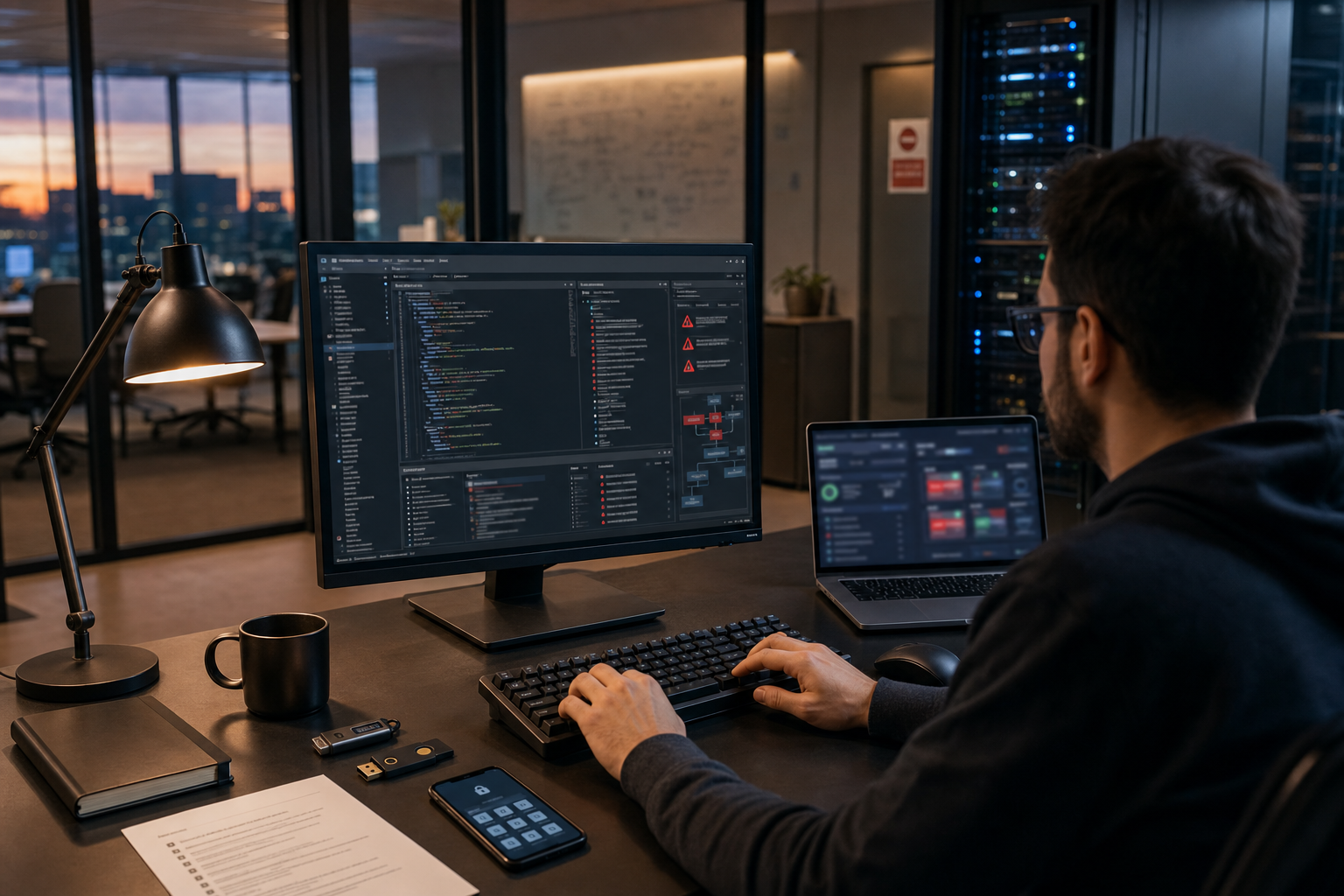
According to current reports, attackers compromised open-source tools used by AI developers, including tools linked to Microsoft’s software ecosystem, to steal passwords and other credentials. Some technical details and the full scope may still change as investigations continue. But even at this stage, the meaning is clear: this is not just a narrow developer story. It is a product trust story.
Why does it matter? Because the tools that developers use to build, test, deploy, and connect AI systems sit upstream of the apps that millions of people touch every day. If those tools are compromised, the risk can spread far beyond a single engineer’s laptop. The real debate is not whether security matters. It does. The debate is whether the AI industry is willing to treat security as part of product quality, even when that slows down shipping.
A technical breach becomes a public problem
Most people will never see an AI toolchain. They will see a chatbot in a bank app, a coding assistant at work, a document search tool in the office, or an AI feature in a hospital workflow. Behind those products is a long chain of software: open-source libraries, package managers, cloud services, plugins, build pipelines, model connectors, and internal scripts.
That chain is powerful, but it is also fragile. If attackers steal a developer’s credentials, they may gain access to code repositories, cloud accounts, package registries, or deployment systems. In practical terms, that can mean malicious updates, leaked customer data, service outages, or hidden backdoors. A user may think, “I was just using an AI feature.” In reality, they were relying on a whole supply chain they never knew existed.
This is why security incidents in developer tools should not be treated as backroom technical drama. They shape whether an AI product is safe to use at all.
The weak point is often not the model
Public conversation about AI safety often focuses on model outputs. Will the system hallucinate? Will it produce biased results? Will it leak training data? Those are valid concerns. But they are not the only ones, and sometimes not even the first ones.
An AI product can use a strong model and still be insecure if the surrounding stack is weak. A compromised plugin can expose API keys. A malicious package update can change how a system handles prompts or logs user data. A stolen token can give an attacker access to internal documents used in retrieval systems. A poisoned build pipeline can slip harmful code into production without obvious warning.
That is the uncomfortable point here: you do not need to “break the AI” to create serious harm. Sometimes you just need to compromise the ordinary software around it.
Why AI raises the stakes
Every software company depends on developer tools. What makes AI different is the kind of access these systems often have. AI products are frequently connected to sensitive material: company knowledge bases, source code, customer support records, contracts, health information, financial documents, and employee chats.
That means a stolen credential in an AI workflow can open the door to more than a buggy release. It can expose valuable data at scale. It can also damage decision-making. If an internal AI assistant is manipulated, employees may act on wrong or unsafe information without realizing the source has been tampered with.
In other words, toolchain security is not just about protecting infrastructure. It is about protecting the people whose work, privacy, and judgment now flow through AI-enabled systems.
Open source is not the problem. Unmanaged dependence is.
It would be easy to turn stories like this into an argument against open source. That would be the wrong lesson. Open-source tools have been essential to modern AI development. They make experimentation faster, lower barriers to entry, and allow broad technical review. Many of the most useful AI frameworks and utilities exist because open collaboration made them possible.
The real problem is not openness. It is dependence without discipline. Too many teams pull in packages they barely review, grant broad permissions to tools that do not need them, store long-lived secrets in unsafe places, and assume that widely used software is automatically well protected.
There is also a fairness issue here. Volunteer maintainers cannot carry the entire security burden for products that large companies monetize. When enterprises build commercial AI services on top of open-source components, they inherit responsibility along with speed. They should contribute audits, funding, patching, and secure deployment practices, not just downloads.
The speed argument is real, but it is not enough
There is a real counterpoint worth taking seriously. AI is moving fast. Startups and product teams face intense pressure to launch before competitors do. Security reviews, dependency controls, and stricter access policies can slow development. For small teams, that cost is not imaginary.
But the answer cannot be to treat security as a luxury for later. In AI, “later” often means after a product has already connected to private data, critical workflows, or customer accounts. At that point, a breach is not just a technical setback. It becomes a legal problem, a trust problem, and sometimes a safety problem.
Shipping fast is a business strategy. Shipping insecurely is a gamble made with other people’s data.
What responsible AI security should look like
Companies that build or deploy AI systems do not need perfection. They do need basic seriousness. That starts with treating the toolchain as part of the product, not as invisible plumbing.
- Know what you depend on. Maintain an inventory of libraries, plugins, model connectors, container images, and build tools.
- Reduce credential risk. Use short-lived tokens, strong access controls, multi-factor authentication, and fast secret rotation.
- Verify what enters production. Prefer signed releases, pinned versions, reproducible builds, and isolated environments for testing and deployment.
- Watch for abnormal behavior. Monitor package updates, access patterns, and developer account activity that could signal compromise.
- Prepare for disclosure. If a toolchain issue may affect customers, communicate early and clearly instead of waiting for perfect certainty.
None of this is glamorous. None of it will make a product demo more exciting. That is exactly why it gets neglected. But this is where trust is either earned or quietly undermined.
The human side of AI is not only about ethics panels
When people talk about “the human side of AI,” they often mean jobs, creativity, bias, education, or emotional dependence on digital tools. Those issues matter. But there is also a simpler human question: can ordinary people trust the systems being put in front of them?
That trust depends on very practical choices made by engineering teams, security staff, executives, and vendors. Did they protect credentials? Did they review dependencies? Did they harden the pipeline? Did they tell users the truth when something went wrong?
These are not side issues. They are part of what responsible AI looks like in the real world. A company cannot claim to care about safe AI while ignoring the software supply chain that delivers it.
A better standard for the industry
The AI industry likes to talk about capability. It should spend more time talking about custody. If a company asks users to trust an AI product with their questions, documents, code, or decisions, it should be able to explain how the surrounding system is secured.
That does not mean every company must publish a perfect blueprint. It does mean security should be visible in priorities, budgets, and public communication. Benchmark scores are not enough. Model demos are not enough. If the stack around the model is weak, the product is weak.
The practical takeaway is simple: when AI toolchains get hacked, this is not an inside-baseball story for developers to sort out on their own. It is a warning about how modern trust actually works. The next time a company promotes a smarter AI feature, a fair question is also the most basic one: how well did they secure everything around it?