How AI Writes Poetry: Pattern, Prompt, and the Limits of Machine-Generated Verse
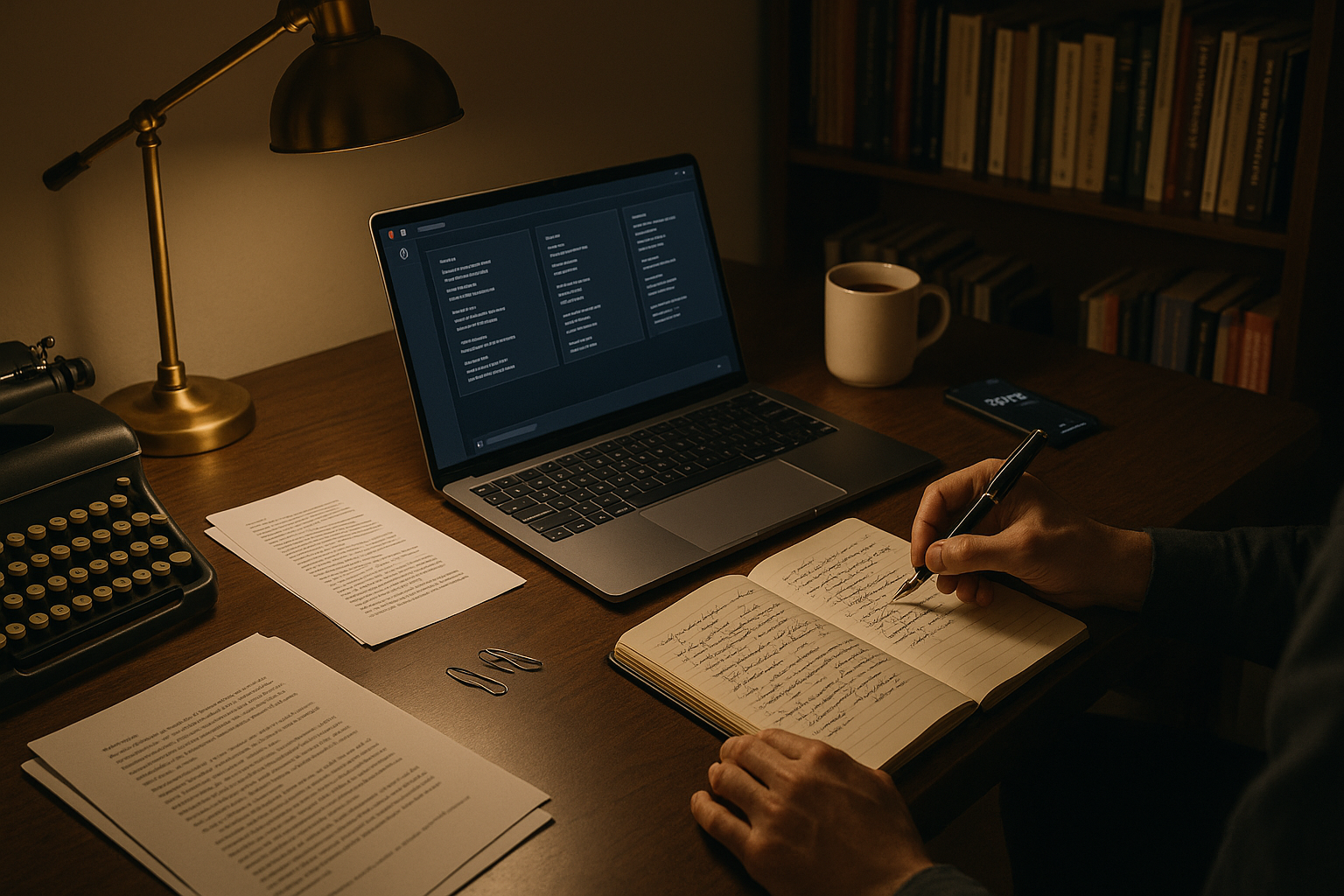
AI poetry is no longer a novelty. Today, the same AI writing systems used for emails, summaries, and marketing copy can also produce haiku, sonnets, free verse, and style imitations in seconds. That matters because poetry has long been treated as one of the most personal forms of writing. The central debate is now hard to avoid: if a machine can generate convincing verse, what exactly are we valuing when we call a poem good?
My view is straightforward. AI can write poetry in the practical sense that it can produce lines shaped like poetry, sometimes with real force and beauty. But it does not write from experience, memory, belief, or personal risk. The best machine-generated verse is usually not a replacement for human creativity. It is a mix of statistical language generation and human direction. That makes AI writing useful, but it also sets clear limits.
It starts with pattern, not inspiration
The basic process behind AI poetry is less mysterious than it sounds. Large language models are trained on huge amounts of text, including books, articles, websites, and other writing. The exact training sources are often only partly disclosed, which is one reason copyright and consent remain active concerns. But the general method is clear: the model learns patterns in language.
When you ask it to write a poem, it does not go searching for a hidden store of feelings. It generates text one word, or part of a word, at a time. Each choice is based on probabilities: given the prompt and the words already written, what is a likely next step?
That sounds mechanical, and it is. But poetry itself relies heavily on patterns. Rhythm, repetition, line breaks, rhyme, contrast, image clusters, and tonal shifts are all forms of pattern. AI writing systems are good at absorbing those structures and recombining them quickly.
How the poem gets made
A typical AI poetry workflow looks something like this:
- The prompt sets the frame. A user asks for a form, theme, tone, or style: a sonnet about grief, a haiku about office life, free verse about migration.
- The model predicts possible lines. It draws on learned associations between topics, images, and poetic forms.
- The system balances safe and surprising choices. Some settings make the output more predictable. Others make it stranger, looser, or more original-seeming.
- The user revises. This is where much of the real craft enters. A person can ask for sharper images, fewer clichés, tighter rhythm, or a different point of view.
- The final version is often edited by hand. In many strong examples of AI poetry, the machine provides raw material and the human decides what deserves to stay.
This is why “inside the creative process” matters. The poem is rarely the result of one clean command. In practice, machine-generated verse often comes from iteration: prompt, output, cut, rewrite, tighten, repeat.
Why some AI poems sound striking
People are sometimes surprised by how effective AI poetry can be. They should not be. Poetry rewards compression, image selection, and formal control. These are all things a language model can simulate well, especially in short pieces.
If you ask for a poem about burnout in a hospital waiting room, the system may reach for fluorescent light, plastic chairs, vending machines, cold coffee, late-night silence, and exhausted bodies. Those details can feel vivid because they come from patterns in human writing. AI does not invent the emotional logic from scratch. It assembles recognizable signals that readers already connect with fatigue, stress, loneliness, or care.
This is also why short AI poems often work better than long ones. A brief poem can hide weak reasoning if the image work is strong enough. Over a few lines, the illusion of depth can hold. Over many stanzas, cracks usually start to show.
Where machine-generated verse stays thin
AI poetry often fails in familiar ways. It leans toward cliché. It repeats emotional shortcuts. It mixes images that sound poetic but do not belong together. It can produce a line that feels profound at first glance and empty at second reading.
That weakness matters because poetry is not just a matter of sounding like poetry. Strong poems usually make choices that feel necessary. A detail appears for a reason. A turn in tone changes the meaning. A strange image earns its place. Machine-generated verse can imitate these effects, but it does not know why one image should matter more than another. It has no lived stake in the line.
This is the key limit. AI writing can model the surface features of voice. It cannot supply a real biography behind the voice. That does not make every AI poem worthless. It does mean readers should be careful not to confuse fluency with depth.
So is it creative or not?
This is where the debate often becomes unhelpful. Some people insist that if a poem moves a reader, nothing else matters. Others say that without consciousness, intention, or lived experience, the word “creative” should not apply at all.
There is a fair middle ground. If creativity means producing something new and fitting within constraints, AI can do a limited form of it. It can generate combinations that did not exist before. It can adapt to prompts. It can surprise even experienced users. But if creativity means expressing a point of view shaped by a life, then AI does not qualify. It has no personal history to transform into art.
That distinction is important because it keeps the discussion honest. It allows us to recognize the real capability of machine-generated verse without pretending that pattern generation and human expression are the same thing.
What AI poetry is good for
Used well, AI writing can be genuinely helpful to poets, students, and curious readers. It can teach form by example. It can offer alternate versions of a line. It can help a blocked writer move past a dead start. It can give non-native English speakers a fast way to test rhythm, imagery, and phrasing. It can also support playful experimentation: writing a ghazal about commuting, a sonnet about spreadsheets, or a minimalist poem built around one image.
In these cases, the value is practical. AI poetry can widen access to creative tools. It can lower the fear of the blank page. It can help people learn by doing.
The risks are real too
There is, however, a cost to the ease of machine-generated verse. One risk is cultural flattening. Because AI systems learn from large existing bodies of text, they often drift toward familiar styles and dominant patterns. That can reward generic “poetic” language over distinctive voice.
Another risk is false authorship. Students can submit poems they did not write. Publishers, contests, and editors may struggle to judge what is original, what is assisted, and what is mostly generated. Readers may feel misled if a poem presented as intimate personal expression turns out to be largely machine-made.
There is also the unresolved issue of training data. If models learn from copyrighted or uncredited literary work, then AI poetry is not just a technical story. It is also a labor and ownership story. The convenience enjoyed by users may rest on material created by writers who were never asked.
The real shift is not the machine. It is the workflow.
The most important change may be less about whether AI can be a poet and more about how AI changes writing habits. More people will draft with systems that can instantly suggest metaphors, forms, titles, and revisions. That will speed up some parts of the process. It may also make many poems sound more alike unless writers push back hard with judgment and revision.
That is why the human role becomes more important, not less. Taste matters. Selection matters. Knowing when a line is alive and when it is only decorative matters. The machine can generate options. It cannot decide what is worth saying.
What readers and writers should do now
A sensible approach is neither panic nor hype. Treat AI poetry as a tool, not an oracle and not a scandal by default. Use it to test forms, unlock drafts, or explore language. But be honest about its use. If a poem is heavily AI-assisted, say so. If you are teaching or publishing, set clear rules. And if you care about poetry, keep returning to human poets whose lines carry the pressure of an actual life.
That is the practical takeaway. AI can produce verse. Sometimes it can produce good verse. But poetry is more than arranged language. The lasting difference is not whether a line sounds human. It is whether anyone truly had something to risk by saying it.