AI Literacy Is Not Coding: The Beginner Skills Every Student Needs First
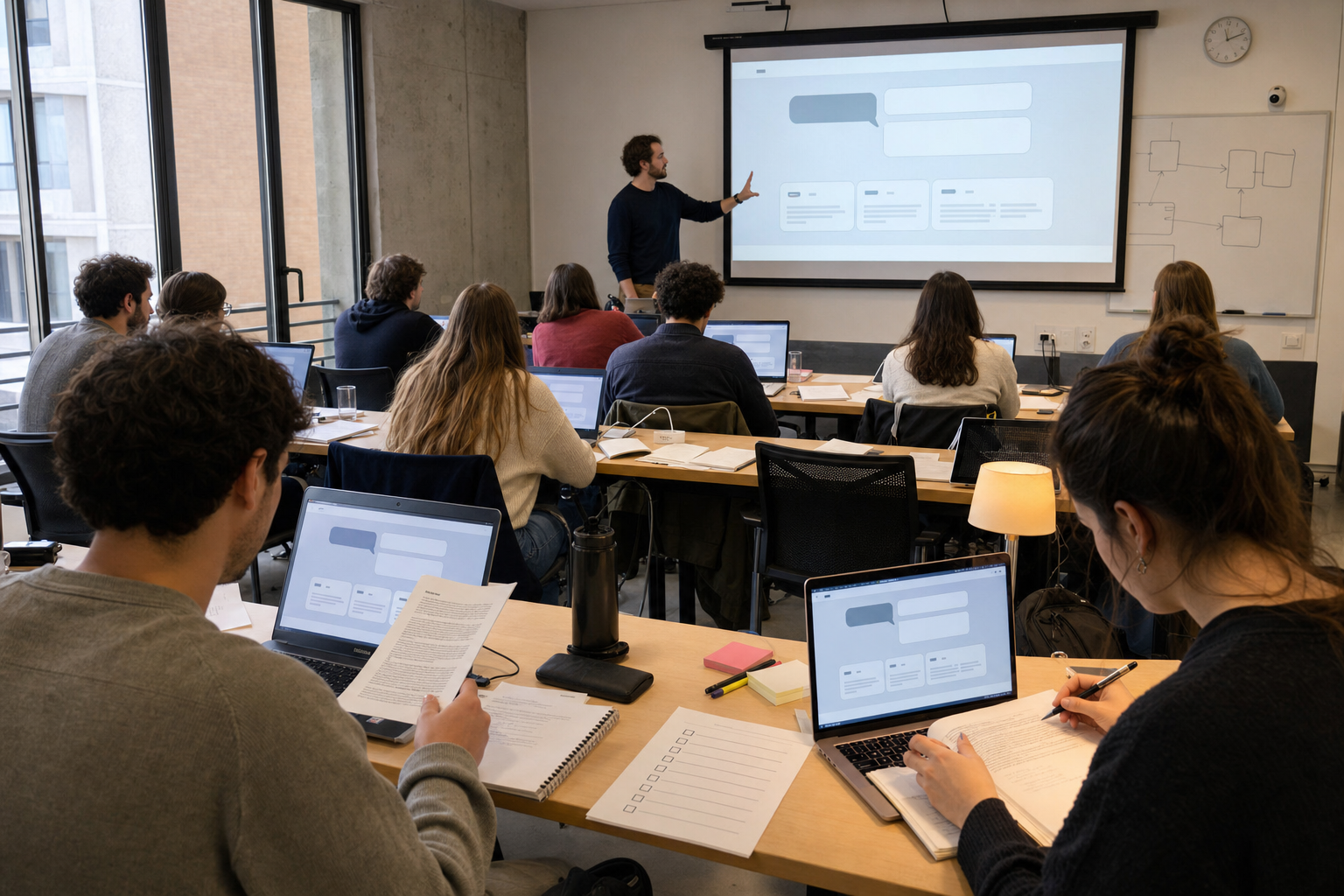
Schools, universities, and online courses are rushing to add AI education. Too often, they present AI literacy as coding, model-building, or learning technical terms. That is the wrong starting point. Most students will not build AI systems soon. They will use them first in search, translation, writing help, study tools, and chatbots.
This matters because students are already making decisions with these tools before they understand their limits. The main debate is not whether coding matters. It does. The real question is what should come first: technical training, or the everyday skills that help students avoid false answers, weak reasoning, plagiarism, privacy mistakes, and overconfidence. My view is clear: beginners need questioning, verification, prompting, context, and responsible use before they need code.
Most students meet AI as users, not engineers
That simple fact should shape the curriculum. A first-year university student may use AI to summarize a reading, explain a formula, translate a paragraph, draft interview questions, or generate practice quizzes. A school student may use it to rewrite an essay introduction or ask for help with homework. These are not engineering tasks. They are judgment tasks.
And judgment is where beginners are most exposed. AI tools can produce fluent answers that sound reliable even when they are incomplete, outdated, or simply wrong. They can invent citations. They can flatten nuance. They can turn a hard question into a smooth but shallow answer. A student who knows a little Python but cannot spot those problems is not AI literate in any useful sense.
Start with better questions
The first beginner skill is asking clear questions. People call this prompting, but the basic idea is simple: vague input produces vague output. Students should learn how to state a task, a goal, an audience, and a format.
Compare these two requests: “Explain climate change” and “Explain climate change for a 14-year-old in 5 bullet points, include one example from daily life, and list two things scientists are still studying.” The second prompt is better because it gives the system a job with boundaries. That is not a trick. It is a communication skill.
This matters beyond AI. A student who can frame a clear question is also better at research, writing, and class discussion. Good prompting is not a narrow platform skill. It is structured thinking.
Verification is more important than speed
The second skill is checking whether an answer is true, current, and supported. AI systems generate plausible text from patterns in data. They do not guarantee accuracy. That means students must learn to verify dates, quotes, statistics, and sources before they use an answer in homework or discussion.
A common example is citations. Ask a chatbot for journal articles on a topic, and it may return titles that look real but do not exist. A beginner needs to know the next step: open the source, check the author, confirm the date, and read beyond the summary. If the source cannot be found, it should not be used.
Convenience is useful. Unchecked convenience is risky. That lesson should be at the center of AI education.
Context changes the quality of the result
The third skill is giving relevant context. Students often treat AI tools as if one generic answer should work for every situation. In practice, results improve when the system is told the level of the student, the subject, the purpose, the language, and the constraints.
Take a simple classroom example. “Help me write about photosynthesis” is weak. “I am in grade 9, I need a short explanation in Arabic, use simple scientific terms, and connect it to farming” is much better. The student is not gaming the system. The student is learning how context shapes information.
This is especially important for non-native English speakers. Many mainstream AI tools still perform best in English, and their answers in Arabic can be less precise, less natural, or based on thinner source material. That does not make the tools useless. It means Arabic-speaking students need stronger checking habits, not weaker ones.
Students should learn to compare, not just accept
A fourth beginner skill is comparison. One answer from one tool should not end the process. Students should learn to compare an AI answer with a textbook, a teacher’s notes, a trusted article, or even another AI system. The goal is not to find the “smartest” chatbot. The goal is to notice differences, gaps, and false certainty.
This is where real learning can happen. A student who asks, “Why did these two tools explain the same event differently?” is already practicing source evaluation. That is a better educational outcome than simply producing a faster paragraph.
Responsible use is part of literacy, not an extra
The fifth skill is responsible use. Students need clear rules about when AI assistance is acceptable, when it must be disclosed, and when it should not be used at all. Copying an AI-generated answer into an assignment without review is not smart use. It is a shortcut with academic and ethical costs.
Responsibility also means protecting privacy. Students should not paste personal records, private messages, health details, or sensitive school data into public tools. Many beginners do this without thinking. That is an education failure, not just a user mistake.
There is also a deeper risk: dependence. If a student uses AI for every outline, every summary, and every first draft, the tool may save time in the short term while weakening core skills in the long term. Good AI use should support thinking, not replace it.
The case for coding is real
There is a fair counterargument here. If students never move beyond user skills, they may become passive consumers of systems they do not understand. Coding can build confidence. It can open career paths. It can also help students understand data, automation, logic, and the limits of software. Those are real benefits.
For some students, especially older ones, early exposure to coding is motivating. It gives them a sense of how tools are built and why design choices matter. Schools should not treat technical learning as optional forever.
But that does not change the order of priorities. A beginner who learns basic coding without learning verification and responsible use can still misuse AI badly. A beginner who learns strong judgment first can add technical skills later on a much firmer base.
What a better beginner curriculum looks like
If schools want practical AI literacy, the early lessons should look less like a developer boot camp and more like guided decision-making. A strong beginner curriculum would teach students to:
- turn a vague request into a clear prompt with purpose, audience, and constraints;
- check claims against original and reliable sources;
- spot invented citations, missing context, and weak reasoning;
- compare answers across tools and sources instead of trusting the first result;
- disclose AI use when required and follow school rules on academic integrity;
- keep private and sensitive information out of public systems;
- know when AI should not be used for high-stakes advice or final judgment.
These skills are teachable. A teacher can ask students to compare an AI summary with the original article, circle what was omitted, correct what was wrong, and rewrite the prompt. That exercise teaches reading, writing, research, and AI literacy at the same time. It is far more useful for most beginners than memorizing technical jargon.
Teach the right first layer
AI education does not need less ambition. It needs a better sequence. The first layer should be practical judgment: how to ask, how to check, how to add context, how to compare, and how to use these tools without outsourcing responsibility. The second layer can be technical: coding, data structures, model training, and system design.
The first question for AI education is not “Can students build a model?” It is “Can they tell when a model is useful, when it is wrong, and when it should not be used at all?” If schools get that part right, coding will have a stronger place later. If they get it wrong, students may learn the language of AI without learning how to think around it.