AI-Generated Video Is Becoming Ordinary: A Viewer’s Guide to Trust Without Paranoia
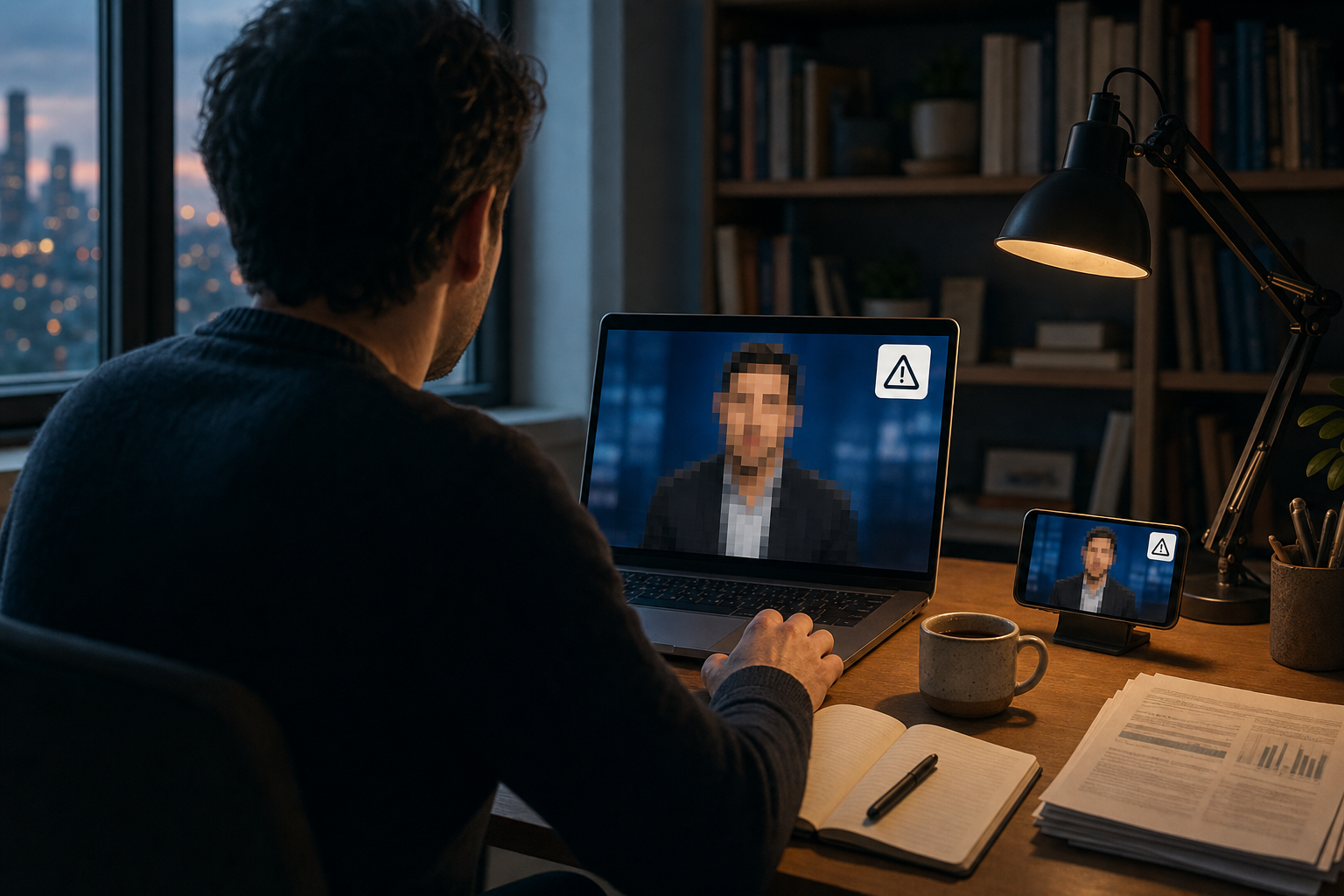
AI-generated video is moving from novelty to routine. Recent discussion around YouTube’s efforts to label AI-generated or materially altered video points to a larger change: major platforms now treat synthetic media as a normal part of the feed, not a rare exception. The details of how labels are applied and enforced are still evolving, but the direction is clear.
This matters because video still carries unusual authority. People are more likely to believe something when they can see a face, hear a voice, and watch an event appear to unfold. The main debate is not whether labels are useful. They are. The harder question is whether labels can preserve trust, or whether they will push viewers toward a more corrosive habit: doubting everything. My view is simple: audiences need better viewing habits, not permanent suspicion.
Labels help, but they do not settle the question
Platform labels are a good step. They can warn viewers when a clip includes generated images, cloned voices, or significant synthetic changes. They also send a message to creators that disclosure matters.
But labels have limits. Some AI use is harmless and easy to disclose. A travel channel may generate a short city skyline for a background shot. A small business may use an AI voiceover for an ad. A history video may recreate a scene that was never filmed. In those cases, a label adds context without changing the core meaning of the video.
Other cases are harder. A deceptive clip may be uploaded, reposted, clipped, translated, and stripped of its original context before any label catches up. Some edits may be minor enough to avoid detection but still powerful enough to mislead. And automatic systems will make mistakes. A label is useful evidence, but it is not a final verdict.
That is why viewers should treat labels as one signal among several. If a video is labeled, ask what exactly was generated or altered. If it is not labeled, do not assume it is fully authentic. Absence of a warning is not proof.
A better habit: match your skepticism to the stakes
Not every video deserves the same level of scrutiny. This is where many people go wrong. They either trust too quickly or become so defensive that every clip starts to look fake.
A better rule is to scale your skepticism to the claim being made. If a creator uses AI visuals in a comedy sketch, the main issue is transparency. If a clip claims to show a politician taking a bribe, a celebrity endorsing an investment scheme, or a soldier committing a war crime, the standard should be much higher.
The more serious the claim, the more you should ask for support beyond the clip itself.
- Start with the source. Who posted the video first? A known news outlet, a public agency, a named creator, and an anonymous account do not deserve the same level of trust.
- Ask what the video wants you to believe. Is it entertainment, illustration, satire, marketing, or evidence of a real event?
- Look for corroboration. If the clip shows something important, can you find reporting, eyewitness accounts, other camera angles, or official statements?
- Watch for friction points. Strange lip movement, inconsistent lighting, broken text, unnatural cuts, or mismatched ambient sound can be clues. They are not proof, but they are reasons to slow down.
- Pause before sharing. The easiest way to limit misinformation is still the oldest one: do not forward a dramatic clip just because it feels urgent.
These are not expert-level forensic skills. They are basic habits. Most people do not need to become video investigators. They need a calmer filter.
Ordinary synthetic media is not the same as deceptive synthetic media
One reason this subject creates confusion is that “AI-generated video” covers very different things. A creator might use AI to translate speech, clean up old footage, generate subtitles, or create a visual illustration for a concept that has no original footage. That is not the same as fabricating a fake press conference or inventing a disaster scene.
If we treat all synthetic media as equally dangerous, we flatten important differences. We also make it harder for viewers to judge the real risk in front of them.
The useful distinction is not simply “AI” versus “non-AI.” It is closer to this: was the tool used to clarify, stylize, or reconstruct something honestly, or was it used to manufacture false evidence? Intent is not always obvious, but context usually helps.
A documentary that clearly marks an AI reconstruction is very different from a clip posted to look like raw breaking news. A creator who tells viewers, “This scene is generated to illustrate a historical event,” is behaving differently from someone who uploads the same scene as if it were real archive footage.
The bigger risk is not only deception. It is cynicism.
There is a strong counterargument here: if synthetic video is getting better, maybe the safest rule is to trust nothing unless multiple sources confirm it. That instinct is understandable. People are trying to protect themselves.
But taken too far, that approach creates a new problem. When audiences start assuming that any inconvenient clip could be fake, real evidence becomes easier to dismiss. A genuine video of abuse, corruption, or violence can be waved away with a lazy claim that it was generated. In practice, widespread fakes do not just help lies spread. They also help truth get denied.
This is why paranoia is not a solution. Total distrust does not make the public smarter. It makes accountability harder. Bad actors benefit when viewers lose the habit of making distinctions.
The goal should be selective trust: trust built from source, context, corroboration, and stakes. That standard is stronger than blind belief, and healthier than blanket disbelief.
What platforms still owe viewers
Viewers cannot carry this burden alone. Platforms have more data, more technical visibility, and more control over distribution than any ordinary user.
At a minimum, platforms should make synthetic-media labels clear, consistent, and easy to understand. They should explain what the label means. Was the whole scene generated? Was a face swapped? Was the voice cloned? Was only a background altered? A vague warning is better than nothing, but specific context is better than a vague warning.
Platforms should also slow the spread of high-risk unlabeled content when authenticity is uncertain, especially around elections, public emergencies, financial scams, and violent conflict. And they should remember that detection tools will never be perfect. Human review, provenance tools, creator disclosure rules, and better appeals processes all matter.
In short, labeling is necessary, but it is not enough. Good policy should reduce deception without training audiences to give up on evidence.
Keep your standards, not your panic
AI-generated video is becoming ordinary. That does not mean reality is disappearing. It means the old habit of believing video on sight is no longer strong enough on its own.
The practical response is not fear. It is discipline. Be more careful with consequential clips. Ask where they came from. Look for support outside the video. Treat labels as clues, not guarantees. And share a little slower than the feed encourages you to.
If audiences can learn that habit, trust does not have to collapse. It can become more adult: less automatic, more earned, and still possible.