The AI Disclosure Starter Kit for Arabic Creators: What to Tell Your Audience Before the Platform Does
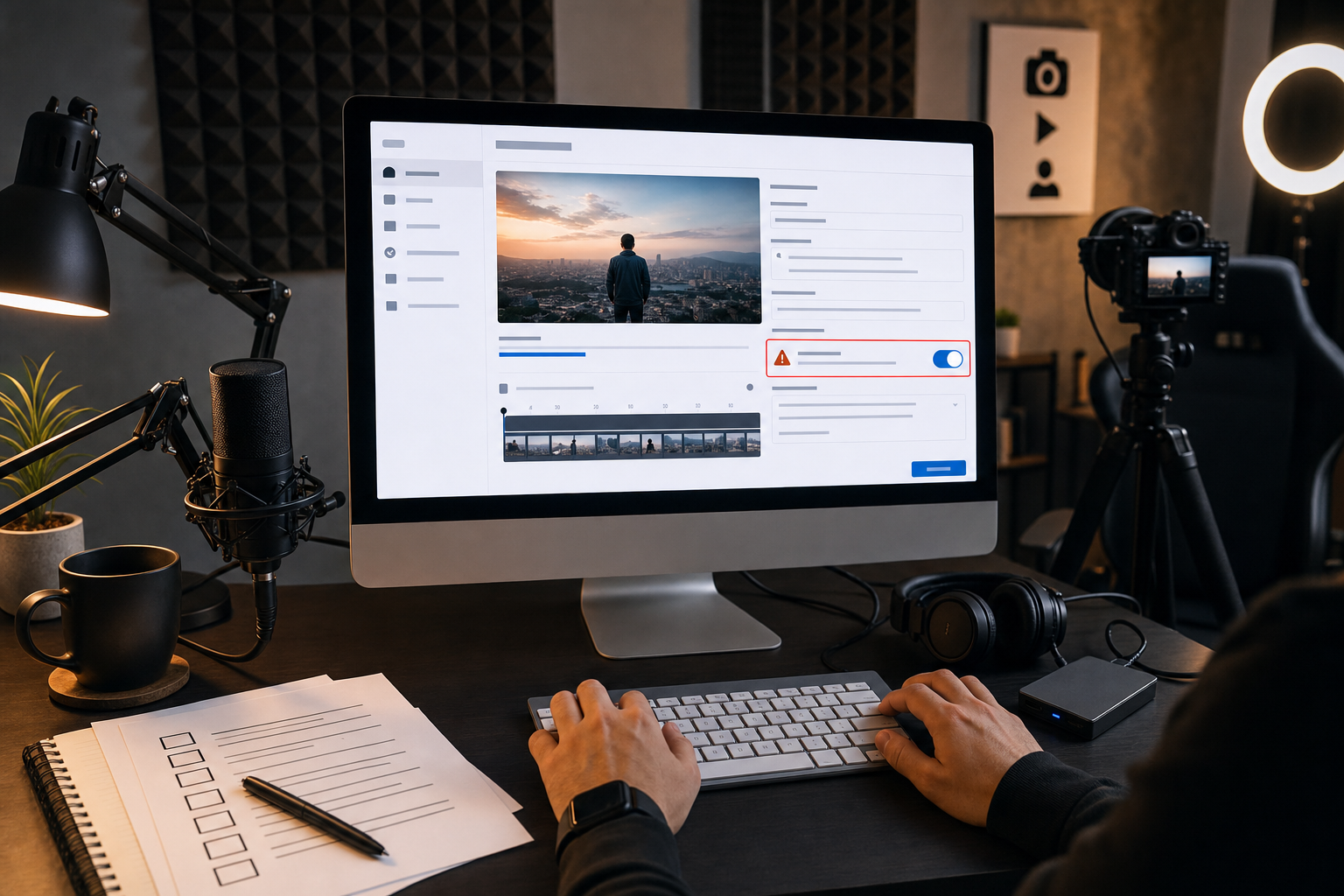
Platforms are moving toward more visible AI labels. YouTube already asks creators to disclose some altered or synthetic material, and reports and policy signals suggest automatic labeling will become more common across major platforms. The exact pace is still uncertain, and automated detection is not perfect. But the direction is clear: creators will have less control over whether AI use is flagged and more pressure over how it is explained.
That matters because a platform label is usually broad, cold, and late. It tells viewers that AI was involved, but not how, why, or how much. The real tension is simple: should the audience learn about AI use from a generic system tag, or from the creator in clear human language? My view is that Arabic creators should disclose first, before the platform does it for them. Not because every AI tool is suspicious, but because trust is easier to keep than to rebuild.
Why this is more than a policy update
For many creators, AI is now ordinary production infrastructure. It helps with subtitle translation, thumbnail drafts, audio cleanup, research summaries, and visual mock-ups. For Arabic creators in particular, it can lower real barriers: smaller budgets, fragmented dialect audiences, limited editing support, and the constant need to publish across multiple formats.
That is the promise. The risk is just as real. A viewer who accepts AI-assisted subtitles may strongly object to a cloned voice, a synthetic interview image, or a realistic scene that looks like documentary footage. In Arabic-speaking media spaces, where trust often depends on voice, identity, and context, those distinctions matter a lot.
This is why disclosure should not be treated as a confession. It is context. Good disclosure tells the audience what they are actually watching, hearing, or reading. It reduces confusion before suspicion starts.
The problem with waiting for the platform
Platform labels are useful in one sense: they create a baseline expectation of transparency. But they are weak at nuance. A system notice may treat very different things as if they are the same.
- AI-assisted translation is not the same as a fully generated script.
- A synthetic illustration is not the same as fake footage presented as real.
- Audio cleanup is not the same as voice cloning.
If the platform adds one flat label to all of that, the audience fills in the missing details on its own. Usually, it assumes the worst. That is especially risky for creators who cover news, education, finance, health, religion, history, or public affairs.
A creator-led disclosure does something a platform notice cannot do. It sets the frame. It tells people what AI actually did, what the human creator still did, and what the audience should not misunderstand.
Not every use of AI needs the same disclosure
One reason creators resist disclosure is that the word AI now covers too much. A sensible standard has to be proportional. Here is a practical three-level approach.
- Low-risk assistance: spellcheck, transcript cleanup, background noise reduction, caption timing, formatting, basic translation drafts later checked by a person. In many cases, this does not need a prominent audience-facing label.
- Medium-risk assistance: AI helped draft the script, generate illustrations, create non-realistic B-roll, suggest edits, or produce translated subtitles that remain visible to the audience. This usually deserves a short disclosure in the description, caption, or opening note.
- High-risk synthetic content: cloned voices, AI avatars, face swaps, recreated events, realistic fake scenes, synthetic quotes, or anything that could be mistaken for a real person or a real event. This needs a clear on-screen disclosure and a written explanation.
A simple rule works well here: if AI changes what the audience thinks is real, original, or human-performed, disclose it clearly.
The starter kit: five things to tell your audience
Most creators do not need long legal text. They need five clear answers.
- What did AI do? Say whether it helped with writing, translation, images, voice, editing, or research. Be specific.
- What did you do? If you reviewed, corrected, or rewrote the output, say that. Do not claim manual review if you did not do it.
- What is synthetic and what is real? This is the most important point when visuals, voices, or quotations are involved.
- Why did you use it? Speed, accessibility, budget, multilingual reach, visual explanation, or restoration are all valid reasons. State the reason plainly.
- Are there limits or permissions the audience should know about? If a voice was cloned with consent, say so. If an image is illustrative and not documentary, say so. If there may be translation errors, say so.
That is enough for most cases. It gives the audience facts, not marketing language.
What good disclosure sounds like
The best disclosure is short, direct, and easy to understand on first reading. For Arabic creators, that usually means avoiding technical jargon and avoiding vague phrases such as “enhanced with smart tools.” If AI was involved, say how.
تمت الاستعانة بالذكاء الاصطناعي في ترجمة هذا الفيديو، ثم تمت مراجعة الترجمة وتعديلها يدويًا.
بعض الصور في هذا المقطع مولّدة بالذكاء الاصطناعي لتوضيح الفكرة، وليست لقطات حقيقية.
هذا الصوت مولّد رقمياً بإذن صاحبه، والمحتوى تمت مراجعته من فريق التحرير.
استخدمنا أداة ذكاء اصطناعي للمساعدة في إعداد المسودة الأولى، ثم أعدنا كتابة النص وتدقيقه قبل النشر.
These examples work because they answer the audience’s actual question: what exactly am I looking at?
Placement matters too. If the AI use is central to the content, put the disclosure where people will actually see it:
- In the video itself for cloned voices, synthetic scenes, avatars, and recreated events.
- In the caption or description for AI-assisted writing, translation, or illustrations.
- In a pinned comment if the format is short and the description is often ignored.
- In audio form for podcasts or voice-only formats.
Do not bury important context at the bottom of a long description.
Where creators should be stricter than the platform
There are cases where the right standard is higher than whatever the platform currently asks for. If your content touches any of the areas below, the disclosure should be more visible and more precise.
- News and current events
- Politics, public figures, and conflict footage
- Health, legal, and financial advice
- Religion and historical interpretation
- Testimonials, reviews, and endorsements
- Children’s content
In these areas, the audience is not just consuming content. It may be making decisions, forming beliefs, or judging real people. A vague AI notice is not enough.
The same goes for likeness and consent. If you are using someone’s face, voice, or style in a synthetic way, permission is not a small detail. It is the first question. If you do not have consent, the safer choice is often not to publish.
The counterpoint creators will raise, and why it only partly works
There are fair objections to all this. Some creators worry that disclosure will trigger unfair stigma. Others say audiences do not care about minor AI assistance, and too many labels create fatigue. Both points are valid. A channel should not need a warning every time software cleans audio or fixes captions.
There is also a real problem with platform systems themselves. Automated labeling can be inaccurate. Broad policies can flatten important distinctions. And some viewers will treat any AI mention as proof that the whole work is fake.
But these are arguments for better disclosure, not for hiding AI use. If the platform may over-label your work, that is a reason to add context early. If audiences may misunderstand, that is a reason to explain in plain language. Silence does not prevent suspicion. It usually delays it until the moment it becomes harder to answer.
Trust is built in the small details
For Arabic creators, this is not only about compliance. It is about relationship. Many audiences in the region and the diaspora follow creators because they trust a voice, a point of view, and a sense of honesty. Once that trust is damaged by avoidable ambiguity, it is difficult to restore.
The good news is that a credible disclosure does not need to be long. It needs to be timely, specific, and proportionate. Tell people what AI did. Tell them what you checked. Tell them what is real. Tell them why it was used. Then move on and let the work stand.
The practical rule to remember is this: if AI changes what your audience believes it is seeing, hearing, or reading, do not wait for the platform to explain it. Explain it yourself.