AI and Free Speech After the Tennessee Meme Settlement: What Creators Should Watch
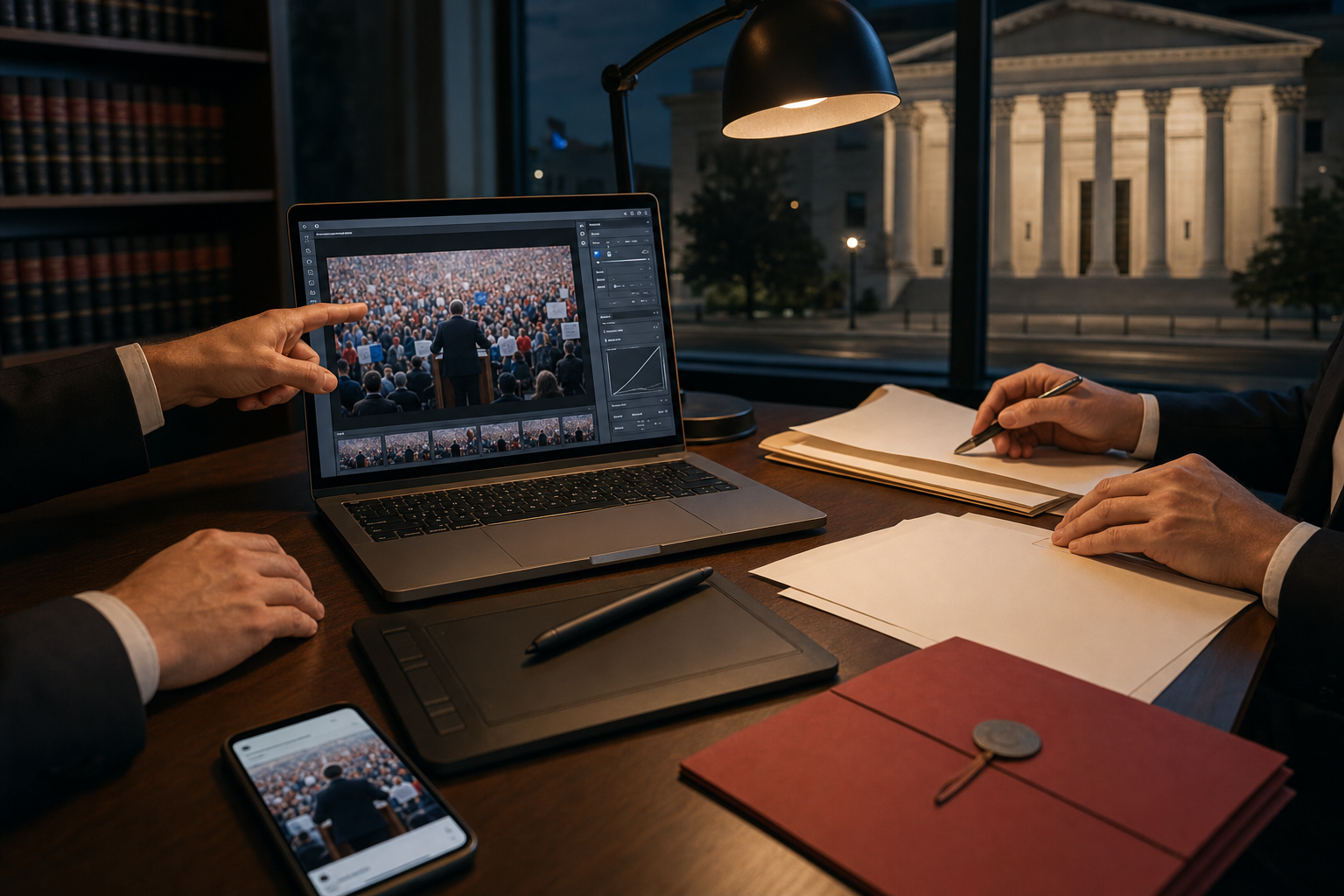
According to public reports, a Tennessee man who spent 37 days in jail over a Trump-related meme has now received an $835,000 settlement. That is not just a local legal story. It is a warning about how fast online political speech can turn into a criminal matter when officials treat digital expression as a public threat instead of protected speech.
It matters even more now because AI tools make images, audio, and video easier to produce, cheaper to spread, and harder to judge at a glance. The central tension is clear: society has a real interest in stopping voter deception, impersonation, and targeted fraud, but government overreach can punish satire, chill dissent, and make creators think twice before speaking at all. My view is simple. The law should set a very high bar before it uses arrest or jail against political memes, even clumsy or offensive ones. At the same time, creators should understand that AI-generated media raises the legal and practical risks around context, confusion, and intent.
What the settlement says, and what it does not
A settlement is not the same as a final court ruling that neatly defines the law for every future case. It does not mean every meme is protected, every arrest was obviously unlawful, or every speech dispute should end in damages. But a settlement of this size, after more than a month in jail, strongly suggests that the authorities faced serious constitutional exposure.
That point matters. Political speech sits near the core of free speech protection in the United States. Satire, parody, mockery, and partisan provocation are often ugly, misleading, or unfair. They are still usually protected. If public officials can treat a meme as criminal speech too quickly, the result is not just one bad case. The result is a broader chill. People begin to censor themselves because they no longer trust where the line is.
That is the real public lesson from the Tennessee case. Even when the government later pays, the damage has already happened. The arrest happened. The jail time happened. The message to everyone else was received.
Why AI makes this harder
The free speech issue did not begin with generative AI, but AI changes the practical stakes. A crude joke image made in five minutes used to look crude. Now a single person can generate a polished campaign-style poster, a fake news clip, or a cloned voice message that sounds close enough to the real thing to fool some listeners.
That does not mean AI-created political content should be treated as suspicious by default. It does mean the gap between parody and deception can shrink once realism goes up. A joke that looks obviously fake to its creator may look official once it is reposted without caption, stripped of context, or seen on a small screen.
That is where creators face a new problem. The law, platforms, employers, and audiences often judge the output, not the process. They do not see the draft folder, the original caption, or the group of followers who knew it was a joke. They see a screenshot, a clip, or a repost. Then they make a decision with incomplete context.
AI also increases scale. A few people misreading a meme is one thing. Thousands seeing a realistic fake about voting rules, polling locations, or a candidate statement is another. That is why lawmakers and platforms are paying more attention. Some of that attention is justified. Some of it is sloppy. Creators have to plan for both.
The free speech principle worth defending
The best rule is not complicated: the government should punish clear fraud, unlawful impersonation, threats, or deliberate efforts to deprive people of their rights. It should not reach for criminal penalties just because speech is offensive, partisan, confusing, or easy to misinterpret.
This principle matters most in politics, where humor and attack are often mixed together. A democracy that cannot tolerate satire is already in trouble. That includes satire made with AI tools. The method of creation should not become an excuse for weaker speech protection.
But defending that principle does not require denial. AI-generated political media can cause real harm. A fake robocall that tells voters to stay home is not just edgy content. A cloned voice used to imitate a public official is not just commentary. A fabricated video designed to trigger panic before an election is not just satire because someone adds a wink later.
That is why the right line is not “AI is dangerous” or “everything is parody.” The right line is narrower and more useful: was the content reasonably likely to be understood as a real instruction, a real endorsement, or a real person?
What creators should watch now
For creators, especially those using AI tools, the Tennessee settlement should sharpen attention in a few specific areas.
- Impersonation risk is rising. Using a real candidate’s voice, a government seal, a news logo, or an official-looking account format can move content out of satire and closer to unlawful deception.
- Election mechanics are the danger zone. Speech about where, when, or how people vote gets stricter scrutiny for good reason. Even a joke can become risky if it looks like a real instruction.
- Context can disappear fast. What is obvious to your followers may look very different after reposting. Screenshots erase captions. Clips remove setup. AI realism makes this worse.
- Labels help, even if they are not perfect. A clear note that something is parody, satire, or AI-generated will not solve every dispute. But it can show intent and reduce confusion.
- Private targets create different risks. Public figures usually face harsher criticism under the law. Private individuals often do not. AI-generated humiliation, harassment, or sexualized content can bring legal trouble quickly.
- Platform rules are not the same as constitutional law. The First Amendment limits government action. Platforms can remove content under their own rules, and many already treat political manipulation and synthetic impersonation aggressively.
None of this means creators should stop making political satire. It means they should stop pretending that realism has no consequences. The more persuasive the fake, the greater the burden to make the joke legible.
The strongest counterargument
The case for stricter oversight is not imaginary. Election officials, civil rights advocates, and researchers have valid reasons to worry. AI can make suppression tactics cheaper. It can help bad actors mimic trusted voices. It can flood the zone with false clips just long enough to distort a news cycle. If law enforcement waits for perfect proof in every case, real damage can happen before anyone responds.
That concern deserves respect. Creators who care about free speech should not dismiss it with easy slogans. There is a public interest in stopping targeted deception before it spreads, especially around voting, emergency information, and impersonation.
But that concern does not justify vague or overbroad enforcement. History shows that when authorities get broad power to police “misinformation” or “harmful” political speech, satire and dissent often get swept in first. Ambiguous standards invite selective enforcement. That risk grows in polarized times, when people tend to read the worst motives into speech they dislike.
The Tennessee settlement matters because it reminds us what overreach looks like in real life. It is not an abstract civics debate. It is a person losing liberty over digital speech that authorities should have approached with far more caution.
A better standard for law and policy
If lawmakers and courts want a workable rule for the AI era, they should ask three practical questions.
- Was there clear impersonation? Did the content present itself as an actual person, office, campaign, or institution?
- Was there intent to cause concrete harm? Not embarrassment or outrage, but something like fraud, voter suppression, extortion, or unlawful interference.
- Was confusion reasonably likely? Not in the most literal-minded reader, but to an ordinary person seeing the content in normal circulation.
That framework is not perfect, but it is better than treating all realistic synthetic media as suspect. It focuses on harm, context, and evidence. It also leaves room for the old but still important truth that politics is full of exaggeration, mockery, and bad taste.
Where possible, civil remedies, corrections, counterspeech, and platform tools should come before arrest. Criminal law should be the last resort, not the first reaction. Once the state uses jail in a speech case, the burden should be extremely high.
Practical habits creators should adopt
If you make memes, parody videos, or AI-assisted political content, a few habits are now basic self-protection.
- Do not fake official voting information. If your content touches voting dates, polling places, registration, or ballot rules, accuracy matters more than irony.
- Avoid official branding you do not need. Fake seals, logos, newsroom graphics, and government-style formatting create unnecessary risk.
- Label high-realism satire clearly. If the image, audio, or video could plausibly be taken as real, say what it is.
- Keep records of your original post. Captions, timestamps, drafts, and production notes can help show intent if your content is later stripped of context.
- Think beyond your intended audience. Ask how the content looks when seen by a stranger with no background and no caption.
- Watch state-level rules. Laws on election-related deepfakes, synthetic impersonation, and disclosure are changing quickly and not always clearly.
These steps are not admissions of guilt. They are the new basics of publishing in a world where realism is cheap and context is fragile.
The lesson after Tennessee
The Tennessee meme settlement should push two ideas into focus at once. First, governments can do serious damage when they react to political speech with force instead of restraint. Second, AI-generated media is making speech disputes more common because it raises realism, reach, and misunderstanding all at once.
Creators should resist any lazy argument that says “AI content is too dangerous, so broad crackdowns are fine.” That path leads to chilled speech and selective enforcement. But they should also reject the equally lazy defense that any deceptive synthetic content becomes harmless if it is called a meme.
The practical rule is the right one: protect satire fiercely, punish clear deception narrowly, and stay alert to how realism changes perception. In the AI era, free speech still needs a wide margin. Creators just need to use that margin wisely.